Femtosecond Laser Cutting: Concept, Working, Uses, Perks, and More
Traditional lasers and mechanical tools can’t match femtosecond laser cutting precision. They cause heat, warping, and damage to fragile components. Micron-scale accuracy is required for medical implants, semiconductor packages, and EV components. Older approaches can’t provide features that small without bugs. Femtosecond technology eliminates this issue with all its speed. The pulse ends before thermal damage even starts. This article aims to delve into the idea, its operation, uses, and practical advantages. Let’s get started!
What Is Femtosecond Laser Cutting?
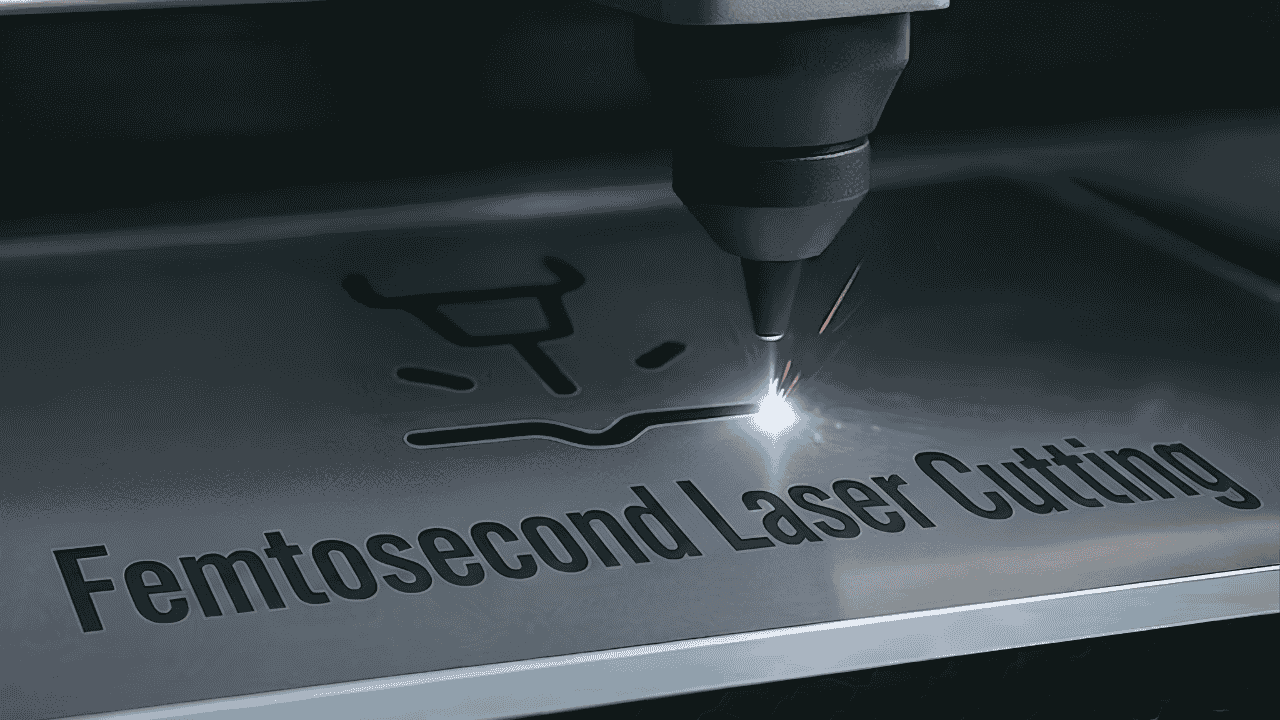
Femtosecond laser cutting is a process that cuts the material by using an ultra-short pulse with the order of 10–900 femtoseconds to ablate or contour the material without contact. It is also referred to as femto laser machining by industry professionals. This approach virtually does not heat the surrounding material as in the case of continuous wave or nanosecond lasers. This is the reason why it is called the cold end of Laser processing. One femtosecond is a quadrillionth of a second, an almost inconceivably short period of time. In other words, a femtosecond is to a second as a second is to about 32 million years. That is part of what accounts for the outstanding precision and damage-free results these pulses obtain.
Key components of Femtosecond laser cutter
Laser Source
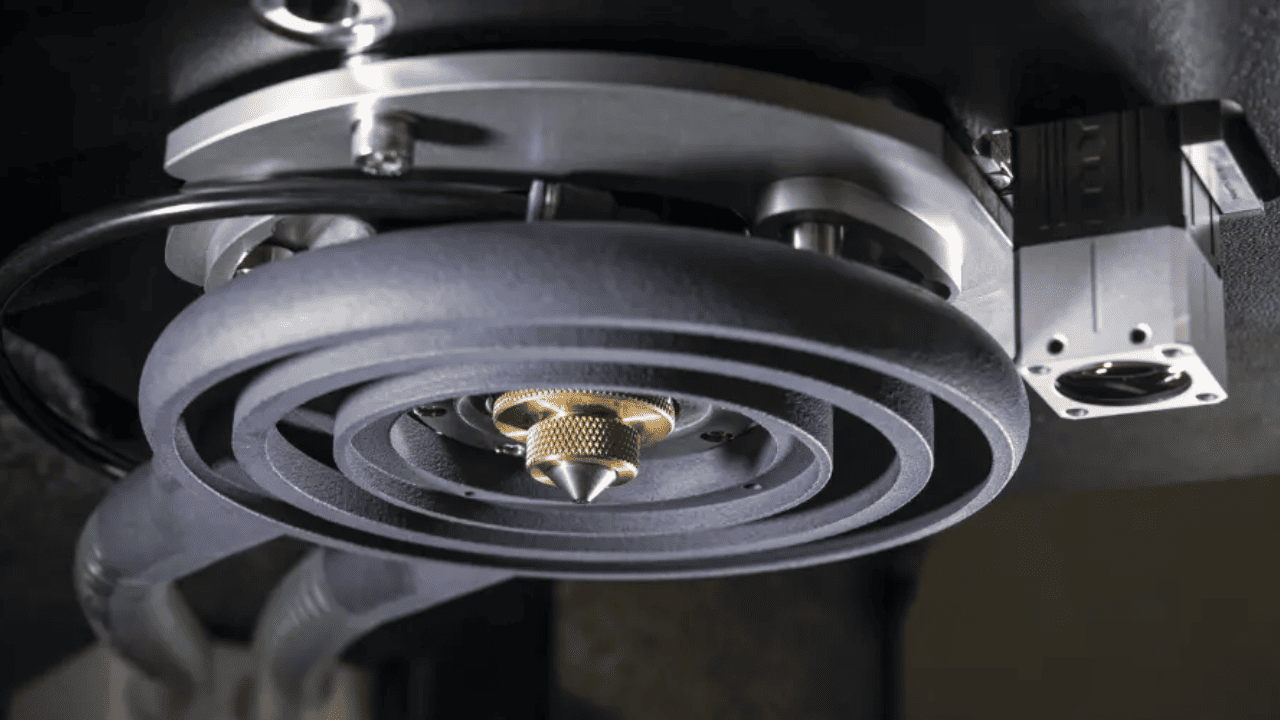
Femtosecond cutters use a fiber, solid-state or diode-pumped source to produce ultra-short pulses. The wavelength, pulse duration, and power output are defined by these sources. Fiber lasers provide small, reliable, precision applications.
Beam Delivery and Focusing Optics
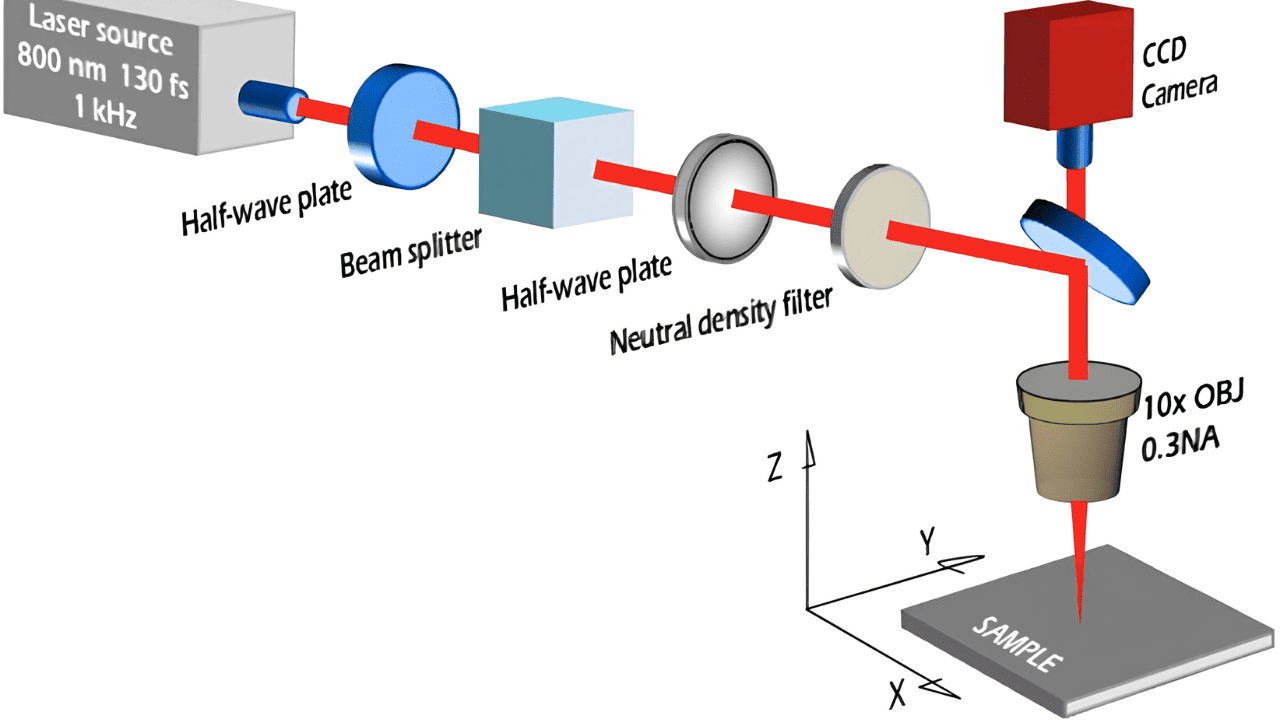
Precision optics direct and focus the laser light onto the workpiece. Pulse size and intensity are controlled with mirrors, lenses, and beam expanders. Correct focusing results in minimum heat-affected areas and clean cuts.
Multi-Axis Motion and Workpiece Control
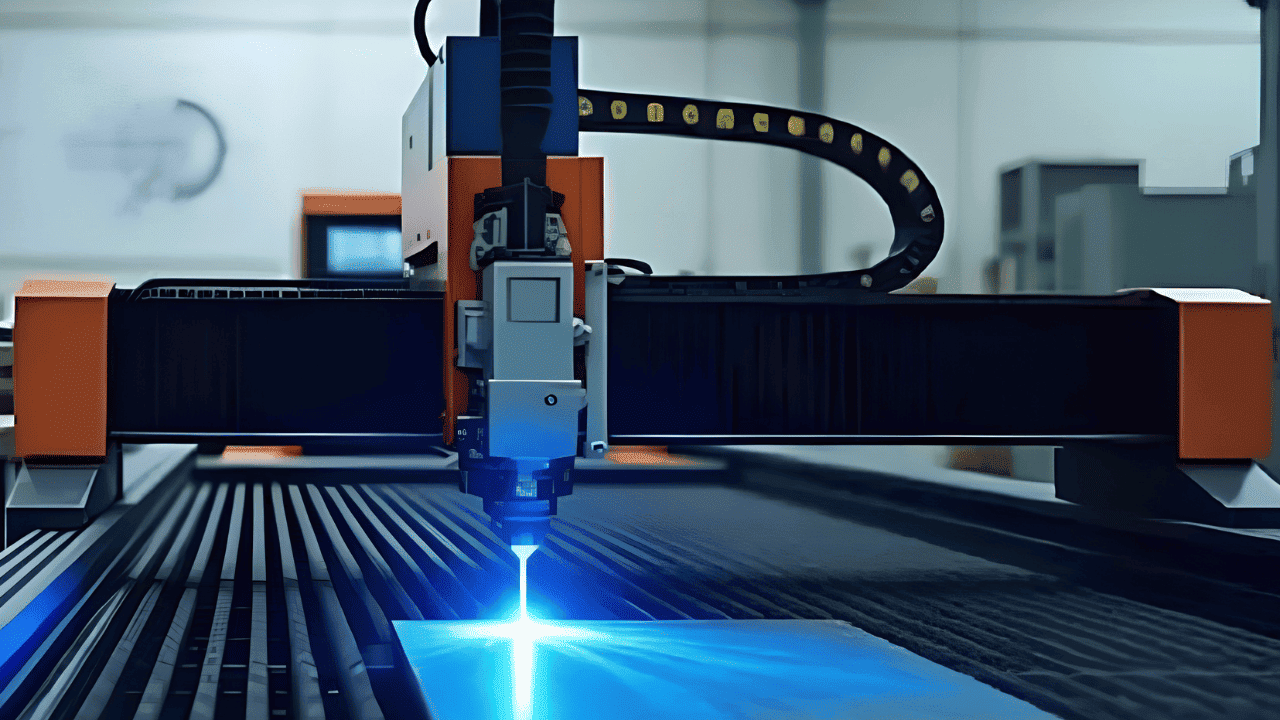
Motion systems precisely move the workpiece under a focused laser beam. Many femtosecond cutting systems are 5-axis, which is used for cutting complex shapes. This versatility enables precise cutting of curved and angled surfaces.
Process Monitoring and Debris Management
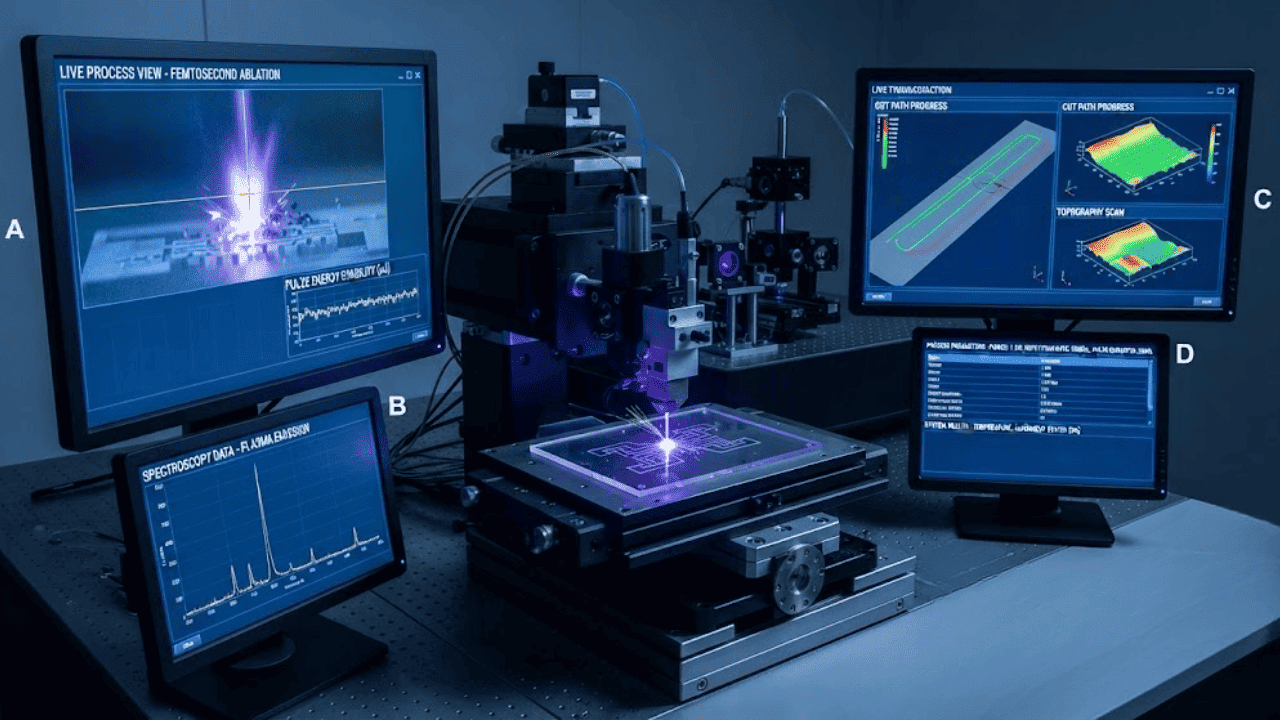
Real-time monitoring monitors cutting quality, pulse stability, and thermal behavior. Anomalies are detected by sensors, which then take steps to correct parameters for consistency. Debris extraction systems remove particulates, keeping optics clean and producing clean edges.
How Does a Femtosecond Laser Work?
A femtosecond laser cutter emits pulses of light that are a quadrillionth of a second in duration, which is faster than the speed of light across a room. This velocity leaves energy before heat is transferred to other material, thereby eliminating the transfer of heat by conduction. Then, multiphoton absorption takes over, allowing the beam to ionise material without heating it up gradually. That process results in cold ablation, in which the solid material is ejected directly to the plasma without being molten. The typical wavelength of a femto laser machine is near-infrared (1030 – 1050 nm), and is focused by high NA focusing optics. Others have beam-shaping options that produce a Bessel or tubular beam, which allows for deep kerfless cutting.
Key Advantages of Femto Laser Cutting
Sub-Micron Dimensional Accuracy
Femtosecond laser cutting has a dimensional accuracy of about ±0.5-1.5 microns. This tight tolerance is material and system dependent. This is precision which can’t be reliably achieved with conventional machining of micro-components.
Minimal Heat-Affected Zone
The pulses are femtoseconds in duration, meaning that they last only quadrillionths of a second, which limits heat transfer. This super-fast interaction avoids the occurrence of microcracking, warping and the formation of a recast layer. No damage to surrounding material throughout the process.
Burr-Free, Clean-Kerf Edges
Femtosecond cuts create clean, burr-free, and debris-free edges. This clean kerf will often eliminate secondary finishing steps altogether. Manufacturers save time and production costs greatly by avoiding the deburring and polishing process.
Non-Contact, Stress-Free Processing
Laser micromachining is a contactless working technique. This helps to remove mechanical stresses that may cause breakage of delicate components. This is a great solution for brittle materials, such as glass and ceramics.
Material-Agnostic Versatility
Femtosecond lasers can be used to cut metals, glass, ceramics, polymers, and semiconductors. This versatility helps one system to be applicable across diverse production lines. Avoids manufacturers investing in numerous special machines for various materials.
High Repeatability for Production Runs
Femtosecond systems are so that they have a consistent quality for thousands of production cycles. This repeatability is very important in regulated markets such as medical devices. Even output decreases the amount of scrap and helps maintain quality assurance standards.
Enabling Previously Impossible Geometries
Features smaller than 25 microns that are not possible with mechanical cutting can be produced using femtosecond laser cutting. With amazing consistency, complex micro-textures and fine geometries are possible. Today, engineers are able to design parts that were once thought to be physically impossible to manufacture.
Femtosecond Laser Cutter vs. Other Laser Cutting Methods
Femtosecond vs. Nanosecond/CO2 Lasers
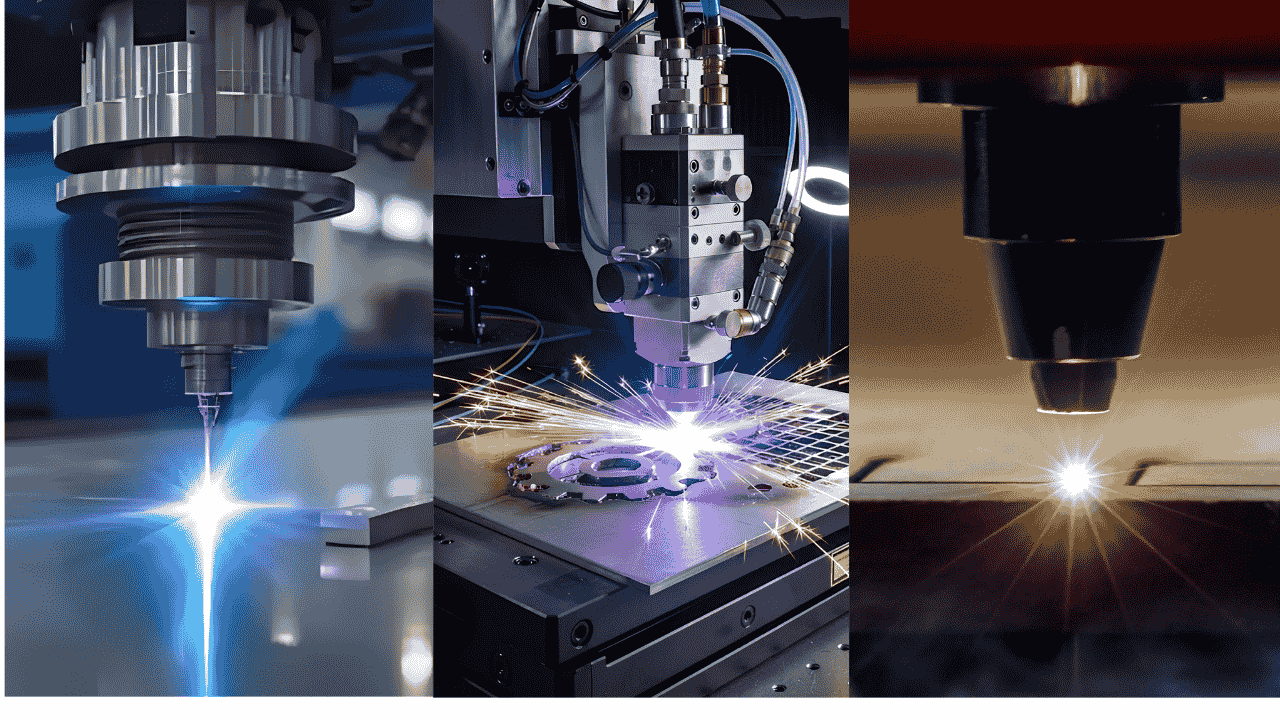
Unlike nanosecond or CO2 systems, the heat-affected zones are minimal when using the femtosecond laser cutting system. The nanosecond lasers are still appropriate for thicker sections. They are good for faster, high-speed bulk cutting in which microstructure quality is not important.
Femtosecond vs. Picosecond Lasers
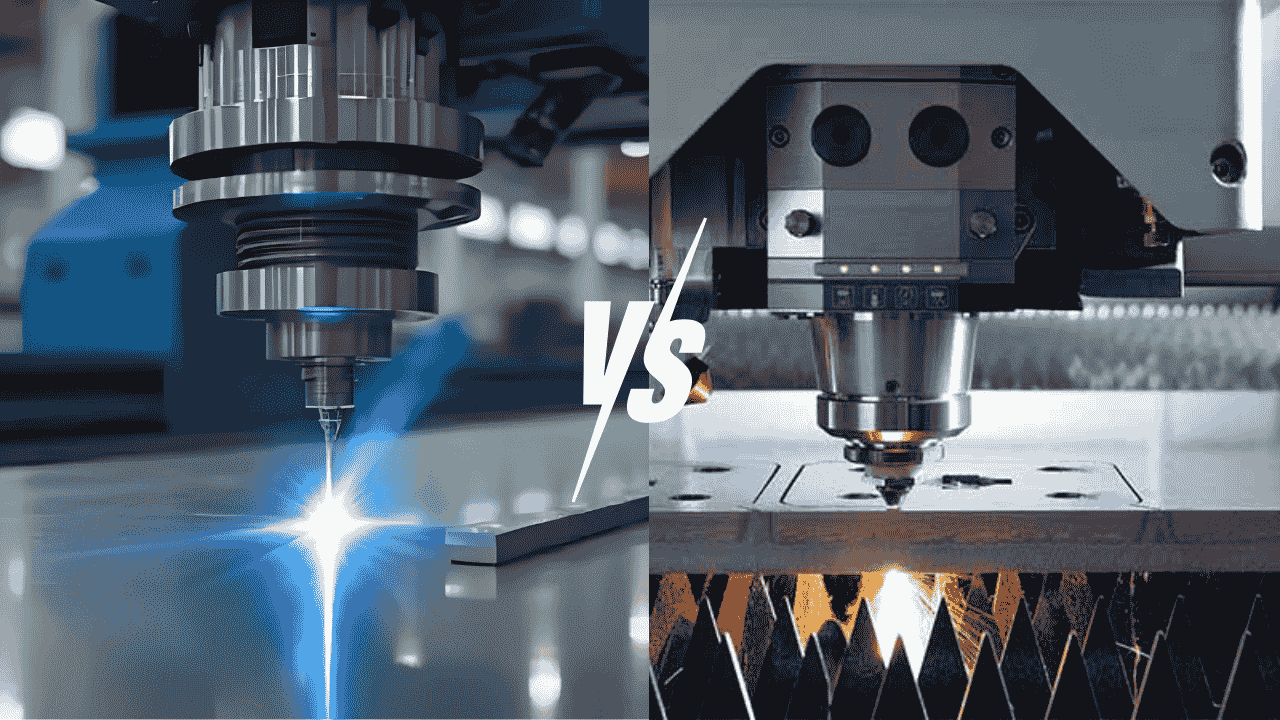
They both belong to the category of ultrafast laser micro-cutting, but are essentially different. A viable compromise lies in the picosecond laser. They provide low heat-affected zones and high throughput with a small reduction in thermal isolation.
Femtosecond vs. Mechanical Micro-Machining/EDM
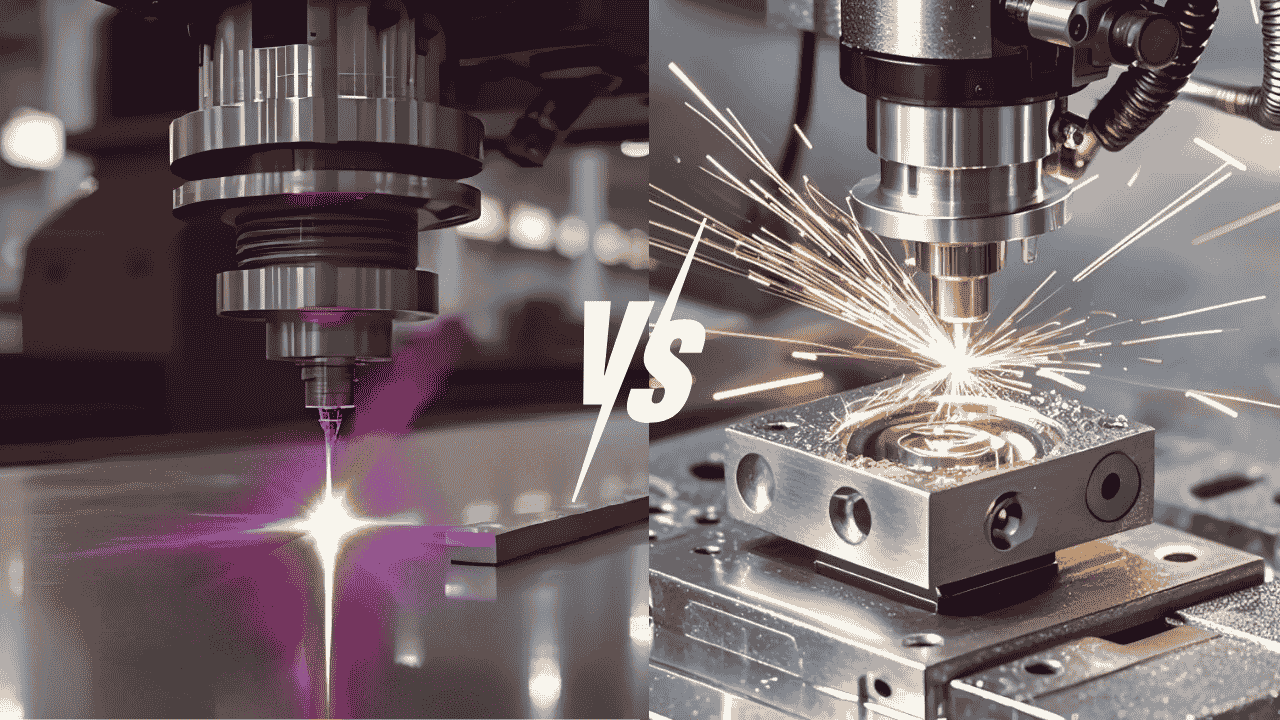
With femtosecond laser machining, no tool wear or mechanical stress is involved. Traditional EDM and micro-machining are based on the use of physical tools. But the cost/throughput characteristics vary widely for large production volumes.
Materials Processed with Femto Laser Machine
Metals: Titanium, Inconel, MP35N, Tungsten, and Precious Alloys
Femtosecond laser cutting metal handles titanium, Inconel, MP35N, tungsten, stainless steel, gold, and platinum in an accurate fashion. Ultrashort pulses ablate the material without changing its temper or microstructure. This is an ideal fit for medical implants.
Glass and Transparent Materials
Femtosecond laser glass cutting makes internal stealth modifications without any chipping or cracking. It is a suitable technique for display glass and optical parts. This precision also applies to wafer-level glass structures.
Heat-Sensitive Polymers: PEEK and Polyimide
Using conventional laser cutting processes, heat-sensitive polymers such as PEEK and polyimide get soft. For femtosecond pulses, material is removed without being heated. This helps to avoid melting, charring, or any other material degradation.
Ceramics and Brittle, Hard Materials
Ceramics and other brittle materials crack easily during mechanical dicing processes. The femtosecond laser machining process minimizes microcracking as opposed to conventional cutting tools. No mechanical stress or fracture propagation leads to clean edges.
Semiconductors and Wafer-Level Substrates
Semiconductor wafers must be diced and micro-via drilled to a very high level of accuracy. Femtosecond lasers process substrates without high thermal and mechanical stress. This will help to avoid compromising fragile circuitries and the general integrity of the wafers.
Femtosecond Laser Processing Applications by Industry
Medical Device Manufacturing
Femtosecond laser micromachining is used to create a cardiovascular stent with clean, burr-free edges. It also precisely cuts biopsy probes and parts of the catheter. Today, minimal heat damage is an advantage in nitinol hypotubes, and intraocular lenses.
Electronics and Semiconductors
The femtosecond laser cutter technology makes it possible to dice the wafer without the formation of microcracks. Micro-via drilling and thin-film circuit micromachining become more precise. Glass structuring and battery cell connector cutting are also enhanced.
Aerospace
Micro-cooling holes are accurately drilled into turbine blades by femtosecond laser machine systems. Femtosecond processing consistently provides tight tolerances for sensor cutouts. The precision is maintained with structural cutting of thin foils and sheets.
Consumer Electronics and Luxury Goods
Femtosecond laser micromachining enables display cutting of cover glass with very good edge quality. Equally fine tolerances are required throughout sensor housings and watch components. Premium luxury products are enhanced with decorative micro-texturing.
Ophthalmic Surgery and Biological Nanoscissor Applications
Femtosecond lasers are used in eye surgery as well, reshaping the cornea safely for delicate surgery. For surgeons, the ultrashort pulses enable them to make precise incisions with minimal invasiveness. Femtosecond pulses act as nanoscissors, allowing researchers to precisely cut cells.
Choosing a Femtosecond Laser Cutting System or Service Provider
Material Type and Thickness
The precision of femtosecond laser cutting is most suitable for thinner materials. Heat-sensitive substrates are not damaged by ultrafast pulses. Pulse energy and passes are based on thickness. Verify materials against machine specifications before making a commitment.
Kerf Quality and Edge Finish
Beam shaping techniques employed have a significant influence on edge finish. Deeper cuts are greatly enhanced by burst mode processing. The smoother kerf walls cut down on post-processing labor and expense. Do sample cuts prior to the selection of any femto laser machine.
Throughput vs. Quality Trade-off
The higher the repetition rate, the faster the material can be removed. Increased processing speed can sometimes mean increased risk of heat accumulation. Build up of debris can affect the quality of the final product. Carefully consider speed requirements and acceptable tolerances.
Debris and Surface-Finish Management
The effectiveness of debris removal is directly affected by assist gas selection. Particulates are collected in vacuum systems in femtosecond laser machining processes. Shielding will guard sensitive parts from redeposited material. Surface integrity is maintained over production runs by proper management.
Multi-Axis Capability for Complex Geometries
Curved parts and tubes are ideal for 5-axis systems. Coordination of motion control precision is necessary in complex 3D geometries. Conventional 3-axis systems impose very restrictive geometric constraints. Make sure that your parts fit the axis capabilities.
Budget and Maintenance Considerations
The initial capital investment is greater for femtosecond systems. The costs for maintenance are significantly higher than those for nanosecond and picosecond alternatives. Think of it as an investment, not a buy. The accuracy is frequently worth the cost, and the benefits of this are long-term.
In-House Equipment vs. Outsourcing
Equipment ownership is more appropriate to high volume production with consistent demands. The advantage of outsourcing to a specialized micromachining service is that it minimizes capital risk. Service providers provide flexibility without maintenance responsibilities. Realistically consider production quantity and operating expenses.
Why Masion Stands Out for Femtosecond Laser Cutting Services?
Masion collaborates with clients on complex sheet metal projects, from design to production. The company possesses high-tech equipment, well-trained engineers, and quality control to ensure the accuracy. Masion provides all the processes of laser cutting, CNC bending, welding, stamping, machining, and finishing in one place. This integrated approach is used in the automotive, electronics, industrial, medical, telecom, and renewable energy industries. Whether it’s prototypes or high-volume runs, Masion ensures reliable lead times all along the way. These strengths combine to create Masion as a long-term partner, based on quality, collaboration, cost-effective production, and support.
Conclusion
The precision made by the femtosecond laser cutting technology has taken the precision manufacturing to a new level, which can achieve micron-level precision and basically no thermal damage. Knowing how it works, what materials it can be used with, its benefits, comparison, and limitations enables manufacturers to select the appropriate solution for more challenging applications. The only way to assess the benefits of femtosecond laser processing and if it is a suitable investment for your project is to evaluate your material, tolerance, and production requirements. If you need high-precision femtosecond laser cutting or want to have full sheet metal fabrication, work with Masion for engineering support, quality, and scalable manufacturing solutions.
FAQs
Is femtosecond laser processing costly for firms?
For most companies, yes, femtosecond laser processing is really expensive. Industrial micro-machining equipment can cost more than $375,000. The cost of annual service contracts is about $40,000 per year. Lower material removal rates increase the overall costs.
Is femtosecond laser cutting metal precise enough?
Yes, femtosecond laser cutting metal is able to achieve micron-level precision. It can attain dimensional tolerances of almost ±0.5 to 1 micron. By using cold ablation, metal is vaporized instantly without spreading heat. This results in virtually no heat-affected zone, microcracks, or scars.
Where can I find a femtosecond laser cutter?
Femtosecond laser cutters are available via special suppliers. Posalux provides Swiss-made systems based on sub 300 femtosecond sources. Alpine Laser produces compact workstations for special medical tube cutting. EKSPLA offers industrial lasers with characteristics appropriate for glass micromachining.
Does femtosecond laser micromachining need cleanroom?
No, femtosecond laser micromachining does not necessarily need cleanroom facilities. By design, it’s a maskless and non-contact process. This eliminates the need for lithography, masks, and chemical development. Local processing is possible so that stable work can be carried out in rooms.
What glass types suit femtosecond laser glass cutting?
Femtosecond laser cutting is applicable to almost all kinds of brittle transparent glass materials. Borosilicate glass has the ability to resist chipping while handling ultra-short pulses. Internal filamentation processing of Gorilla glass is well suited. Fused silica and soda-lime glass also have a clean cutting ability.
How much does a femto laser machine cost?
The typical femtosecond laser machine costs anywhere from $30,000 to $500,000. Entry-level lab systems start from around $30,000 to $60,000. Industrial marking systems can cost anywhere from $80,000 to $150,000. The total cost of high-power manufacturing lasers is frequently more than $350,000 USD.
What materials suit laser micro cutting best?
Laser micro cutting works best with thin, high-precision materials such as stainless steel, titanium, nickel alloys, copper, aluminium, brass, ceramics, silicon, glass, and medical-grade polymers. These materials allow clean, accurate cuts with minimal heat-affected zones and excellent edge quality.