Sheet Metal Gauge Chart Guide: How to Choose the Right Thickness
An incorrect metal gauge selection can lead to structural failures, poor welds, and higher production costs. The Gauge refers to a standard way of measuring thickness for sheet metal; the lower the number, the greater the thickness. Although the metric system is in common use, gauge is still used in manufacturing and engineering. This guide will provide an overview of gauge basics, sheet metal gauge charts for various materials, some helpful hints for reading gauges, and some common pitfalls. Let’s get started!
What Is Sheet Metal Gauge?
You can define sheet metal gauge as the numerical designation for the assessment of the metal thickness. A higher gauge score determines the thinness of the metal and vice versa. The gauge number is not an inherent unit value; that is, it is not a unit value which can be translated to millimetres or inches without further information. For the same gauge, you can expect a different level of thickness; this is true for different metals. For instance, the 18-gauge mild steel has a thickness of 0.0478 inches, and the 18-gauge aluminium has a thickness of 0.0403 inches. Getting the wrong gauge results in the wrong thickness, leading to waste and the failure to complete projects. Always double-check the gauge numbers with a certified chart of the mm/inch equivalents.
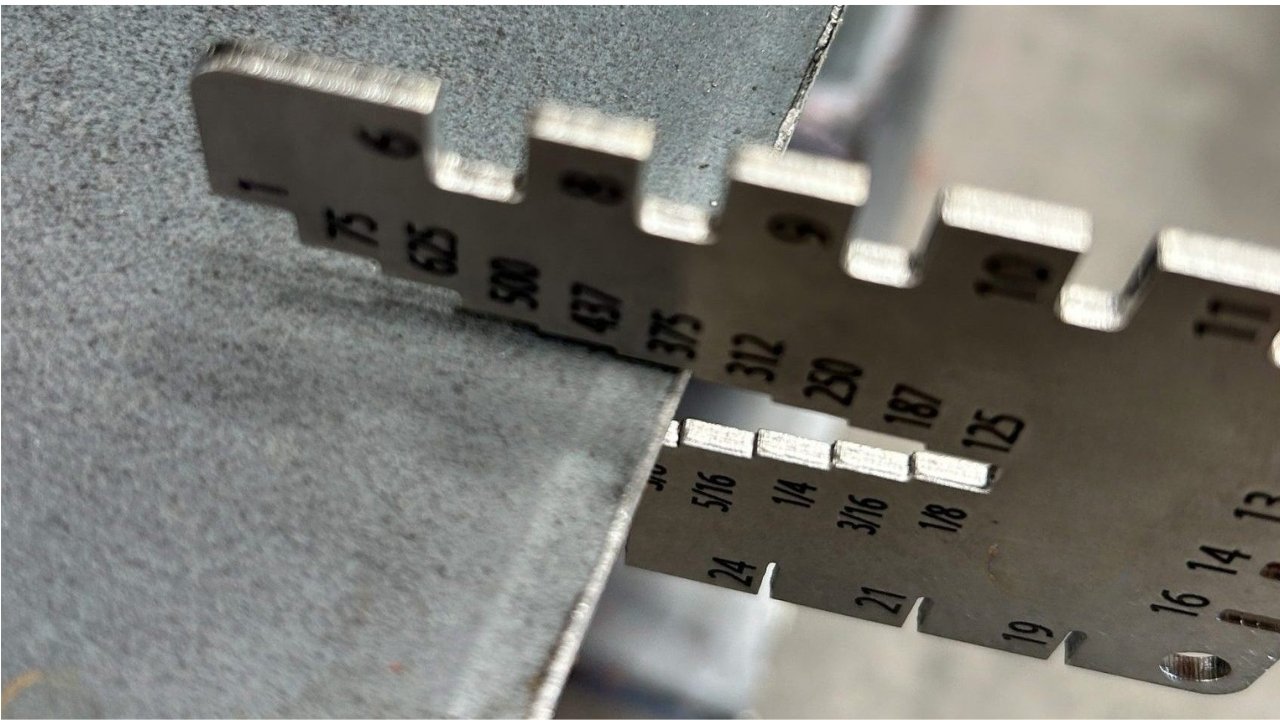
Metal Sheet Gauge Charts – Working Process
You can refer to a gauge chart as the chart that helps you transform gauge numbers into millimetres.
The reader finds the gauge number in the left-hand column and reads across to find thickness values. There are separate gauge-to-thickness charts for each metal type. The values for a mild steel chart and an aluminium chart will never be the same.
A few gauges are marked directly in fractional inches. For instance, 16-gauge stainless steel is equal to 1/16″ or 0.0625″.
There is a large range of Standard Wire Gauge. It runs from 7/0 at 0.500 inches down to 50 SWG at just 0.001 inches.
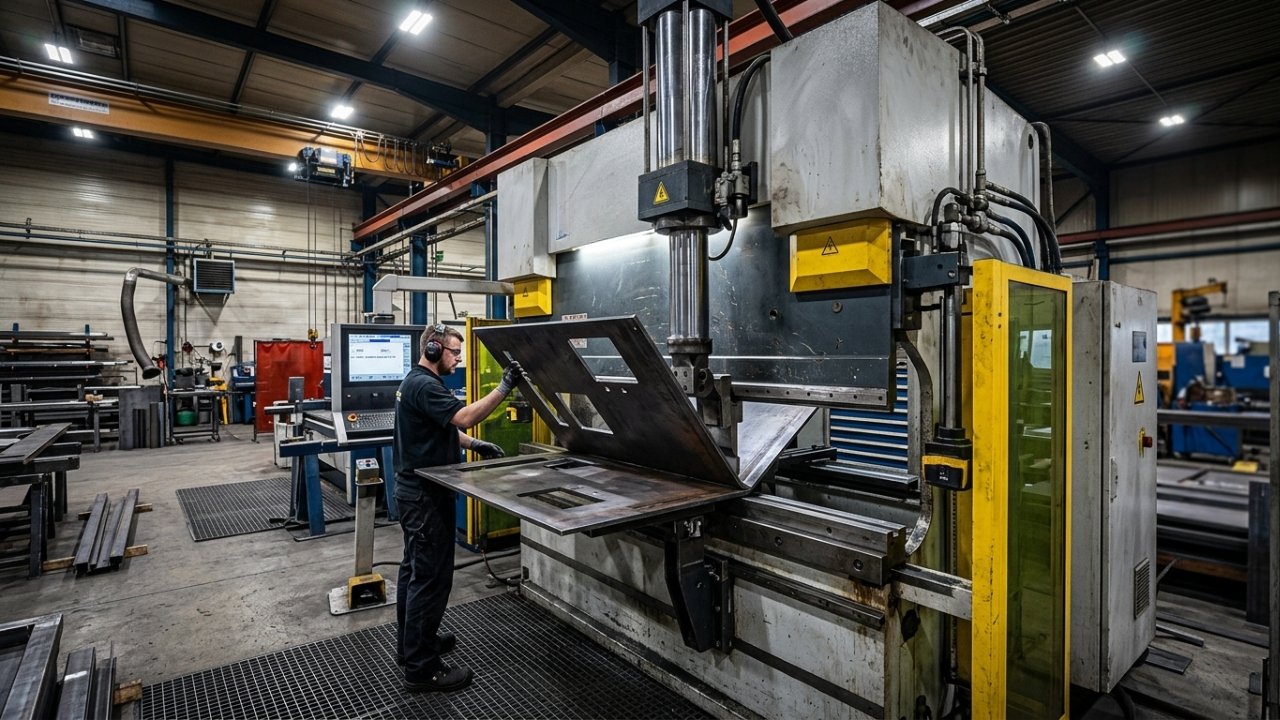
These charts are used in several real-life scenarios by fabricators. Accurate gauge reference is required when ordering stock, reading shop drawings and setting brake press or laser cutter parameters.
Thickness is becoming more and more important for modern fabrication and is often specified in millimetres. Gauge numbers are used as a handy secondary reference only and are not a primary specification.
How to Measure Sheet Metal Thickness Using a Sheet Metal Gauge Chart?
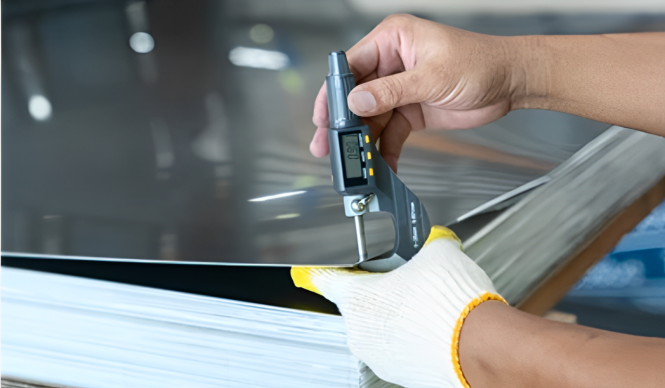
Using a metal sheet gauge chart, the first step in measuring the accurate thickness is to have the correct tool for the job.
- A micrometre provides the most accurate measurement and can be read to 0.0001 inch with confidence.
- Vernier callipers are accurate to 0.001 inch, which is suitable for most workshops.
- Stepped disc gauges provide a fast field check by comparing slots with numbers on the gauge.
In non-destructive testing, ultrasonic gauges measure metals that have been painted or coated, without harming the surface. This is particularly useful in situations where stripping or scratching the material is unacceptable.
The correct use of the micrometre is as important as having one. When the anvil is to be applied to the metal surface, always clean it first. To get a true reading, hold the micrometre at right angles to the sheet. Measure three times and average to minimise surface variation.
Sheet metal is produced within published tolerances, typically ±0.003 inch. If the measured value is slightly off a gauge chart, it doesn’t necessarily mean that it’s the wrong material. If you know what the tolerance range is, you will not reject perfectly acceptable stock unnecessarily. When a project requires a close tolerance, always measure the incoming material.
Sheet Metal Gauge Table – Material-Based Highlights
The gauge table for sheet metal is based on the different materials given below:
Mild Steel (Cold Rolled / Hot Rolled) Gauge Chart
HVAC, the automotive industry, and the construction sector each make use of mild steel for the purpose of manufacturing accessories. Cold rolled steel offers a smoother and more accurate finish, while hot rolled steel is suitable for structural and heavy-duty fabrication applications. Gauges 18-22 are perfect for general fabrication projects, as they are heavy enough to be strong and light enough to be easy to handle. Thicker gauges (14-16) are required for heavy structural and load-bearing applications. The lighter gauge 24 to 26 ducting is the most common in HVAC ductwork for forming. The sheet metal gauge chart in inches and mm is as follows:
Gauge | Inches | MM |
3 | 0.2391 | 6.07 |
4 | 0.2242 | 5.69 |
5 | 0.2092 | 5.31 |
6 | 0.1943 | 4.94 |
7 | 0.1793 | 4.554 |
8 | 0.1644 | 4.175 |
9 | 0.1495 | 3.797 |
10 | 0.1345 | 3.416 |
11 | 0.1196 | 3.038 |
12 | 0.1046 | 2.656 |
14 | 0.0747 | 1.897 |
16 | 0.0598 | 1.518 |
18 | 0.0478 | 1.214 |
20 | 0.0359 | 0.911 |
22 | 0.0299 | 0.759 |
24 | 0.0239 | 0.607 |
26 | 0.0179 | 0.454 |
28 | 0.0149 | 0.378 |
30 | 0.0120 | 0.305 |
Aluminum Gauge Chart
Aluminium not only has lightweight characteristics but also excellent corrosion resistance, which is indispensable in the aerospace, automotive, marine, and consumer electronics industries. Aluminium has the same gauge numbers as mild steel but makes distinctly different thicknesses at each gauge number. Thicker gauges (10-14) are for structural panels and trailers, and thinner gauges (18-22) are for signage and architectural flashing. Foil weight applications with lower mass are supported by lighter 24-30 gauge aluminium.
Gauge | Inches | MM |
7 | 0.1443 | 3.665 |
8 | 0.1285 | 3.264 |
9 | 0.1144 | 2.906 |
10 | 0.1019 | 2.588 |
11 | 0.09074 | 2.305 |
12 | 0.08081 | 2.053 |
14 | 0.06408 | 1.628 |
16 | 0.05082 | 1.291 |
18 | 0.04030 | 1.024 |
20 | 0.03196 | 0.812 |
22 | 0.02535 | 0.644 |
24 | 0.02010 | 0.511 |
26 | 0.01594 | 0.405 |
28 | 0.01264 | 0.321 |
30 | 0.01003 | 0.255 |
Stainless Steel Sheet Metal Gauge Chart
Stainless steel is naturally resistant to corrosion; it is the material of choice for food processing, medical equipment and architectural cladding. Gauge value is different from mild steel and aluminium. For instance, 16 gauge steel thickness is 1/16 inch and 11 gauge steel thickness is 1/8 inch.
Gauge | Inches | MM |
8 | 0.17187 | 4.365 |
9 | 0.15625 | 3.968 |
10 | 0.14062 | 3.571 |
11 | 0.1250 | 3.175 |
12 | 0.10937 | 2.778 |
14 | 0.07812 | 1.984 |
16 | 0.0625 | 1.587 |
18 | 0.0500 | 1.270 |
20 | 0.0375 | 0.9525 |
22 | 0.03125 | 0.7937 |
24 | 0.0250 | 0.635 |
26 | 0.01875 | 0.476 |
28 | 0.01562 | 0.396 |
30 | 0.0125 | 0.3175 |
Galvanized Steel Gauge Thickness Chart
Galvanized steel is a composition of zinc and mild steel, which provides highly corrosion-resistant steel for use in severe applications. It is widely used for manufacturing roofing, guttering, HVAC systems and outdoor structures. Galvanised gauges are slightly thicker than bare mild steel at the same gauge numbers, because of the added thickness of the zinc layer.
Gauge | Inches | MM |
8 | 0.1681 | 4.269 |
9 | 0.1532 | 3.891 |
10 | 0.1382 | 3.510 |
11 | 0.1233 | 3.1318 |
12 | 0.1084 | 2.753 |
14 | 0.0785 | 1.9939 |
16 | 0.0635 | 1.6129 |
18 | 0.0516 | 1.310 |
20 | 0.0396 | 1.005 |
22 | 0.0336 | 0.853 |
24 | 0.0276 | 0.701 |
26 | 0.0217 | 0.551 |
28 | 0.0187 | 0.474 |
30 | 0.0157 | 0.398 |
Brass Metal Gauge Thickness Chart
Brass is a decorative, electrical, and musical instrument and electrical component alloy made of copper and zinc. It is a part of the Brown & Sharpe (AWG) gauge system, which is common to the aluminium and copper wire industry. The brass sheet metal gauge chart in mm and inches is as follows:
Gauge | Inches | MM |
7 | 0.1443 | 3.665 |
8 | 0.1285 | 3.264 |
10 | 0.1019 | 2.588 |
12 | 0.08081 | 2.053 |
14 | 0.06408 | 1.628 |
16 | 0.05082 | 1.291 |
18 | 0.04030 | 1.024 |
20 | 0.03196 | 0.812 |
24 | 0.02010 | 0.511 |
28 | 0.01264 | 0.321 |
30 | 0.01003 | 0.255 |
Copper – Gauge Size Chart
Copper has remarkable electrical and thermal conductivity and is essential in electrical wiring, plumbing, roofing and heat exchanger applications. Please note that the AWG/B&S gauge system is used for copper and is quite different from the steel gauge system.
Gauge | Inches | MM |
7 | 0.180 | 4.572 |
8 | 0.165 | 4.191 |
9 | 0.148 | 3.759 |
10 | 0.134 | 3.404 |
11 | 0.120 | 3.048 |
12 | 0.109 | 2.769 |
14 | 0.083 | 2.108 |
16 | 0.065 | 1.651 |
18 | 0.049 | 1.245 |
20 | 0.035 | 0.889 |
22 | 0.028 | 0.711 |
24 | 0.022 | 0.559 |
26 | 0.018 | 0.457 |
28 | 0.014 | 0.356 |
30 | 0.012 | 0.305 |
Zinc Sheet Metal Gauge Chart — A Special Case
However, zinc has its own Zinc Gauge (ZG) system, and the higher the number, the thicker the metal — the opposite of SWG. This can cause confusion for fabricators – particularly in roofing and architectural work. ZG is found in older European construction specifications for zinc cladding, facades and roofing sheets. Always state the zinc thickness on procurement documents in millimetres to avoid errors.
Zinc Gauge (ZG) | Thickness (mm) |
6 ZG | 0.3 mm |
10 ZG | 0.5 mm |
15 ZG | 1.0 mm |
18 ZG | 1.4 mm |
21 ZG | 2.0 mm |
24 ZG | 3.0 mm |
Comparing Gauges Across Materials
Gauge numbers do not specify the thickness of materials. Different gauge sizes are found in steel, aluminium, and stainless steel. For the same gauge, stainless steel is typically thicker than mild steel. Because of the zinc coating, galvanised steel is slightly thicker. Aluminium is measured in a different gauge and is normally thinner. For instance, 18-gauge aluminium is lighter and thinner than 18-gauge steel. Never use gauge as a sole indicator—check for material quality first. Here is the sheet metal gauge chart that compares different metals in inches:
Gauge | Mild Steel (in) | Aluminum (in) | Stainless Steel (in) | Galvanized (in) | Copper (in) |
10 | 0.1345 | 0.1019 | 0.14062 | 0.1382 | 0.134 |
14 | 0.0747 | 0.06408 | 0.07812 | 0.0785 | 0.083 |
16 | 0.0598 | 0.05082 | 0.0625 | 0.0635 | 0.065 |
18 | 0.0478 | 0.04030 | 0.0500 | 0.0516 | 0.049 |
20 | 0.0359 | 0.03196 | 0.0375 | 0.0396 | 0.035 |
Sheet Metal Gauges by Industry Application
Automotive Body Panels
Automotive body panels are typically 18–20-gauge mild steel. The thickness varies from a minimum of 0.036 to a maximum of 0.048 inches, in general. Today, thinner high-strength steel alternatives are used.

HVAC Ductwork
The galvanised steel that is used in commercial HVAC systems is 24-26 gauge. Lighter, 28- to 30-gauge material is used for residential low-pressure systems. A lower gauge is more affordable while maintaining system performance.

Structural Enclosures & Electrical Boxes
Mild/galvanized steel of 14–16 gauge is needed for electrical enclosures. This 14-16 gauge thickness can resist the mechanical impact and bear heavy components reliably. The galvanised versions have good resistance to corrosion in challenging industrial conditions.
Commercial Kitchen Equipment
In the sheet metal gauge chart, the 16–18 gauges of stainless steel are the standard gauges used in food service equipment. Grade 304 stainless steel, which is corrosion-resistant, is the most popular. Resists normal day-to-day sanitation chemicals but will not degrade with use.
Roofing and Cladding
The panels are generally 26–28-gauge galvanised steel and are mostly utilised for roofing purposes. Typically, it will be in 24–26-gauge and be aluminum cladding. Both materials are weather-resistant and have an effective, manageable installation weight.
Aerospace Panels
18-22 gauge aluminium alloy sheets are accurately used in aerospace structures. High-strength 2024, 6061, and 7075 alloys are the most popular. These grades have very high strength-to-weight ratios for use in flight.
Decorative Copper Work
In decorative uses, copper sheet is generally used in 18-24 gauge. Thinner gauzes can be more easily formed and used for fine architectural details. The patina that occurs naturally on copper contributes much to the aesthetic value over time.
The shielding of Printed Circuit Boards
Electronic shielding is done using 28- to 32-gauge copper/brass. The thin gauzes have the ability to effectively block electromagnetic interference at all times. In places where dimensional stability is important, brass is slightly stiffer.
Marine Applications
Marine hulls and decking are made from 14–18-gauge aluminium sheet. The alloys of the 5052 and 5083 series are very resistant to corrosion in salt water. They are also extremely strong and able to provide structural integrity in harsh offshore conditions.
Tips for Ordering and Specifying Sheet Metal
Before placing an order, using a sheet metal gauge chart helps to choose the appropriate thickness to avoid costly mistakes. Here are some tips for ordering and specifying sheet metal:
- Always use gauge AND material type — never gauge alone.
- Clear up confusion by giving mm or inch equivalents on purchase orders along with gauge.
- Indicate gauge system upon international order (SWG vs. AWG)
- Indicate alloy/garden (where applicable), e.g. 304 stainless, 6061-T6 aluminium, C110 copper.
- Determine tolerance requirements: commercial tolerance and precision tolerance.
- Ask for a Mill certificate for structural/safety critical work to verify actual thickness.
- When drawing for laser cutting or CNC forming, state the thickness in mm in the drawing; put the gauge as a reference note only.
Conclusion
The selection of the right metal gauge is crucial for structural performance, fabrication costs, and longevity using the sheet metal gauge chart. Gauge numbers are not universal; always use the appropriate chart for the material. Each thickness standard applies to a different type of metal, such as mild steel, aluminium, stainless steel, copper, and galvanised metal, and is the same for each metal at the same gauge number. If doing precision work, state thickness in mm and gauge as a secondary measurement. Have certified gauge charts available on the shop floor. A good gauge selection at the initial stage prevents rework, material waste and failure of structures downstream at a high cost.
FAQs
Is 7 gauge steel thickness strong enough for load-bearing structures?
Yes, 7 gauge steel is suitable for many load-bearing applications. Its substantial thickness provides excellent strength and rigidity for structural frames, supports, and heavy-duty equipment.
Does a galvanized sheet metal gauge chart differ from a standard steel gauge chart?
Yes. Galvanized steel includes a protective zinc coating, so its actual thickness and weight can vary slightly from standard steel of the same gauge.
Which is the most common gauge in sheet metal?
Gauge 16 is the most common size used in the fabrication and manufacturing industries. The thickness is about 0.0598 in steel. It is the backbone of most of the structural and enclosure applications.
Which is Thicker, Higher Gauge or Thinner?
Many buyers are perplexed by the fact that the higher the gauge number, the thinner the material. 24-gauge is a much thinner sheet than 10-gauge. Never take stock for granted.
What’s the gauge size of 1mm steel?
The thickness of one millimeter steel is about 19-20 gauge, depending on the material. Always double-check the accuracy with a certified metal gauge thickness chart. There are slight differences between various steel standards.
Is it OK to use a Steel Gauge Chart for Aluminium?
No, there is no relationship between steel and aluminium gauge charts. The gauge size of aluminium is based on the Brown & Sharpe system. A specification error due to the use of the wrong chart results in expensive mistakes.
What is a “Gauge” Drawing?
Gauge is a term used on technical drawings to indicate the approximate thickness of the sheet metal. It is always used in conjunction with the material type and referenced by engineers. Always check the correct standard before starting any work!
What factors affect steel gauge and thickness selection for different projects?
Choosing the appropriate steel gauge for a project depends on various factors, including the intended application, required strength, and flexibility of the material. Thicker materials provide greater strength but may lack the flexibility needed for certain designs.