Is Stainless Steel Magnetic? – Unveil Types, Grades and Applications
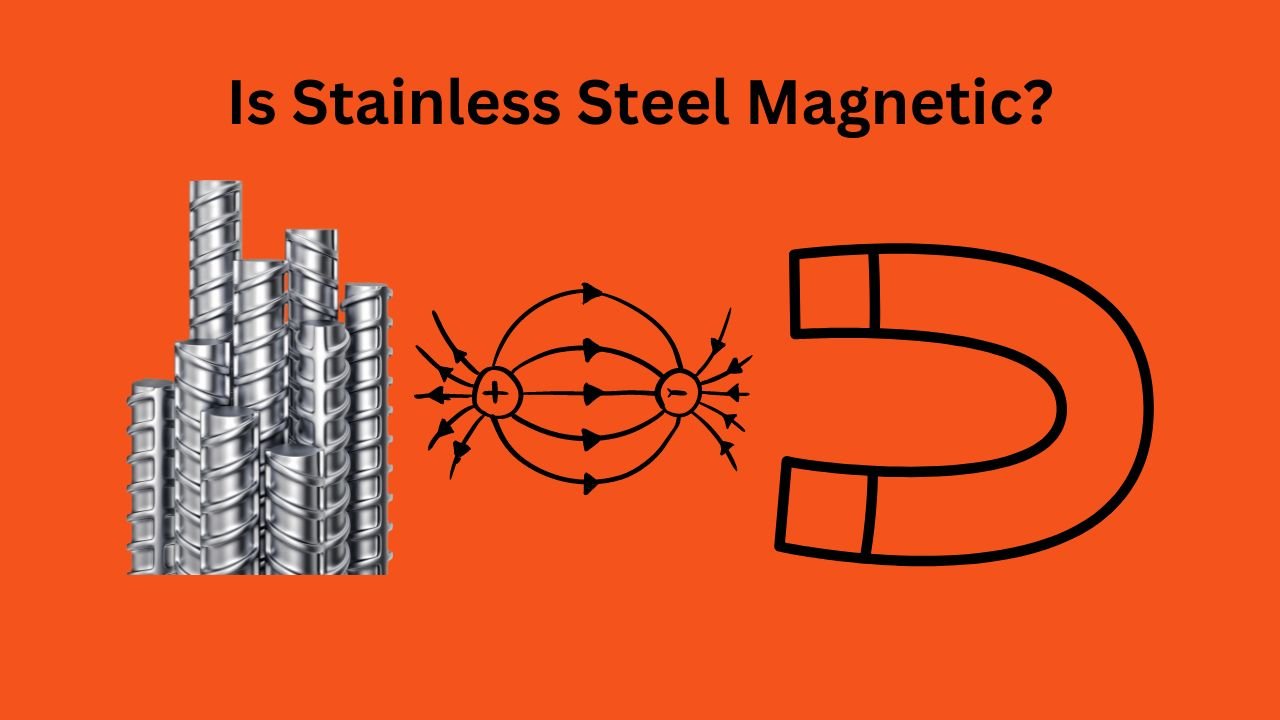
Corrosion resistance is what adds value to stainless steel. You can find its usage in industrial machinery as well as kitchenware, to name a few. Many perceive stainless steel as a non-magnetic material. But this is not true for every type of stainless steel. It depends on the number of properties and the chemical composition of the specific type. It is crucial to have a better understanding of the magnetism of various types to make the right selection for the targeted application. The purpose of this blog is to offer a comprehensive answer to “Is stainless steel magnetic?” Get insights into the magnetic characteristics for every stainless steel type. Know every unknown about whether stainless steel is magnetic or not. Let’s get started!
Revealing Facts on Stainless Steel
Stainless steel refers to a durable and versatile alloy. It contains chromium and iron as the main constituent elements. Other elements that also go into its composition include manganese, nickel, and carbon. The presence of chromium as an element in the composition of the stainless steel is what adds to corrosion resistance. It reacts with the atmospheric oxygen and forms a thin film of chromium oxide, hence preventing further material degradation.
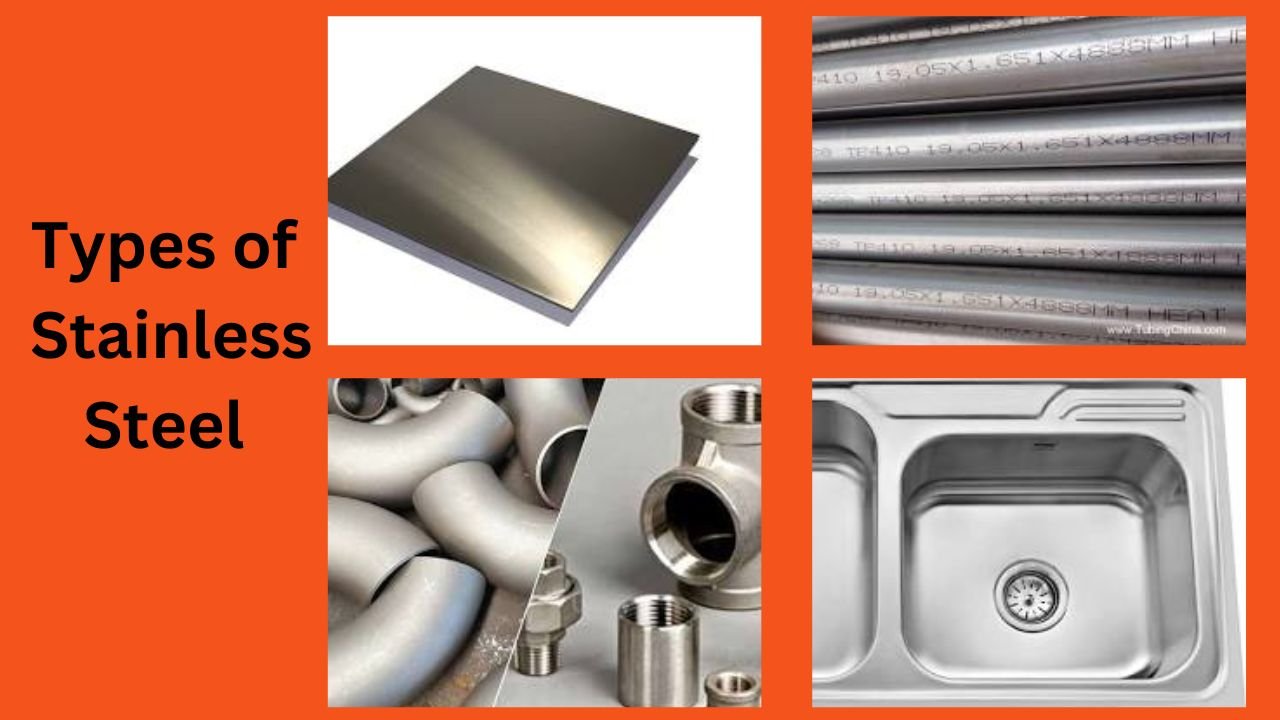
Different Types of Stainless Steel
Austenitic Stainless Steel
The austenitic stainless steel features a crystal structure of face-centred cube. This type is referred to as a non-magnetic type. The main reason behind this is the structural opposition to contributing to magnetic alignment. It also features excellent resistance to corrosion.
The following table shows the different grades falls under this type and their chemical composition:
Sr. No. | Grade | Chromium (Cr) | Nickel (Ni) | Carbon (C) | Manganese (Mn) | Silicon (Si) | Phosphorus (P) | Sulfur (S) |
1 | 304 | 18-20% | 8-12% | 0.08% max | 2.00% max | 1.00% max | 0.045% max | 0.03% max |
2 | 316 | 16-18% | 10-14% | 0.08% max | 2.00% max | 1.00% max | 0.045% max | 0.03% max |
3 | 316L | 16-18% | 10-14% | 0.03% max | 2.00% max | 1.00% max | 0.045% max | 0.03% max |
4 | 309 | 23-26% | 11-14% | 0.20% max | 2.00% max | 1.00% max | 0.045% max | 0.03% max |
5 | 310 | 25-26% | 20-22% | 0.20% max | 2.00% max | 1.00% max | 0.045% max | 0.03% max |
The key applications of the above grades are common in kitchen appliances, processing equipment, and in marine environments.
One thing affect the magnetism of austenitic stainless steel is cold working. When you subject this type to cold working, including the machine or bending processes. You can experience slight magnetism. This is mainly because of a shift in structure from austenitic to martensitic.
Ferritic Stainless Steel
When exploring the question is stainless steel magnetic, ferritic stainless steel stands out because it features a crystal structure that has a body-centred cubic shape. This is the reason why ferritic stainless steel shows stronger magnetic properties. The structure contributes to the magnetic alignment of domains.
You can witness the grades that come under this type and their composition in the table below:
Sr. No. | Grade | Chromium (%) | Carbon (%) | Other Elements |
1 | 409 | 10.5-13 | 0.12 max | Si, Mn, P, S |
2 | 430 | 14-18 | 0.12 max | Si, Mn, P, S |
3 | 430F | 14-18 | 0.12 max | Si, Mn, P, S, Ti, Al |
4 | 436 | 16-18 | 0.12 max | Si, Mn, P, S, Ti, Al |
5 | 442 | 17-20 | 0.12 max | Si, Mn, P, S |
6 | 446 | 23-27 | 0.12 max | Si, Mn, P, S |
7 | 448 | 23-27 | 0.12 max | Si, Mn, P, S, Cu |
You can use this stainless steel type in kitchen accessories, auto parts, and in industrial machinery. Apart because of the ability to keep the magnetic characteristics at higher temperatures. You can use it in heat-exchanging equipment as well as exhaust manufacturing. It is cheaper than its counterparts and resist the fracture.
Martensitic Stainless Steel
The question is stainless steel magnetic can be answered by examining different grades, including martensitic stainless steel. It features a crystal structure having a body-centered tetragonal structure and is popular for its high hardness and strength. The information on the grades of steel that come under this category is:
Sr. No. | Grade | Carbon (%) | Chromium (%) | Manganese (%) | Phosphorus (%) | Sulfur (%) | Silicon (%) | Nickel (%) |
1 | AISI 410 | 0.10-0.15 | 12-14 | 1 | 0.04 | 0.03 | 1 | 0.2 |
2 | AISI 420 | 0.20-0.35 | 13-15 | 1 | 0.04 | 0.03 | 1 | 0.2 |
3 | AISI 440A | 0.60-0.75 | 16-18 | 1 | 0.04 | 0.03 | 1 | 0.2 |
4 | AISI 440B | 0.75-1.00 | 16-18 | 1 | 0.04 | 0.03 | 1 | 0.2 |
5 | AISI 440C | 1.00-1.50 | 16-18 | 1 | 0.04 | 0.03 | 1 | 0.2 |
6 | AISI 431 | 0.08-0.12 | 16-18 | 1 | 0.04 | 0.03 | 1 | 0.2 |
7 | AISI 440F | 0.95-1.20 | 16-18 | 1 | 0.04 | 0.03 | 1 | 0.2 |
You can use this stainless steel in industry tools manufacturing, surgical components, and cutlery accessories. The corrosion assistance feature of this type is less than what you get in austenitic. An option exists to increase the hardness of this steel by further treatment through heat.
Duplex Stainless Steel
The duplex stainless steel contains half a structure similar to ferrite and half that is similar to austenite. You can experience the properties of both in the type. The key features include super strength and good corrosion resistance.
Duplex stainless steel grades are as follows:
Sr. No. | Grade | Chromium | Nickel | Molybdenum | Nitrogen | Carbon |
1 | 2205 (S32205) | 21-23% | 3-5% | 2.5-3.5% | 0.15-0.30% | 0.03% max |
2 | 2507 (S32750) | 24-26% | 3.5-4.5% | 3.5-4.5% | 0.25-0.30% | 0.03% max |
3 | Z100 (S32760) | 25-27% | 3.5-4.5% | 3.5-4.5% | 0.25-0.30% | 0.03% max |
4 | UR52N+ | 22% | 5% | 3% | 0.15% | 0.03% max |
5 | L605 | 21-23% | 3-5% | 2.5-3.5% | 0.15-0.30% | 0.03% max |
6 | SAF 2507 | 24-26% | 3.5-4.5% | 3.5-4.5% | 0.25-0.30% | 0.03% max |
7 | UNS S32307 | 21-23% | 3-5% | 2.5-3.5% | 0.15-0.30% | 0.03% max |
The key areas where you can use this steel include the gas sector, oil sector, marine sector, and the chemical sector. You can make accessories and equipment featuring corrosion resistance, high strength and moderate magnetism.
Precipitation Hardening Stainless Steel
The precipitation hardening stainless steel offers higher strength and hardness. The structure of this type of stainless steel is in the form of precipitates or small particles.
You can witness these grades in this category of stainless steel type:
Sr. No. | Grade | Chromium (Cr) | Nickel (Ni) | Manganese (Mn) | Silicon (Si) | Carbon (C) |
1 | 17-4 PH | 17 | 4 | 1 | 0.75 | 0.03 |
2 | 15-7 PH | 15 | 7 | 1 | 0.75 | 0.03 |
3 | AM-350 | 15 | 7 | 1 | 0.75 | 0.03 |
4 | PH 13-8 Mo | 13 | 8 | 1 | 0.75 | 0.03 |
5 | 17-7 PH | 17 | 7 | 1 | 0.75 | 0.03 |
6 | FV520 | 14 | 5 | 1 | 0.75 | 0.03 |
7 | PH 358 | 15 | 8 | 1 | 0.75 | 0.03 |
8 | PH 302 | 17 | 2 | 1 | 0.75 | 0.03 |
The magnetic properties of this steel vary with age. When annealing, they have lower characteristics, but after some time, the magnetic properties get maximum.
You can use this steel type in nuclear applications, heavy-duty industry, aerospace, etc.
Is Stainless Steel Magnetic or Not
The answer to this query is both yes and no. You can witness what type of stainless steel is magnetic in the table below:
| Sr, No. | Type of Stainless Steel | Magnetic Properties | Magnetic Strength |
| 1 | Austenitic (e.g., 304, 316) | Generally non-magnetic | Weakly magnetic (if cold-worked or heat-treated) |
| 2 | Ferritic (e.g., 430) | Strongly magnetic | Moderate |
| 3 | Martensitic (e.g., 410, 420, 440) | Strongly magnetic | High |
| 4 | Duplex (e.g., 2205) | Moderately magnetic | Varies depending on the ratio of ferrite and austenite |
Different Factors Impacting the Magnetic Properties of the Stainless Steel
While answering the question “Is stainless steel magnetic?” we learned that not all stainless steel grades behave the same way. Various factors greatly influence their magnetic properties. Some of these factors are:
Composition Elements
Different composition elements induce different properties, such as:
- Chromium: Responsible for magnetism in martensitic and ferritic grades
- Nickel: It can reduce the overall magnetic effect in the specific stainless steel type
- Manganese: Induction of more manganese to replace the nickel can impact the magnetic behaviour of the specific type.
If you need higher magnetic properties, you need to balance these elements carefully.
Mechanical Deformation
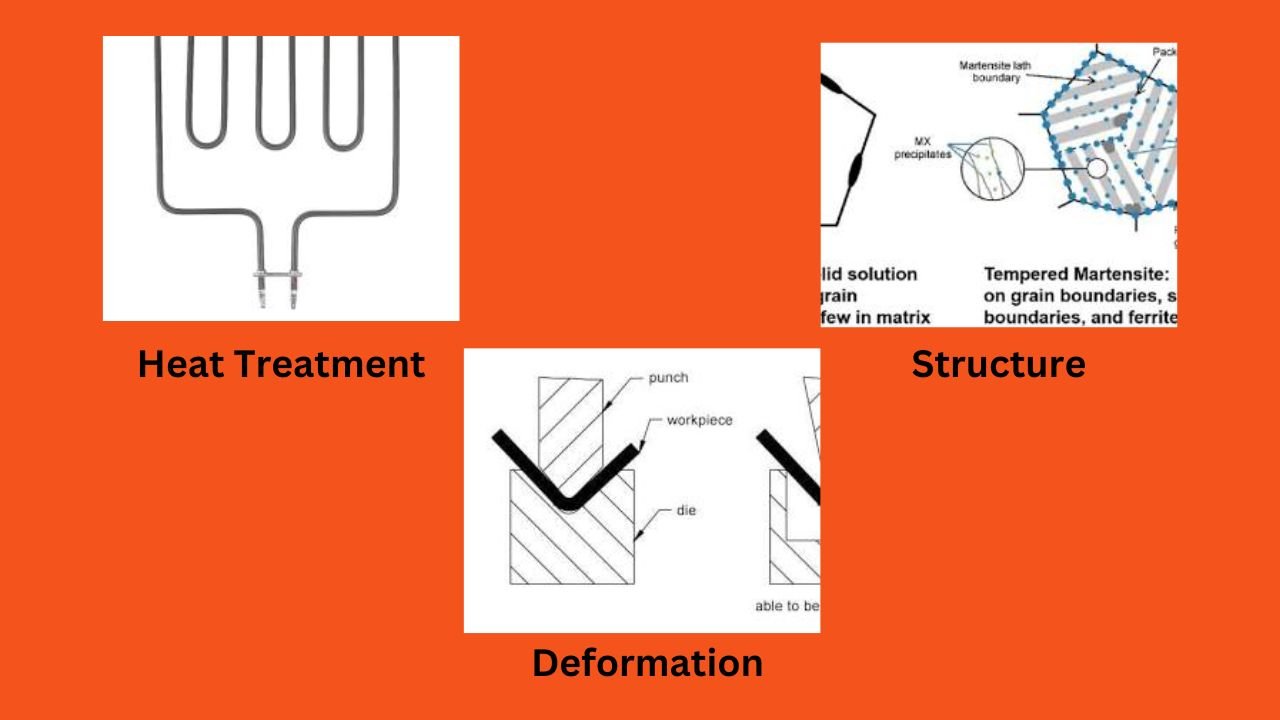
Another name for this term is also cold working. When discussing is stainless steel magnetic, it is important to understand that if the stainless steel is non-magnetic, then you can induce some magnetism or alter the magnetic properties through this process. In mechanical deformation or cold working, you can bend or apply force to change the stainless steel type structure. The shift in structure, for instance, from austenitic or martensite results in magnetic features.
Heat Treatment
Processes like quenching and annealing can greatly influence the magnetic properties. For example:
- You can use annealing to develop or retain the austenitic structure. This eventually leads you to experience zero magnetism
- Quenching refers to the rapid cooling. This structure leads you to have a martensitic structure. You can add up greater magnetism this way
Getting insights into the heat treatment impact on magnetic characteristics helps you choose the right material type.
Defects and Impurities
The existence of defects and impurities can alter the level of magnetism within the specific material. When the phosphorus and sulfur content are present within the material in small amounts. They can impact the overall crystal structure of the element. Indirectly, this affects the magnetic properties.
Apart from this, the boundaries of grains or structure dislocation can lead you to experience the magnetic localised regions developments. This promotes the magnetism even in non-magnetic materials.
Conclusion
So, now you know the answer to “is stainless steel magnetic or nonmagnetic” or “which stainless steel is magnetic”. The answer also depends on the stainless steel or its type, structure, composition elements, and the processes of treatment through which it passes. Before selecting the right stainless steel type, assess the magnetism. This will help you avoid the wrong type for the intended application. Whether you want magnetic steel or non-magnetic steel, every type exists for selection.
Frequently Asked Questions
Is Stainless Steel Jewellery Magnetic?
The stainless steel jewellery does not feature magnetism. This is because the jewellery makes use of austenitic steel, which does not possess magnetic characteristics.
Is 416 Stainless Steel Magnetic?
Yes, the 416 series lies in the martensitic category, which is obviously a magnet grade. The key attribute of this steel is high hardness.
Is 301 Stainless Steel Magnetic?
301 stainless steel features a slight to moderate level of magnetism. You can increase the magnetism by employing cold working. As this type comes from the austenitic class, it is basically non-magnetic.
Is 17-4 Stainless Steel Magnetic?
Yes, the 17-4 stainless steel belongs to the martensitic class and precipitation hardening category and is magnetic.
Is 303 Stainless Steel Magnetic?
No, it is not magnetic. It belongs to the austenitic class of stainless steel types. You can make it magnetic through heat treatment or cold working.
Is 18-8 Stainless Steel Magnetic?
The 18-8 stainless steel comes from the austenitic class. It is basically non-magnetic in nature.
Is 316L Stainless Steel Magnetic?
The 316L stainless steel is non-magnetic. In the term “L” represents the lower carbon content.
Is Food Grade Stainless Steel Magnetic?
In the food industry, the non-magnetic stainless steel is popular. It keeps food ingredients safe and resists corrosion effectively.
Is 302 Stainless Steel Magnetic?
No, it has no relation to austenitic class and features negligible magnetism.
Is Martensitic Stainless Steel Magnetic?
When discussing is stainless steel magnetic, martensitic stainless steel is a clear example of a magnetic grade. Its structure promotes magnetism through the alignment of magnetic domains.
Is 400 Series Stainless Steel Magnetic?
Yes, it involves the structures of martensitic and ferritic, which is the reason it behaves as a magnetic material.
Is 316 Stainless Steel Magnetic?
No, but you can make it magnetic by subjecting it to cold working or mechanical deformation.
Is 300 Series Stainless Steel Magnetic?
No, the face-centred cubic structure makes this material non-magnetic.
Is Surgical Stainless Steel Magnetic?
No, because it belongs to the austenitic class and has a structure that opposes the magnetic alignment to the external field. Non-magnetic steel in surgical equipment is beneficial and provides added safety.
Read More Relevant Articles:
Is Steel Magnetic – Know the Every Unknown
Is Cast Iron Magnetic? – Types, Applications, Properties
Is Magnesium Magnetic? – Facts / Properties / Applications
Is Titanium Magnetic? – Properties/Applications/Analysis
is lead magnetic? Unveiling Properties, Implications, and Applications