Stainless Steel Stamping – The Complete Beginner’s Guide in 2026
Precision manufacturing requires accuracy, durability and repeatability over thousands of production cycles. However, many manufacturers are wasting valuable time and money due to material variability, tooling issues and expensive manufacturing mistakes. Stainless steel stamping addresses this by efficiently transforming flat steel sheets into highly complex, high tolerance parts. It provides the corrosion resistance, strength and dimensional accuracy essential for the aerospace, medical and automotive industries. This guide includes information on material grades, processes, tooling, quality standards and real world applications. Let’s get started!
What Is Stainless Steel?
Stainless steel is an alloy that contains more than 10% chromium and is corrosion resistant because it produces a thin, self-healing film of chromium oxide when it comes into contact with oxygen. This passive layer is able to repair itself if it is scratched, unlike plain carbon steel, which rusts if it is not protected. Nickel increases ductility, molybdenum protects against pitting, and carbon is used for hardness control but has a negative effect at higher levels on corrosion resistance. These properties of the steel are competing, and thus make stainless steel highly valuable but also a true challenge to stamp.
Types of Stainless Steel Used in Stamping
Austenitic Stainless Steel
Austenitic grades are low carbon, and are the most formable stainless type. They are not magnetic and can not be hardened by heat treatment. The hardening mechanism is instead by cold working. Kitchen sinks, medical shells and food equipment are primarily made from grades 304, 316 and their low-carbon versions.
Ferritic Stainless Steel
Ferritic stainless is magnetic, contains no nickel and has moderate formability. Drawing ability is directly related to the carbon and alloy content in stamping. The standard options here are grades 409, 430 and 439. These grades are used extensively in automotive exhaust systems, dishwashers, dryers and decorative panels.
Martensitic Stainless Steel
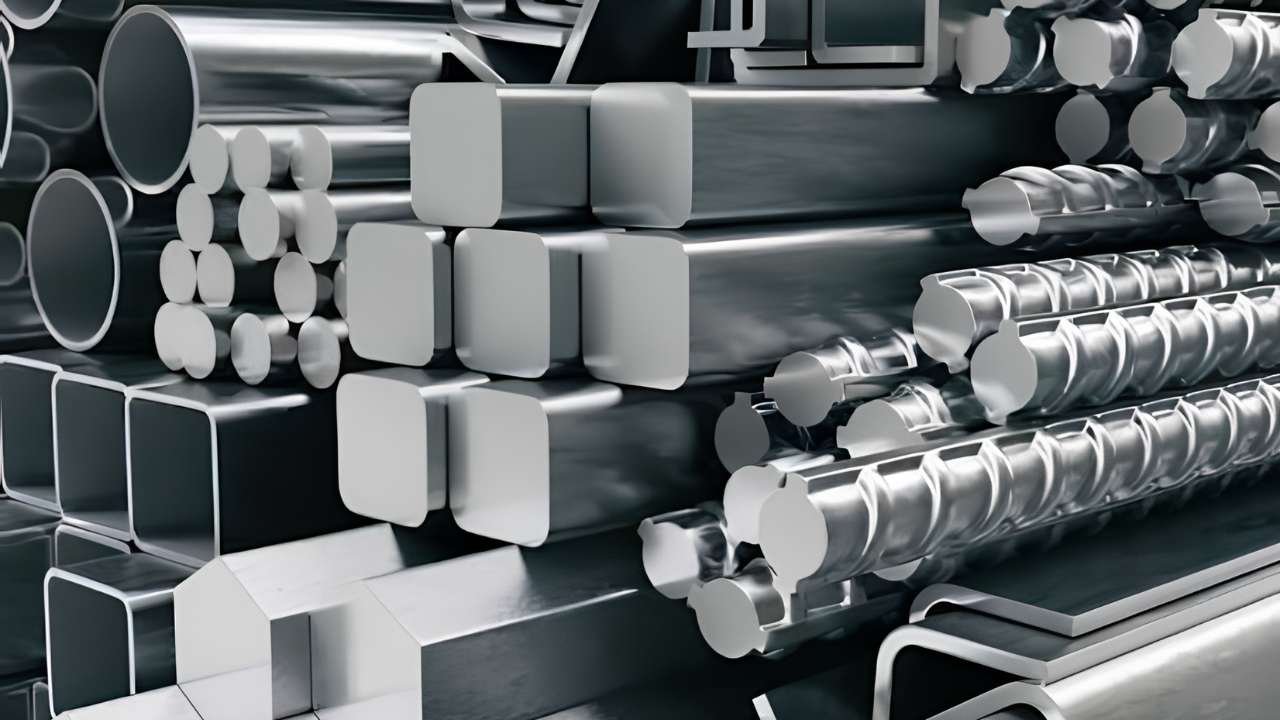
Martensitic grades are strong but have a high carbon content and are very brittle. This family is not adapted to deep drawing or stretching. The most popular grade is 420. It is used mainly for stamping razor blades, surgical instruments, pocket knives and ball bearings.
Stainless Steel Grades for Stamping — Properties and Applications
Grade | Type | Yield Strength (MPa) | Tensile Strength (MPa) | Elongation (%) | Formability | Magnetic | Key Applications |
304 | Austenitic | 205 | 515 | 40 | Excellent | No | Kitchenware, appliance shells, sinks |
304L | Austenitic | 170 | 485 | 40 | Excellent | No | Food processing, medical housings |
316 | Austenitic | 220 | 520 | 40 | Excellent | No | Marine, chemical, medical devices |
316L | Austenitic | 170 | 485 | 40 | Excellent | No | Pharmaceutical, surgical implants |
409 | Ferritic | 205 | 380 | 20 | Good | Yes | Automotive exhaust, mufflers |
430 | Ferritic | 310 | 460 | 25 | Good | Yes | Decorative trim, hardware, appliances |
439 | Ferritic | 205 | 415 | 22 | Good | Yes | Dishwashers, dryers, heat exchangers |
410 | Martensitic | 450 | 750 | 12 | Limited | Yes | Cutlery, tools, shafts |
420 | Martensitic | 700 | 950 | 8 | Poor | Yes | Surgical tools, razor blades, knives |
201 | Austenitic | 275 | 520 | 40 | Good | No | Low-cost hardware, cookware |
Temper Conditions and Their Impact on Stampability
Temper directly governs how much deformation a die can safely impose on sheet metal.
The five temper designations:
- Deep drawing operations are best carried out with dead soft material which is fully annealed and is most formable.
- Quarter hard temper provides some increase in strength and retains some formability without incurring the risk of cracking during moderate forming.
- Half hard stock makes the stock tougher, decreasing the drawing capability but enhancing structural integrity.
- Three-quarter hard material is near full hardness and can only be used for simple shallow forming operations.
- Full hard temper is almost brittle, and is used only for blanking and punching.
The right temper for the intended stamping operation must be matched before even designing the die. To not do this risks expensive redesigns and will yield inconsistent and faulty parts when produced in large numbers. In addition to the initial temper selection, the material is also work hardened during stamping, which becomes more pronounced with the progression of the stamping process. This means that the temper of the metal actually changes during the process, with each additional forming operation increasing resistance and decreasing the remaining ductility.
The Stainless Steel Stamping Process — Step by Step
Material preparation and blanking
The first step in the process is to size the sheets by mechanical shears or precision laser cutting. The quality of the edges at this stage will directly determine the quality of all subsequent forming processes. Use coil stock for large quantity orders and sheet stock for more flexible, lower volume needs.
Punching and Piercing
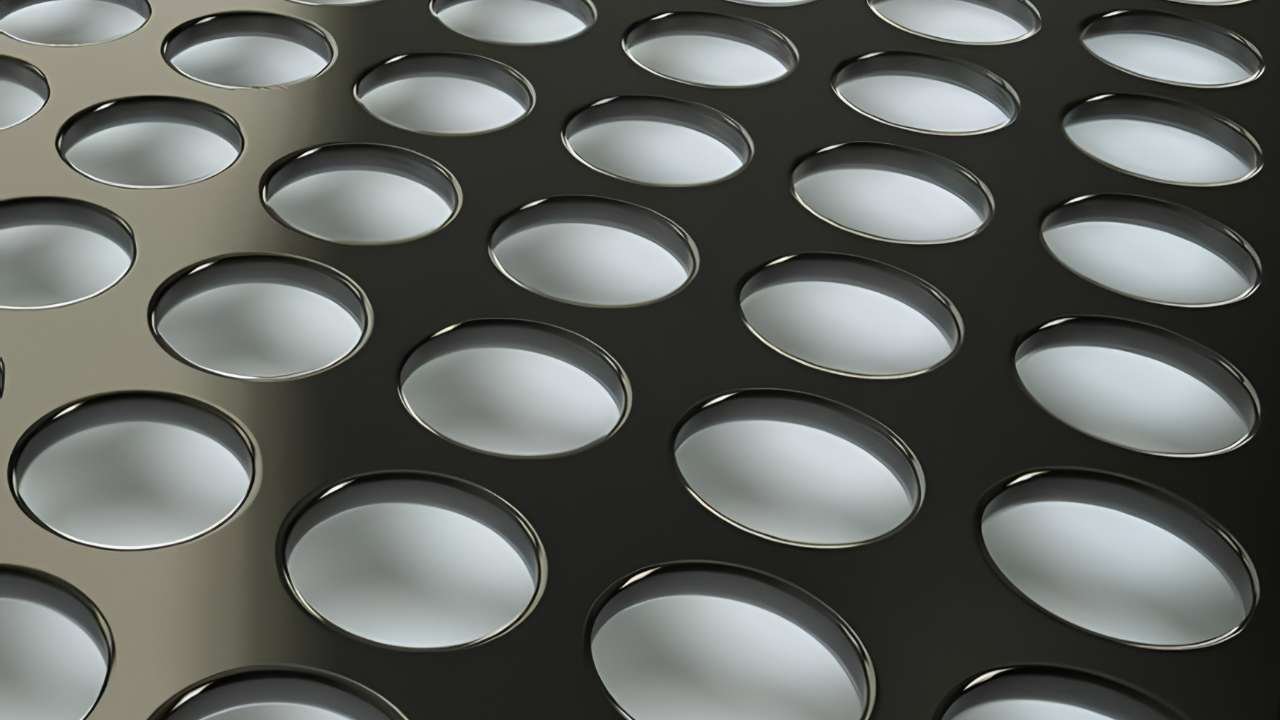
After material preparation, proceed to punching for holes, slots and cutouts. Carefully set die clearances as stainless steel requires tighter tolerances than mild steel. Ensure that clearances are kept to tight tolerances, avoiding burrs and part damage.
Bending and Forming
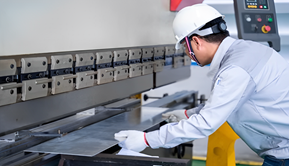
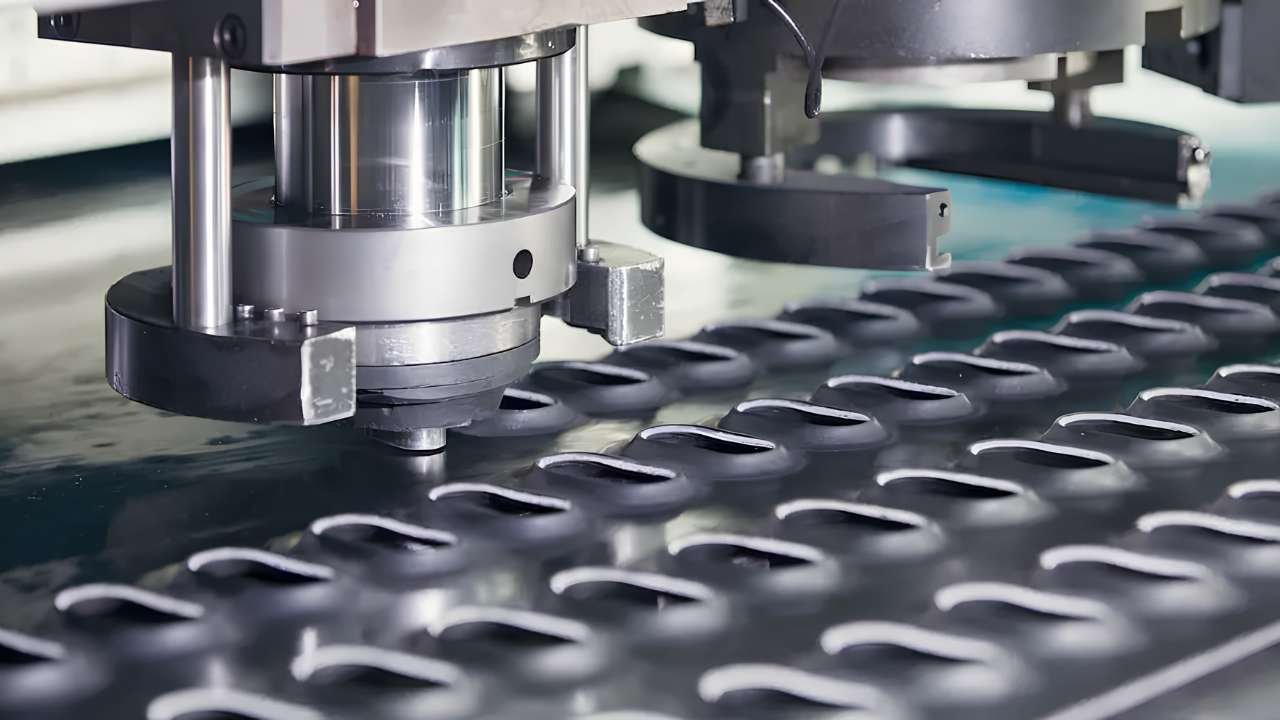
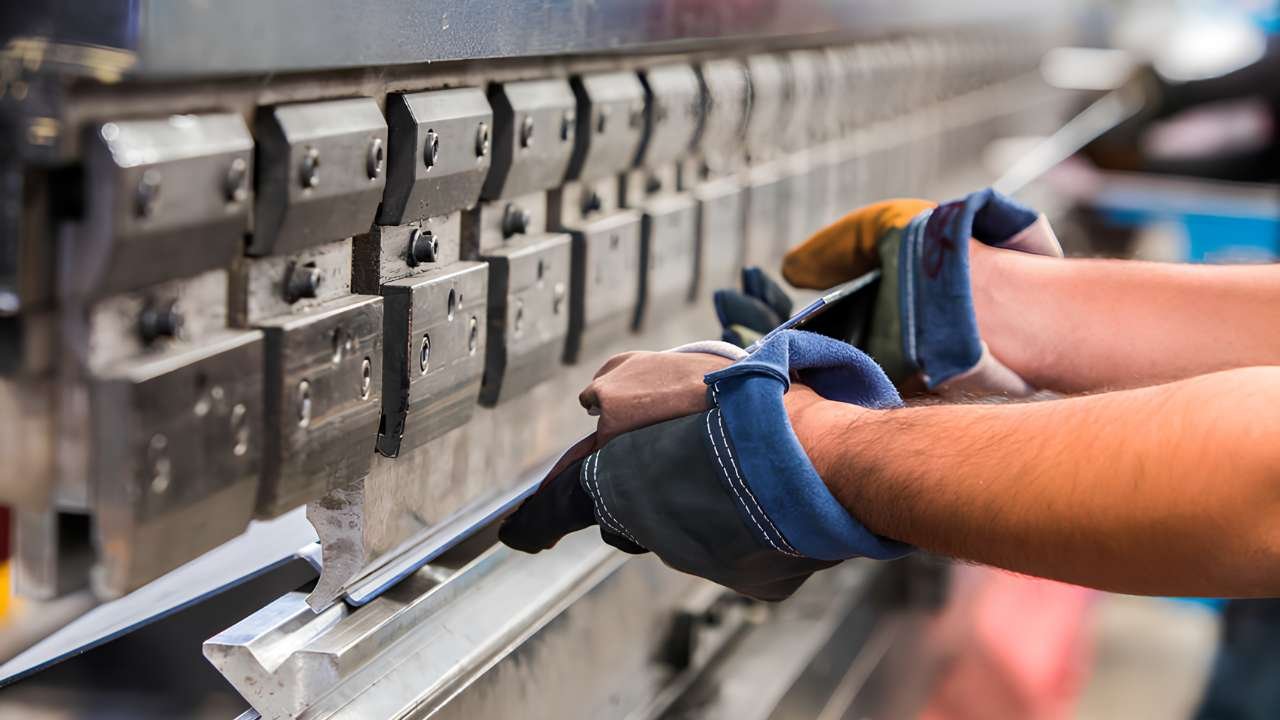
Once holes are punched, it’s time to bend, with press brakes and forming dies. Stainless steel has a higher yield strength than carbon steel, which means there will be more springback. Overbend or bottom out to compensate to get your desired geometry.
Deep Drawing
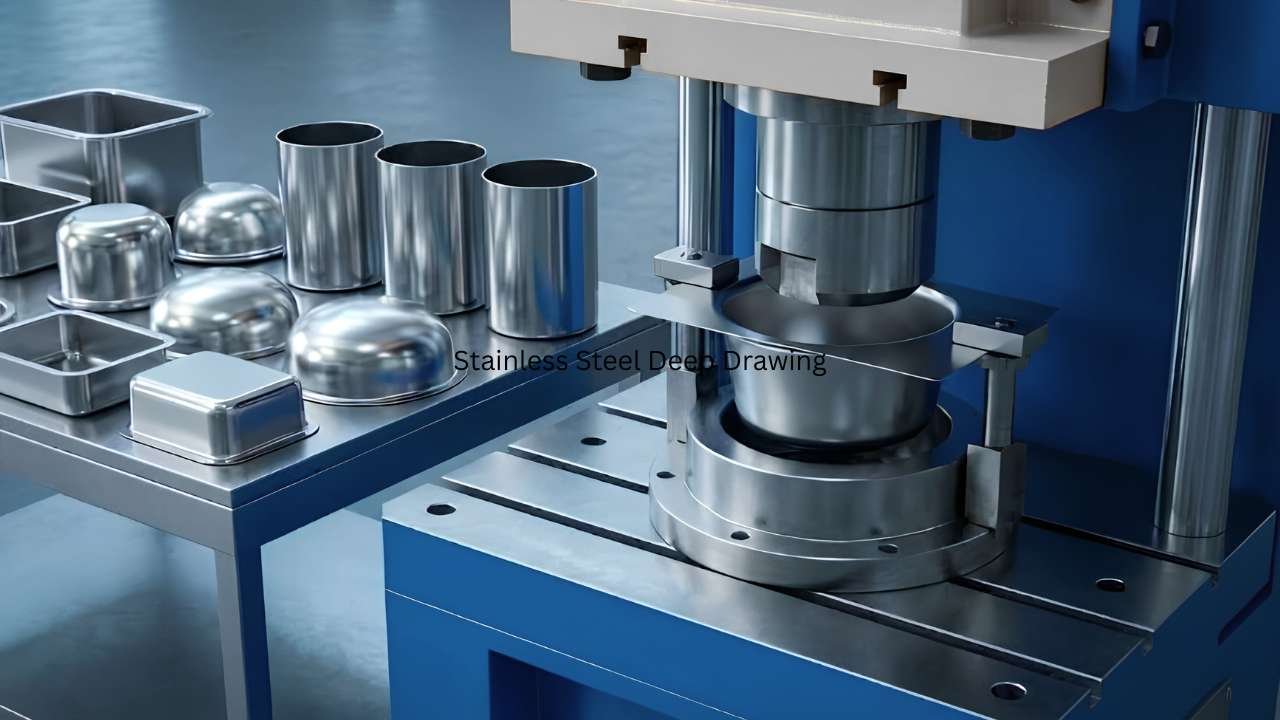
For complex recessed or cupped parts, step up to deep drawing. Austenitic grades here, because they have a higher ductility, they can withstand drawing stress without failure. At this stage, avoid martensitic grades as they crack under drawing pressure and cause the part to be ruined.
Coining, Embossing and Secondary Operations
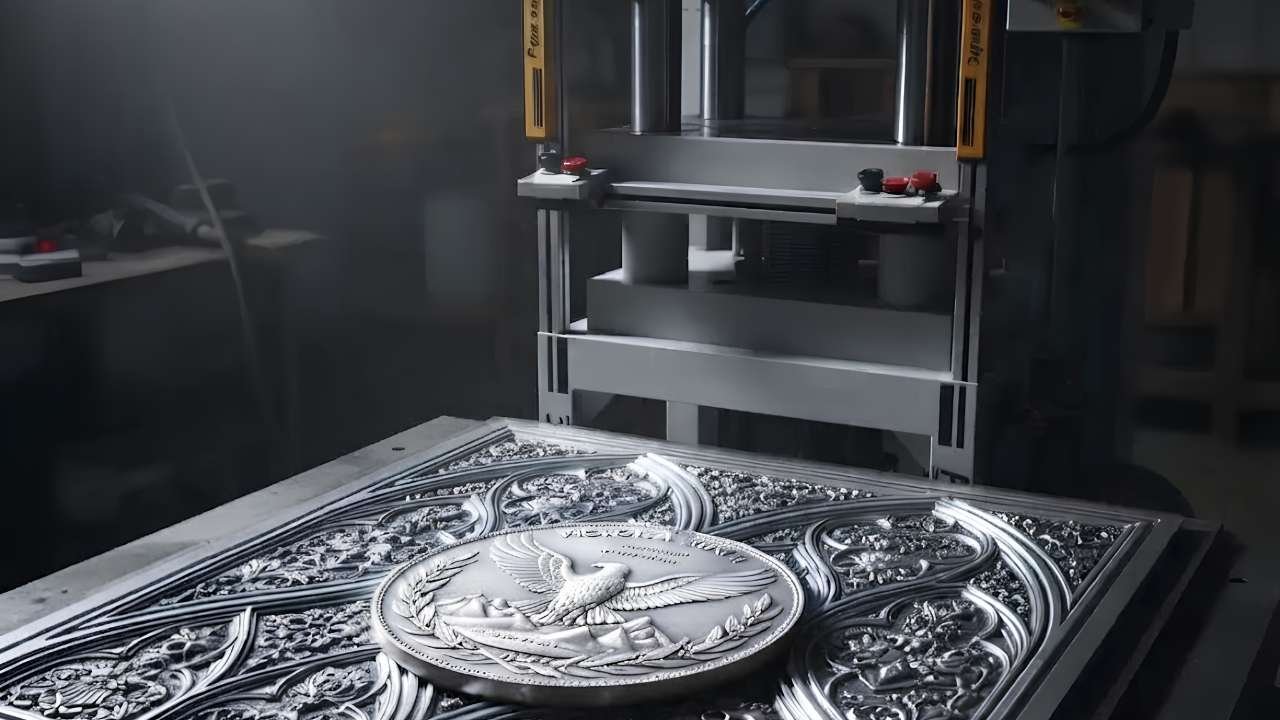
Once primary forming, apply coining when tight dimensional tolerances are a must. Embossing can be used to add logos, stiffening ribs or surface patterns, if needed. Flanging, curling and staking complete this stage and provide fully assembly ready components.
Annealing Between Stages
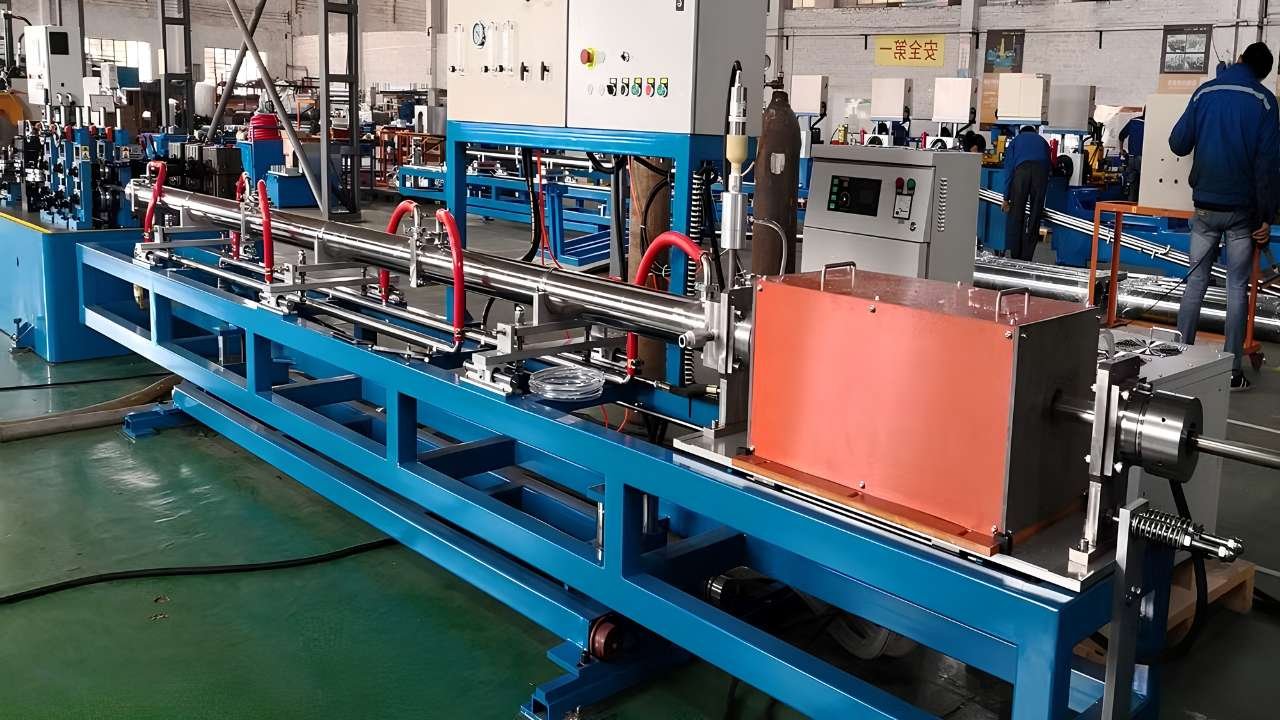
If material has been work hardened at previous stages, STOP and ANNEAL and proceed. Heat to 800-850°C for about 30 minutes. At this stage, always use controlled atmosphere furnaces, otherwise surface oxidation and contamination will reduce the integrity of materials.
Hot and Cold stamping
Carefully consider the geometry, thickness and volumes in production before deciding on a stamping method. Use cold stamping for thin, simple parts that require speed and room temperature processing. Consider hot stamping when the geometry and/or depth of the process is beyond the ability of cold stamping.
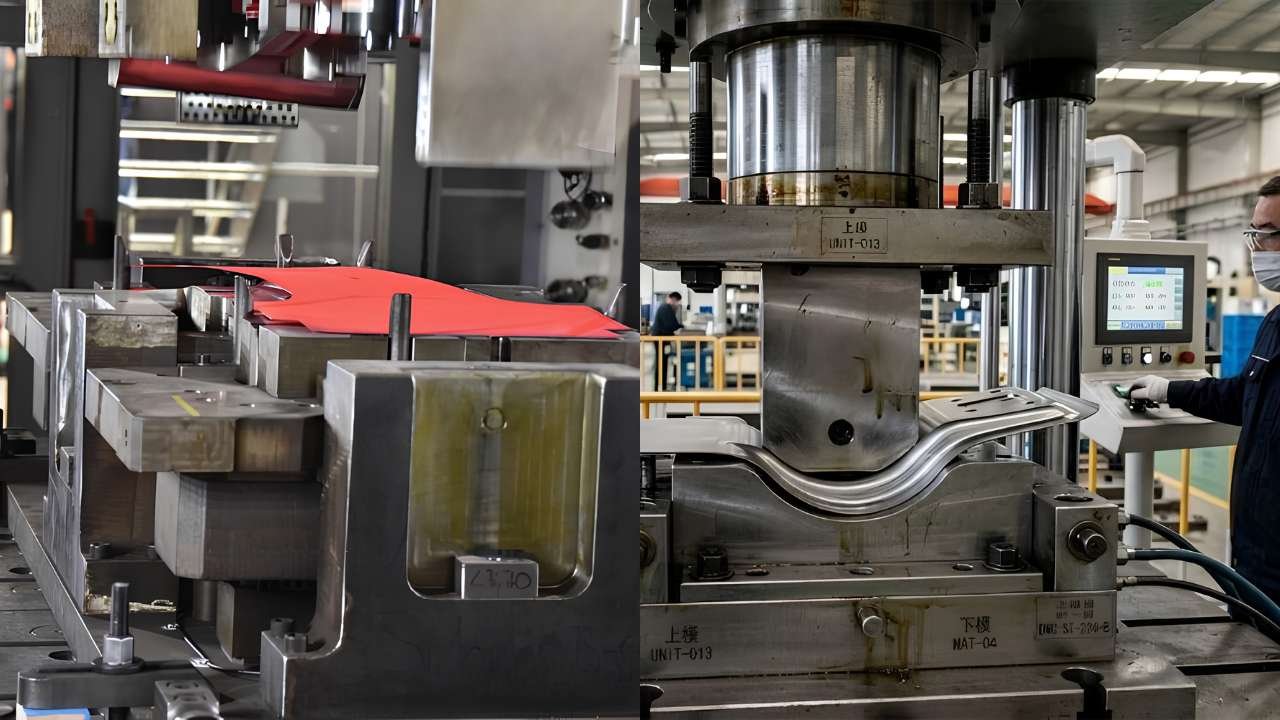
Equipment Selection
Press Type | Operating Principle | Suitable Stainless Operations | Typical Force Range | Speed | Best For | Limitations |
Mechanical Press | Flywheel-driven crankshaft | High-speed blanking, punching, shallow forming | 25–400 T | High (>200 SPM) | High-volume thin-gauge production | Fixed stroke length |
Hydraulic Press | Fluid pressure | Deep drawing, large parts, thick stock | 100–1,000 T | Slower | Complex shapes, large format | Lower throughput |
Servo Press | Servo motor-driven | High-precision forming, energy-sensitive operations | 30–300 T | Variable | Complex profiles, springback control | Higher capital cost |
Progressive Die Press | Mechanical/servo | Multi-operation sequential stamping | 50–500 T | High | High-volume, multi-feature parts | Complex die setup |
Transfer Press | Mechanical/hydraulic | Large, complex parts moved between stations | 100–800 T | Medium | Automotive, structural parts | High tooling cost |
Four-Slide / Multi-Slide | Cam-driven | Wire forms, small clips, terminals | Up to 30 T | Very High | Small precision parts | Limited part size |
Tooling Design and Materials
Die Materials
When it comes to stamping stainless steel, don’t neglect to consider the die material. Normal Cr12MoV will wear out very quickly facing the abrasive surface. For punches and dies use SKD11 or DC53 at HRC 60-62. Hard chrome steel with a HRC of 58-60 minimum is required for guide components.
Die Clearance
Die material is right, then clearance is the next critical variable. For stainless use 1.05–1.1× material thickness. Reduce to 1.02× on sheets less than 1mm. Clearance too tight leads to excessive wear and clearance too loose leads to burrs and rollover.
Die Radius Design
Thicker or dual-phase stainless grades are able to be processed without cracking, due to generous radii. No undersizing of the punch nose radius, stress concentration leads to fracture. During deep drawing, the corner radii of punch and die directly influence wall thinning and integrity of the drawn part.
Progressive vs. Single-Station Dies
Depending on your production volume, the die configuration you choose may make sense. For coils that have several features and are produced in large quantities, a progressive die is a suitable choice. Single-station is a good choice for prototyping and small production runs. Transfer tooling is the best choice for large, complex stampings that require several operations.
Tool Maintenance
No matter how good the tooling, if you don’t maintain it, it won’t work. Stainless will wear much quicker than carbon steel. Reduce re-sharpening time to ensure dimensional accuracy. Extend tool life with TiN or TiAlN coatings and add force monitoring for early detection of tool wear.
Lubrication in Stainless Steel Stamping
Stainless steel is harder to stamp than other metals because galling, work hardening and heat buildup are extremely aggressive to the tools used. Choose lubricants carefully: sulfurized for heavy forming, synthetic water-based for medical or food applications, dry film for precision blanking, and wax based paste for deep drawing. Use uniformly by flooding, roller coating or spray systems. Never leave residue of any lubricant on the surface, since the residue will always adversely affect the corrosion resistance, even after passivation or surface treatment. Consider environmental and regulatory needs before making a lubricant selection.
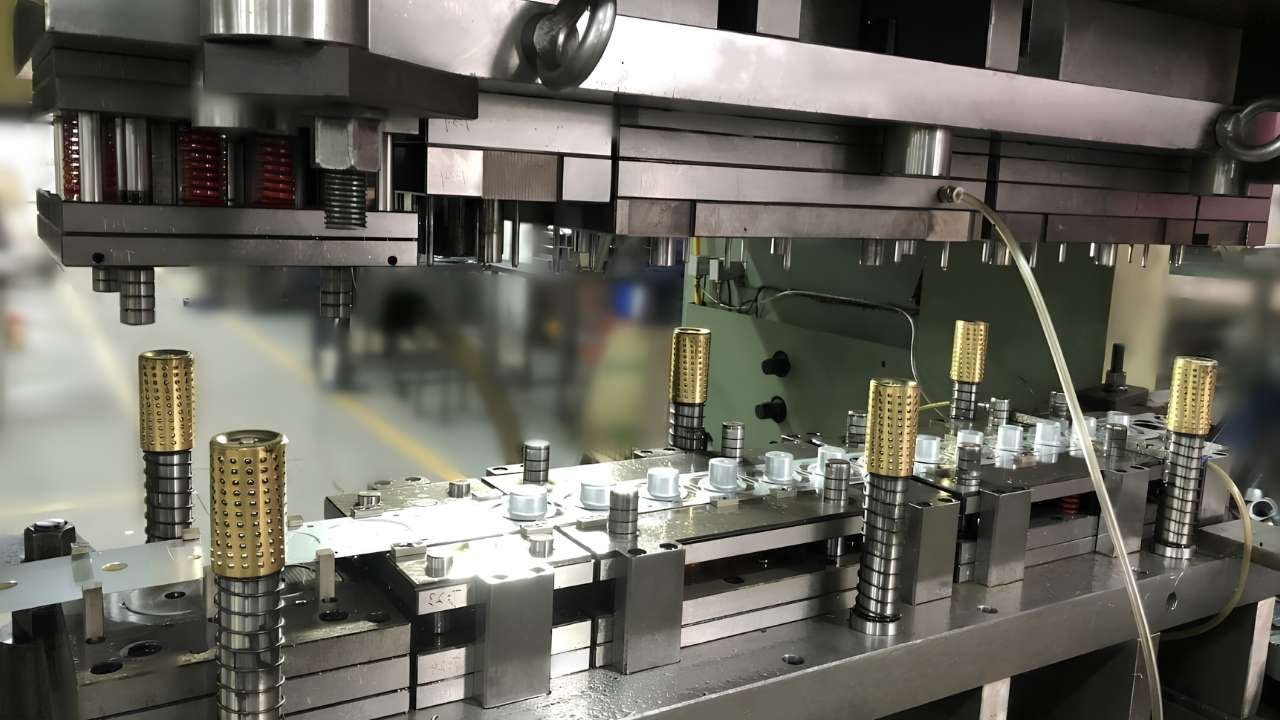
Key Process Parameters and Control
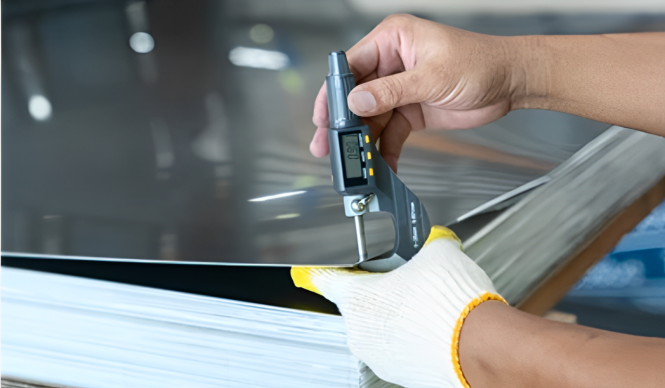
Use 2/3 of the carbon steel press speed, but do not exceed 15 SPM for thin sheets. Adjust blank holder force to prevent wrinkles and avoid tearing. Always keep an eye on the die temperature; heat build-up causes excessive wear and tolerance changes. The press force must be adjusted precisely: for 0.5 mm 304 SS, the force is 80–120kN; for 1.5 mm dual-phase steel, it is up to 250kN. Overbending, die geometry, and bottoming are methods of making up for springback. Install force sensors, acoustic emission sensors and vision systems for real time defect detection and use SPC to ensure dimensional consistency for long production runs.
Surface Finishing Options
Mechanical Finishing
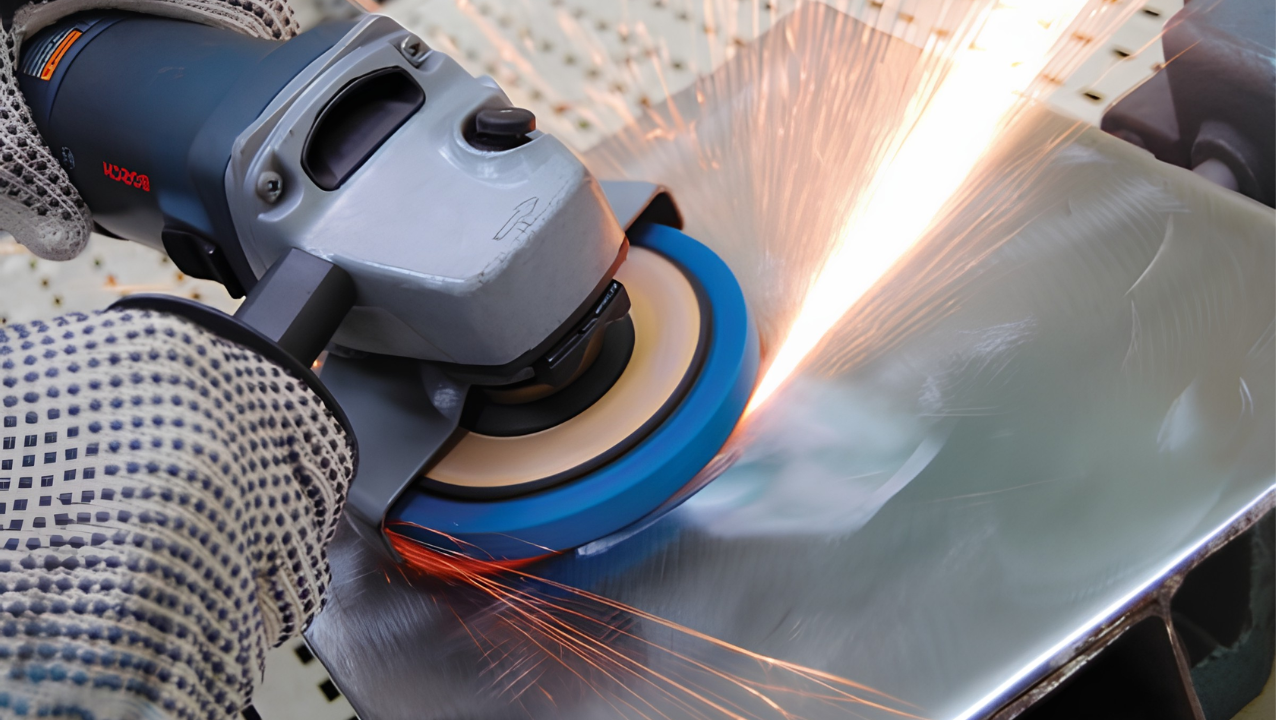
Smooth out sharp edges after stamping — always use vibratory deburring. Sand blasting provides even matte finishes and removes surface stresses. Brushing produces grain finishes in specific directions for food and medical equipment. Mirror polishing is used to get a high lustre finish for decorative uses.
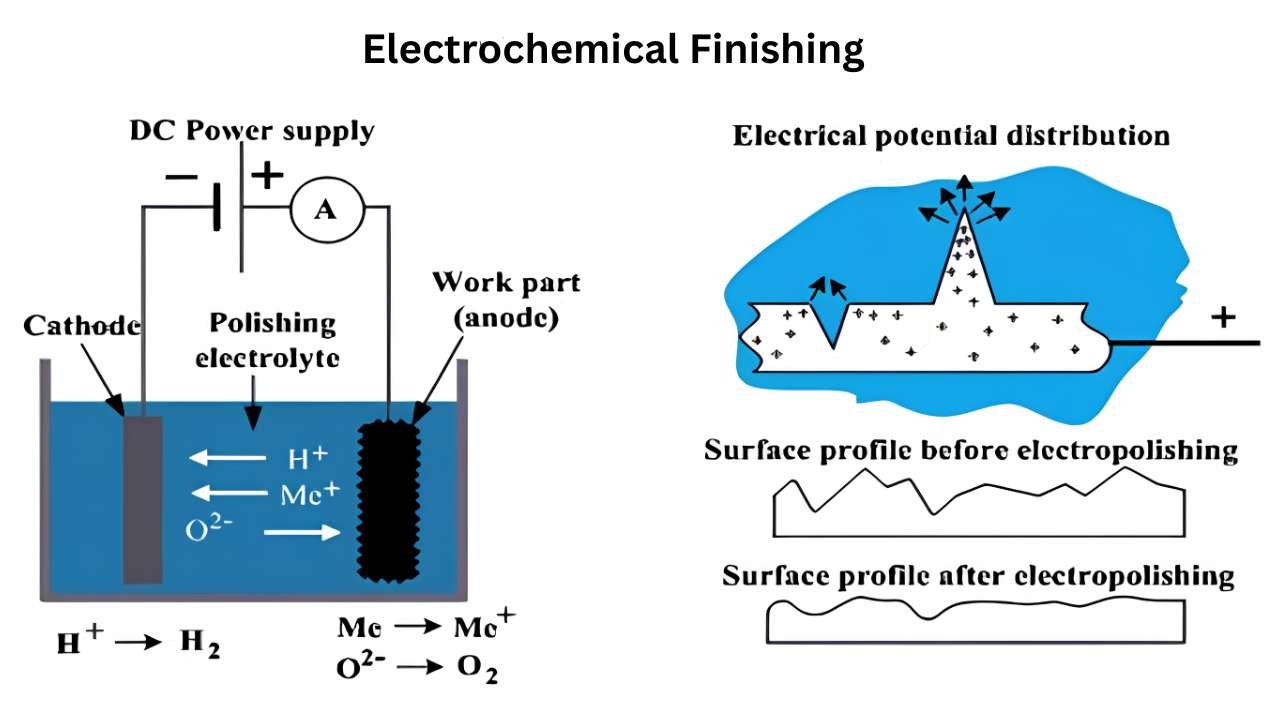
Chemical and Electrochemical Finishing
Rebuilds the chromium oxide layer (after machining or stamping). The heat tint on welded areas is effectively removed by pickling. The ultra-smooth hygienic surface for pharmaceutical parts is created by the removal of micro-peaks through electropolishing. Decorative finishes with a higher surface hardness are provided by PVD coating.
Special and Functional Coatings
Use anti-fingerprint coatings on consumer appliance surfaces to avoid visible fingerprint smudging. Apply antimicrobial coatings to hospital and food processing equipment to control contamination. Laser texturing produces exact surface patterns designed with particular grip, cosmetic, or fluid management in mind.
Common Defects, Causes, and Solutions
Burrs
If die clearance is not correct, uneven shearing occurs, resulting in raised burrs on edges. Set clearance to 5-10% of the material thickness on each side. Regular resharpening of dull tooling avoids burr formation, thus avoiding downstream assembly problems at higher cost.
Cracking and Tearing at the edges
Edge tears are caused by excessive deformation, which generates stress in excess of the material’s ductility limits. Newer bends with a greater bend radius and a preforming operation to spread out the stress. Change lubrication at all times when working with high strength materials to avoid tearing of the surfaces under pressure.
Wrinkling
Low blank holder pressure allows the sheet metal to buckle rather than flow. When wrinkles first appear, start increasing hold down force right away. Use draw beads to ensure the material flows inwards and prevent compression buckling in deep drawing processes.
Springback
Metal can elastically recover, causing angular deviation, when the forming pressure is removed. Overbend to make up for. Coin fully at stroke end, eliminating the springback gap from finished parts by the use of bottoming.
Galling and Scoring
Excessive contact pressure welds and tears between die and workpiece surfaces. Anti-galling coatings with Titanium Nitride (TiN) to cut down on adhesion by a lot. Increase lubrication and decrease press speed to decrease interface temperatures and the incidence of scoring during production.
Dimensional Instability
As the temperature changes, the critical dimensions change because of thermal expansion, moving outside the tolerance range. Use active die cooling for thermal stability during production runs. Positional variation eliminated before each individual press stroke by improving locating pins and nests.
Surface Scratches
The rough die contact points make scratches on workpieces under the forming pressure. Regularly polish die surfaces to completely remove abrasive contact points. Upgrade the viscosity of the lubricant and method of application to ensure the correct protective film during production.
Work Hardening Beyond Specification
The repeated cold reduction without recovery results in a brittle metal, which cracks during subsequent forming. Program intermediate annealing cycles to precisely fit your alloy grade. Test hardness at regular points in the production process to prevent excessive work hardening before the amount of scrap increases.
Applications Across Industries
Automotive Exhaust and Structural Components
Ferritic and austenitic grades are used for exhaust systems, catalytic converters and fuel components that are under heat and pressure. Stainless stamping is required for structural brackets, sensors and fasteners that require corrosion resistance and tolerances.
Medical Instruments and Implantable Housings
Grade 316L is the most common grade for implantable housings because of the direct biocompatibility requirements. Surgical instruments and diagnostic equipment require burr-free edges, tight tolerances and required brushed or electropolished surface finishes.
Food and Beverage Processing Equipment
Fryer bodies, oven interiors and processing equipment are subjected to harsh thermal and chemical stresses every day. Passivation and Electropolishing is not optional, it is required, to remove contaminants and eliminate micro-crevices where bacteria colonise Stainless surfaces.
Domestic components and consumer appliances
Ferritic grades are used most frequently in cookware, dryer liners and dishwasher drums because they are compatible with magnets and less expensive. The grades always provide the smooth drawn surface and moisture resistance required in high volume appliance stamping.
Electronics & High Precision Stamped Parts
Progressive stainless stamping can be used to produce tolerances as small as ±0.01mm for contacts, terminals and sensor housings. The use of Austenitic grades here are specifically for their predictable non-magnetic characteristics within the electronic assemblies.
Marine and Chemical Processing industries
Molybdenum is added directly to protect 316 and 316L from chloride-induced pitting, which is what causes normal grades to fail rapidly. This grade is a must without a doubt in saltwater and chemical environments, where valves, fittings, and pump components are required.
Cladding and Architectural Fixings for Construction
Grade 304 is used for inland decorative panels and fixings, and coastal installations require chloride resistant grade 316. Smoothing and mirror polishing finishes shall be uniform in appearance on all sheets for architectural purposes.
Choosing the Right Stamping Partner
Before making a commitment, consider the experience of the stamping partners with a range of press tonnages, die design, and material knowledge. Look for suppliers who have ISO 9001, IATF 16949, or ISO 13485 to ensure quality. Make sure they provide in-house tooling, DFM consultation, prototyping and finishing to ensure the protection of your IP and timeline. Select partners to perform prototype and high volume runs with flexibility. Always consider total cost of ownership (amortized tooling, scrap rates and rework costs) and not just unit price.
Conclusion
Stainless steel stamping is a blend of cutting-edge metallurgy, precision tooling, and controlled manufacturing processes that yield high-quality, corrosion-resistant components for a wide range of industries. The key to success is choosing the correct grade, temper, tooling and process parameters and then using strict QC during production. While automation and servo press technology, AI inspection and advanced die coatings are all still under development, the best way to get high-quality, cost-effective, consistent results is still to partner with an experienced stainless steel stamping manufacturer.
FAQs
What Is Included in a Stainless Steel Stamping Kit?
The basic kit comes with steel punches, heavy duty striking hammer, and a steel block. Letters are stamped on stamping guides which ensure they are aligned and enamel markers fill impressions for visibility. A polishing cloth and starter metal blanks complete the package and you are ready to get started.
How to Choose Quality Stainless Steel Stamping Parts
Prior to buying, always check punch hardness is greater than your stainless steel grade. The stamp faces should be perfectly machined; otherwise, you will get an uneven impression. Test edge sharpness, alloy composition and manufacturer provided material certifications. These details help distinguish reliable, long-lasting stamping parts from the less expensive options that simply don’t hold up in the face of repeated heavy impact.
Which Types of Stainless Steel Stamping Machines Are Available?
Select a machine that fits your production requirements. Mechanical presses can be used to perform high-speed, high-volume runs, while hydraulic presses are used for drawing heavy gauge steel with deep draws. For complex parts, precision is programmable with servo presses. Transfer presses are best suited to multi-stage complexity, while pneumatic presses are good for lightweight, high precision small part production.
What Are Stainless Steel Stamping Blanks Used For?
Use blanks as a starting point. They are pre-cut and ready to stamp and are used for custom jewelry, personalized keychains, pet tags and identification labels. In industry they are turned into precision brackets, washers and aerospace fittings. They are used for both creative and functional long-lasting applications, due to their corrosion resistance.