
30 Best Electrical Terminal Types – The Complete Beginner’s Guide
Electrical terminals are essential in making electrical connections in any system safe, efficient, and reliable. It is important to know all the electrical terminal types since the incorrect selection may lead to failures, overheating, or even accidents. This guide describes the importance of terminal selection and the work of each type. You will learn the 30 types of electrical terminals, their characteristics, advantages, disadvantages, and applications to be able to select the appropriate terminal to use in any electronics, automotive, or industrial project.
What is a terminal in electronics?
A terminal is an electrical connection point in electronics to allow electrical current to be flowing in or out of a circuit. Terminals are used to connect wires with components or sources of power. A circuit contains terminals, which are kept in continuous contact with each other so that the flow of current is continuous, and the losses due to resistance are minimized. Well-designed terminal connections enhance efficiency of the circuit and avoid overheating or signal drop. To be more precise, include a bare illustration of a wire that is firmly connected to a terminal.
Why Terminal in Electrical Setups Matters?
Improved Connection Safety
Proper terminals minimize loose wiring, sparks and hazardous overheating risks daily. They develop reliable insulation of safer electrical operation in almost all environments always consistently.
Faster Installation Efficiency
Quality terminals make the wiring easy when making complex installations and repairs. They not only save technicians on valuable time but also ensure consistency in connection accuracy on a daily basis on busy projects.
Consistent Long-term performance
Effective Reliable terminals can withstand vibration, moisture, corrosion, and high temperatures. They have steady current flow across challenging systems over many years that have been reliably used in challenging conditions.
Versatility Across Industries
Various terminals are used in automotive, construction, marine and industrial electrical applications. They easily fit different sizes of wires and connection requirements everywhere in contemporary workplaces today.
Reduced Maintenance Problems
Proper terminal selection eliminates connection failures and reduces unplanned downtime to a minimum. It also reduces the cost of repairs by creating more robust and durable electrical connections on a global scale in harsh conditions.
Top 30 Electrical Terminal Types You Need to Know in 2026
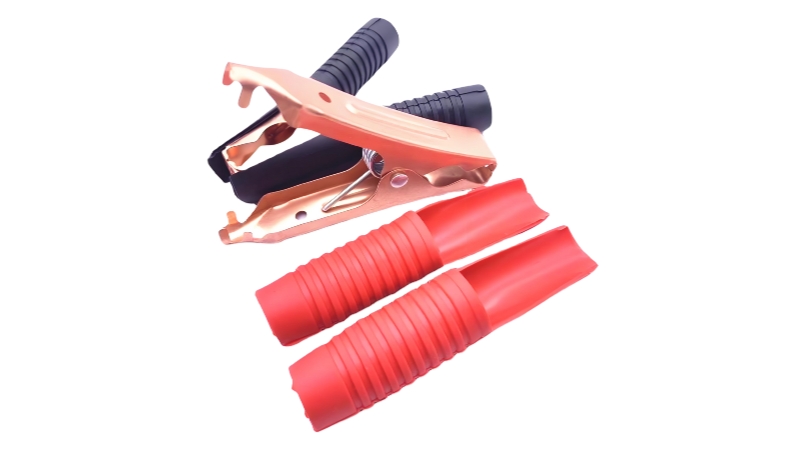
1. Alligator Clip Terminal
An alligator clip is a spring-loaded terminal connector, with serrated jaws, normally of copper-plated steel or brass, designed to provide a temporary electric contact. Common in 5A–30A applications, these electrical terminals are available insulated or as uninsulated terminals.
Key benefits
- Quick tool-free mounting.
- Reusable in various testing activities.
- Easily accepts different wire diameters.
- Good transitory conductivity performance.
- Available with insulated safety covers
Ideal for
Best where rapid temporary interconnection is needed, frequent interconnection, and flexibilities of the electric wire terminals.
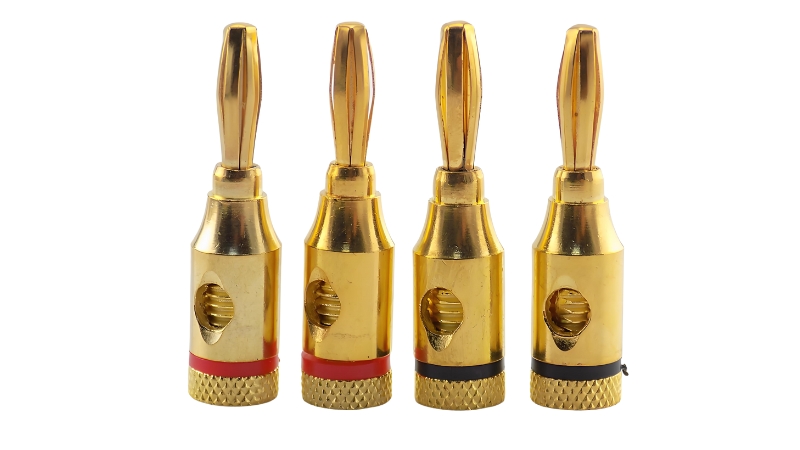
2. Banana Terminal
A banana terminal is a cylindrical monocontact terminal, typically 4 mm in diameter, made of brass or beryllium copper with nickel or gold plating. It offers dependable plug-in contacts in terminal electronics and laboratory systems.
Key benefits
- Quick push-fit connection
- Stable low-resistance contact
- Supports the repeated insertion cycles.
- Deals with medium current capacity.
- Best when it comes to precise measurements.
Ideal for
Usually found in multimeters, speaker wiring, amplifiers, power supplies, and laboratory instruments that require reliable electrical terminal types with consistent electrical contact performance.
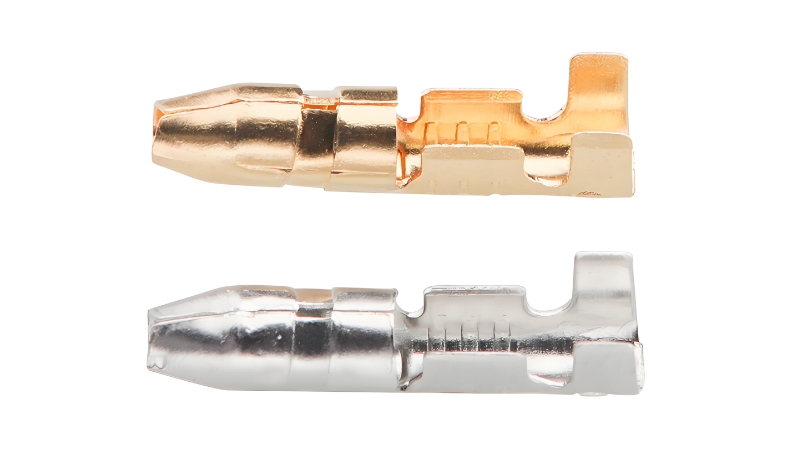
3. Bullet Connectors
Bullet connectors are male and female terminal pairs of cylindrical shape that form detachable inline electrical connections. They are typically made of brass or copper alloy, and are commonly used to support 16-22 AWG to 10-12 AWG wire in automotive terminal applications.
Key benefits
- Quick disconnect capability
- Compact connector footprint
- Simple service of wire harnesses.
- Insulated or bare available.
- Reliable moderate-current connection
Ideal for
Ideal in automotive harnesses, motorcycles, appliance wiring, and modular assemblies that need serviceable connector solutions that can easily disconnect without cutting the wires.
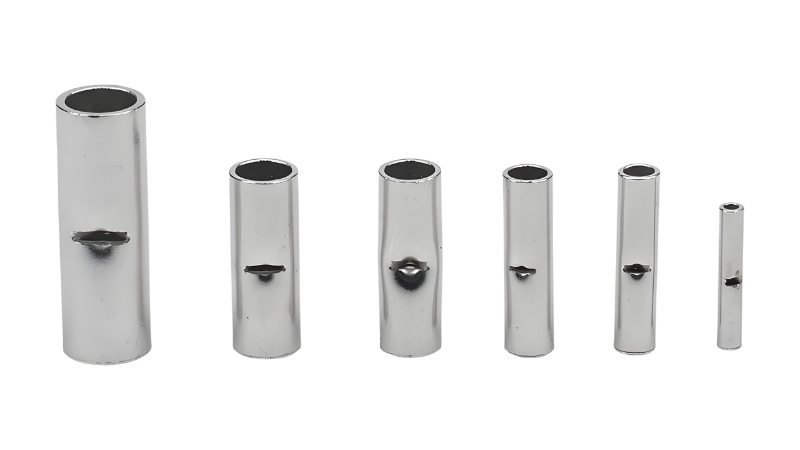
4. Butt Connectors
Butt connectors are end-to-end splice terminals that are circular in shape and are used to permanently connect 2 wires in an end-to-end connection. They are made of copper or copper-tin plated and are commonly used as reliable electric wire terminals.
Key benefits
- Clean wire-to-wire splice
- Strong electrical continuity
- Good mechanical retention strength
- Off-the-shelf heat-shrink insulated forms.
- Appropriate to repair and extend.
Ideal for
Use in automotive repairs, control wiring, equipment repairs and cable extensions where robust inline joining terminals in electrical systems are required.
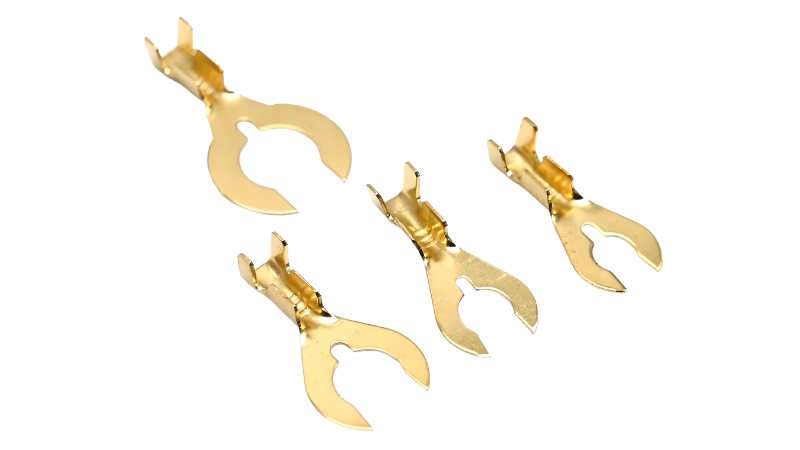
5. Crab Claw Terminal
A crab claw terminal is a forked screw-fastening terminal with claw-like gripping arms to securely fasten beneath screws or studs. It is often manufactured as stamped electrical terminals, which offer stable contact in fixed mounting applications.
Key benefits
- Secure screw-mounted grip.
- Quick under-terminal installation.
- Mechanical holding force that is reliable.
- Good load conductivity.
- Insulated to be safe.
Ideal for
Applicable to industrial panels, switchgear, compact circuit board terminals, and equipment where access to maintenance is restricted.
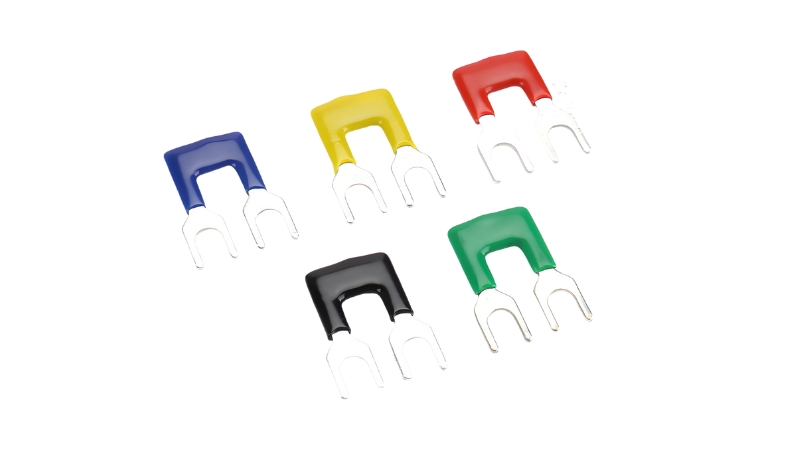
6. Dual Fork Terminal
A dual fork terminal is a two-prong screw-mounted terminal designed with a higher fastening stability than a single-fork design. Typically copper alloy plated with tin, it takes ring-stud style of mounting in challenging terminals electric systems.
Key benefits
- Better anti-vibration retention
- Increased stability in screw clamping.
- Improved load distribution
- Fast serviceable connection
- Stable cycling with low temperature.
Ideal for
Ideal in automotive panels, industrial controls, relay blocks, and high-vibration wiring assemblies that demand reliable screw-mounted electrical terminal types connections.
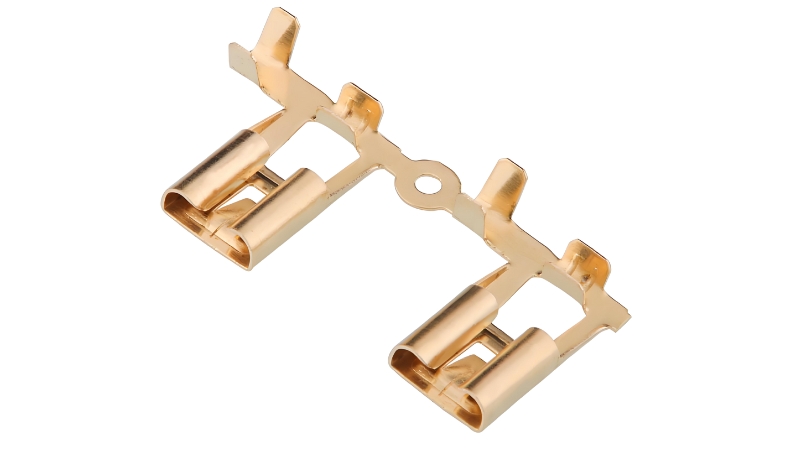
7. Flag Terminals
A flag terminal connector is a right-angle terminal connector which redirects the connection of wires 90 degrees off the conductor axis. These terminals are commonly crimped onto 22-10 AWG wire, and are used to enhance routing in small assemblies.
Key benefits
- Saves installation space
- Lessens the acute wire bending.
- Improves wire routing layout
- Supports compact enclosures
- Minimizes conductor strain
Ideal for
Best where side-entry wiring is required to provide better clearance and routing efficiency in appliances, dashboards, compact modules, and dense terminal electronics layouts.
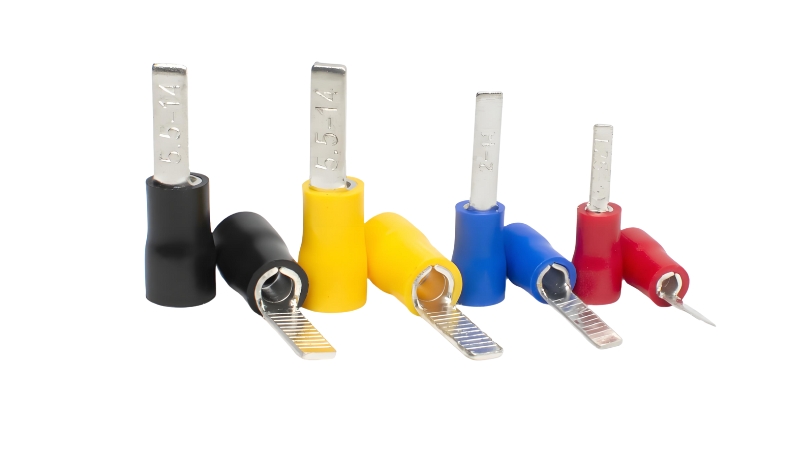
8. Flat Terminal
A blade terminal or flat terminal is a terminal of the type of blade terminal, but with contact surfaces that are broad rectangular surfaces (rather than circular ones). It is usually made of brass, copper alloy, or custom metal terminals, and is effective in handling moderate-to-high current loads.
Key benefits
- Large contact area
- Lower connection resistance
- Better heat dissipation
- Good current carrying capacity.
- Durable mechanical connection
Ideal for
Commonly used in automotive power circuits, appliances, industrial controls, and heavy-duty connector assemblies that require a dependable broad-surface electrical contact.
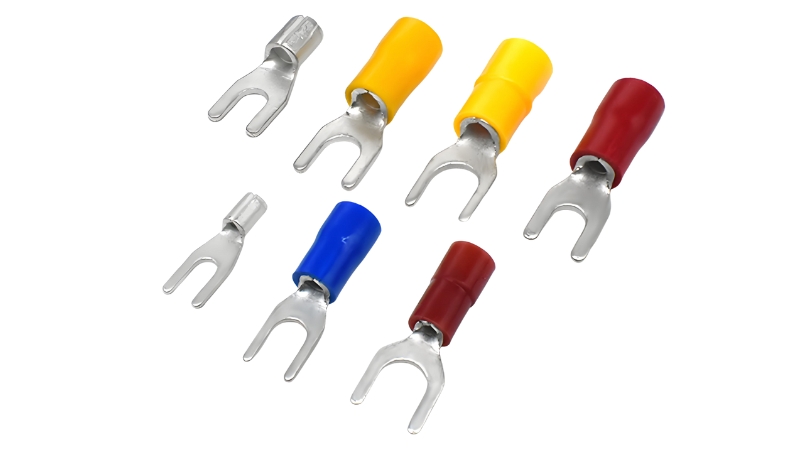
9. Fork Terminal
Fork terminal is a U-shaped terminal that is created to slide under a screw or stud without fully removing the fastener. It is usually tin-plated copper, and supports common stud sizes of M3 through M8 in most terminal types.
Key benefits
- Fast assembly with screws.
- Simple extraction in case of servicing.
- Good electrical contact area.
- insulated or bare available.
- Appropriate to be maintained repeatedly.
Ideal for
Best where there is a periodic inspection, upgrade, or quick replacement requirement of switchboards, automotive harnesses, machinery wiring, and serviceable electric wire terminals connections.
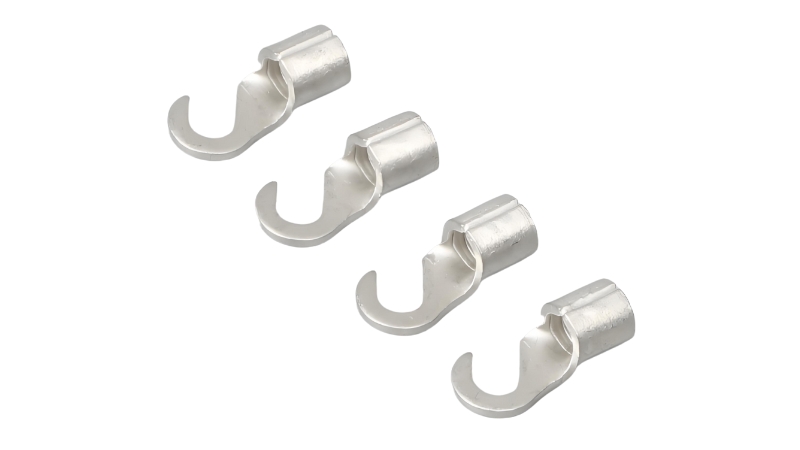
10. Hook Terminal
Hook terminal This is a curved open-end terminal, which wraps around a screw or terminal post half-way, to enable quick connection. It is typically made of brass or a copper alloy, and is used in low-current electronics applications.
Key benefits
- Fast attachment method
- Simple temporary connection
- Simple repositioning when setting up.
- Allows configurable wiring designs.
- Cost-effective terminal design
Ideal for
Lab boards, demonstrations, and low-load electrical setups that need frequent adjustments or temporary circuit connections are all ideally suited to prototypes.
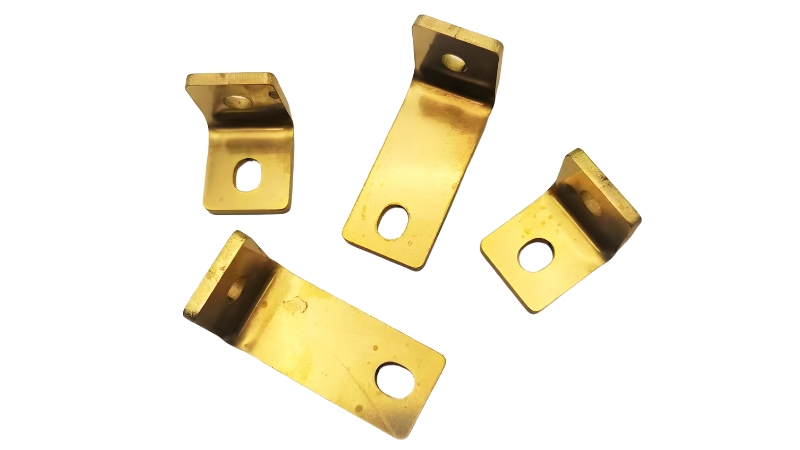
11. L Terminal
An L terminal is a connector terminal that is angled to form a 90 degree angle, used to direct conductor routing where straight connector types would not fit. They are usually copper based, insulated or bare and designed to fit within compact assemblies.
Key benefits
- Enables directional routing
- Enhances assemblies clearance.
- Reduces cable strain
- Supports compact layouts
- Improves wiring organization
Ideal for
You can use it on automotive modules, small control panels, small machines and dense circuit board terminals layouts that require accurate angular wire entry.
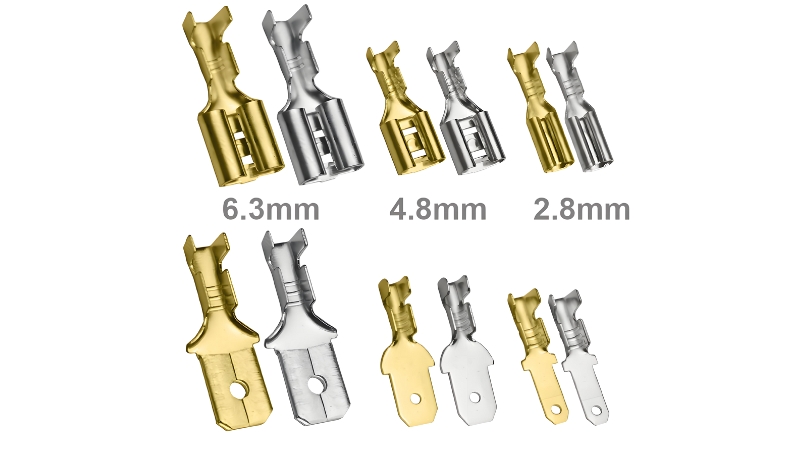
12. Male Female Terminal
Male female terminals are mating plug-and-socket terminals that consist of a projecting male blade and a receiving female terminal socket. Typically made of brass or phosphor bronze, they typically carry conductor sizes of 0.5-6 mm 2 in modular wiring systems.
Key benefits
- Quick plug-and-play connection
- Simplifies component replacement
- Minimizes the wiring service time.
- Designs with insulation enhance safety.
- Supports modular assemblies
Ideal for
Ideal with appliances, automotive harnesses, electronic modules, and systems with serviceable terminal connectors that require secure disconnectable electrical joints.
13. Multi-Hole Terminal
A multi-hole terminal is a distribution-style terminal with multiple conductor entry points in a single body in an organized circuit branching. These terminals are often made of brass or copper alloy, and are simplified using electric solutions to structured panel wiring.
Key benefits
- Allows connecting many wires.
- Improves wiring organization
- Simplifies troubleshooting access
- Reduces splice complexity
- Makes clean points of distribution.
Ideal for
Fitted to automation cabinets, control panels, power distribution blocks and professional electrical terminals types installations that demand orderly termination of multi-wire connections.
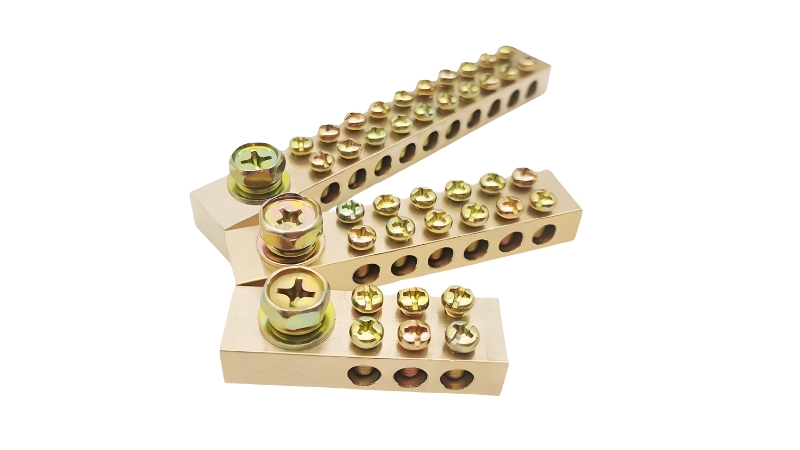
14. Pin Terminals in Electrical Terminal Types
A pin terminal is a stiff straight-ended terminal that is crimped on stranded wire so that it can be inserted into terminal blocks or connectors. It is generally copper plated with tin, and is commonly used in electronics assemblies to support 24-8 AWG conductors.
Key benefits
- Eliminates fraying of strands of wire.
- Improves insertion accuracy
- Makes tidy wire ends.
- Improves terminal block contact.
- Favors small wiring areas.
Ideal for
Best in PLC wiring, compact control systems, circuit board terminals, and instrumentation where clean wire insertion and reliable conductor termination are a factor.
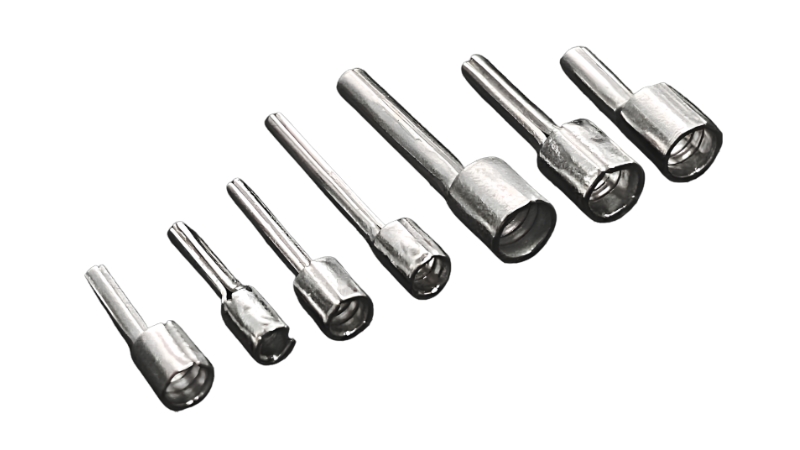
15. Round Terminal (Ring / Eye Terminal)
An eye terminal or round terminal is a closed-loop electrical terminal that is attached to a stud terminal or terminal stud with nuts or bolts. It is available in sizes M3-M12 sizes and offers very secure mechanical and electrical contact.
Key benefits
- Excellent vibration resistance
- Strong mechanical fastening
- Reliable long-term conductivity
- Even load distribution
- Extremely safe with high current.
Ideal for
Battery, grounding, industrial controls, and high-load terminals connections needing optimum fastening security and long-term reliability.
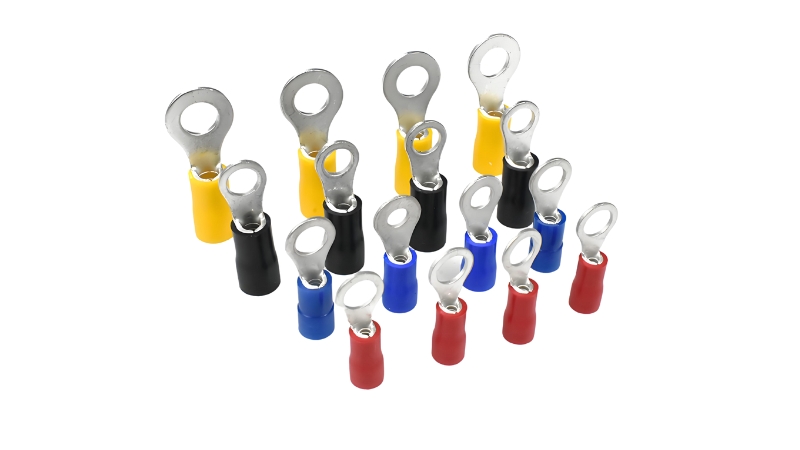
16. Screw Terminal (Welded Terminal)
A screw terminal is a threaded-clamp terminal, which holds conductors together through mechanical compression under a screw plate or clamp. These electrical terminal types are common in 300 V -1000 V rated equipment, and are used to support strong low-resistance fixed connections.
Key benefits
- High current handling
- Strong conductor retention
- Low contact resistance
- Reliable long-term connection
- Works well during vibration.
Ideal for
Best where switchgear is required, or where industrial machinery or distribution panels are required, and where fixed terminal in electrical setups requiring secure long-duration conductor termination.
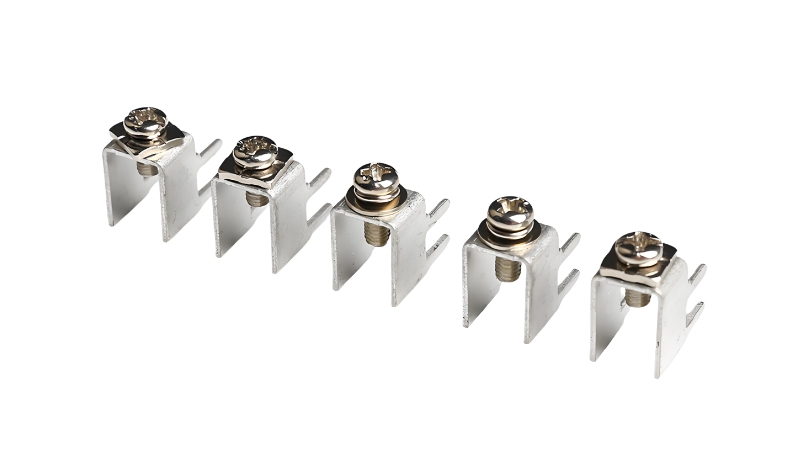
17. Spade Terminal
A spade terminal is a fork-ended terminal that is designed to slide under screws or studs to be quickly fastened. These electric wire terminals are typically made of tinned copper or brass and are typically compatible with M3-M8 hardware and can support rapid service access.
Key benefits
- Fast screw-mounted installation
- Easy removal for maintenance
- Stable load contact.
- Insulated or bare available.
- Appropriate to be serviced repeatedly.
Ideal for
Appliances, automotive wiring, relay boards, and maintenance-friendly systems of terminal connector systems that require quick installation and easy replacement without cutting wires: Best.
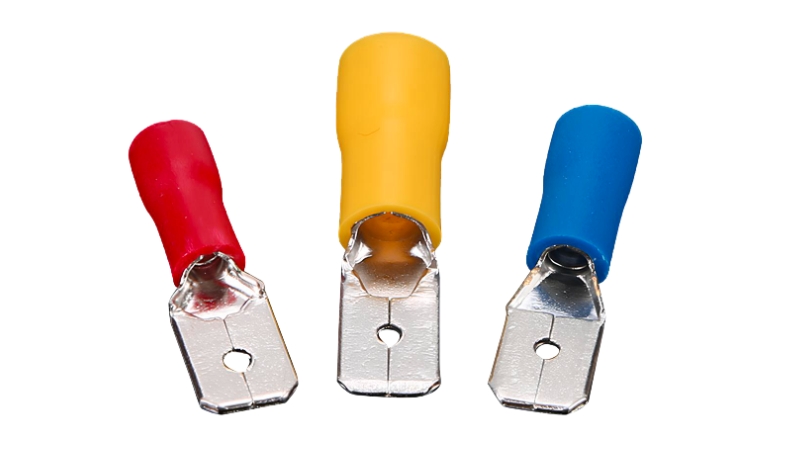
18. Star Terminal
A toothed-contact terminal with sharp radial edges that bite into metal surfaces, enhancing conductivity and mechanical grip. They are often used as grounding e terminals, and they minimize contact resistance in vibration-prone conditions.
Key benefits
- Improves metal-to-metal contact
- Excellent vibration resistance
- Lowers contact resistance
- Enhances grounding reliability
- Strong anti-loosening grip
Ideal for
Ideal in machine grounding, bonding systems, industrial equipment and rough environment e-terminals installations subjected to vibration, motion or thermal cycling.
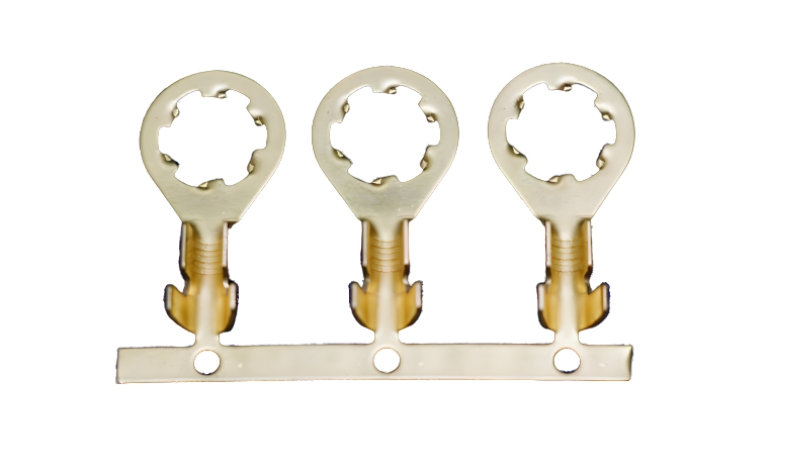
19. T Terminal
A T terminal is a branch-like connector designed to be tapped in a perpendicular way by a main wire path. These electrical terminal types are typically crimp-based and insulated, and are used to form a structured split connection in a structured wiring system.
Key benefits
- Enables clean wire branching
- Simplifies harness routing
- Quicker than hand splicing.
- Supports organized layouts
- Reduces installation complexity
Ideal for
Optimal in automotive harnesses, equipment branching circuits, and control wiring, and modular electrical systems that require structured wire splitting.
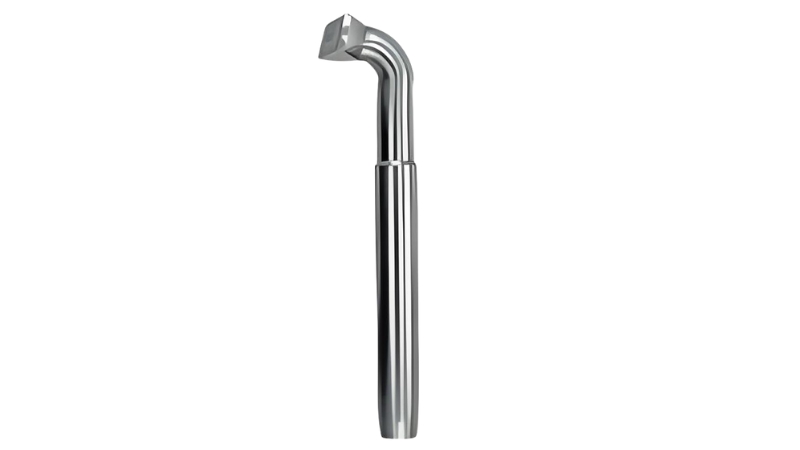
20. Triple Fork Terminal
A triple fork terminal is an e-terminal with a fork-like design, but with three gripping prongs to provide greater fastening stability. Typically produced as stamped electrical terminals, it provides better anti-rotation in mechanically stressed installations.
Key benefits
- Excellent screw grip stability.
- Better anti-rotation resistance
- Improved vibration performance
- Stronger mechanical holding force
- Reliable heavy-duty fastening
Ideal for
Ideal in breakers, grounding points, machinery wiring, and heavy-load terminals types applications with a high vibration-induced screw-mounted stability requirements.
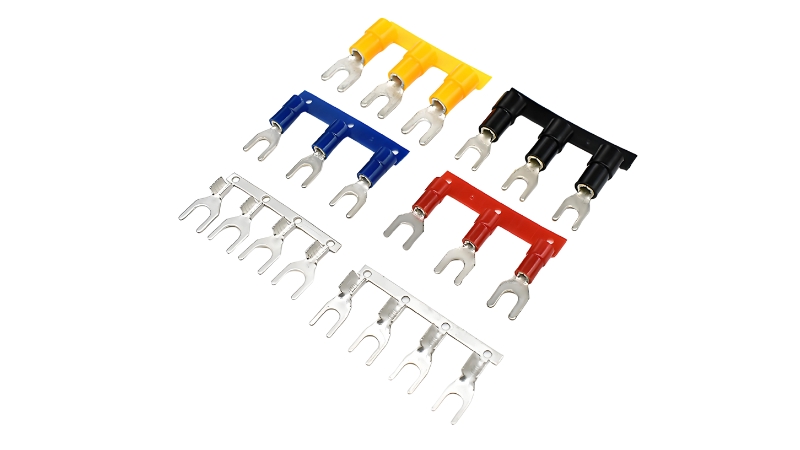
21. Tube Terminal
A tube terminal is a cylindrical crimp sleeve terminal, compressing around strands of stripped wire, to provide a neat termination. These uninsulated terminals or insulated equivalents are usually used to carry 26-4 AWG wire sizes.
Key benefits
- Prevents conductor fraying
- Develops professional wire endings.
- Improves conductor insertion
- Good mechanical crimp hold.
- Reliable electrical continuity
Ideal for
Industrial panels, automotive wiring, ferrule-style terminations, and clean terminal electronics installations, which require secure strand management, are best served with these.
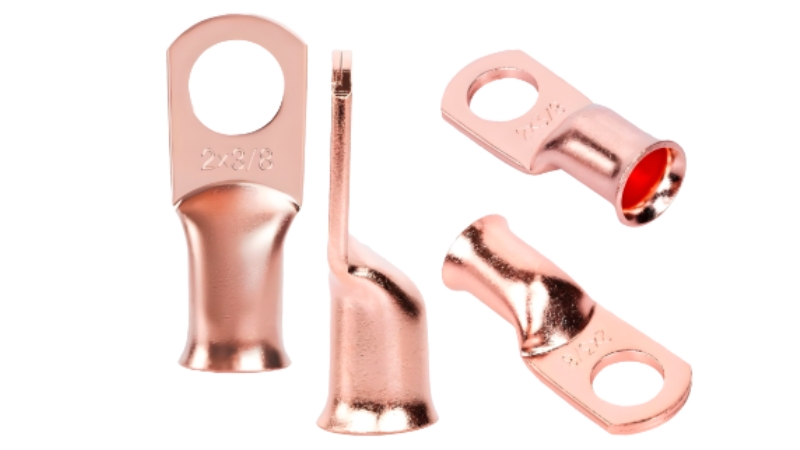
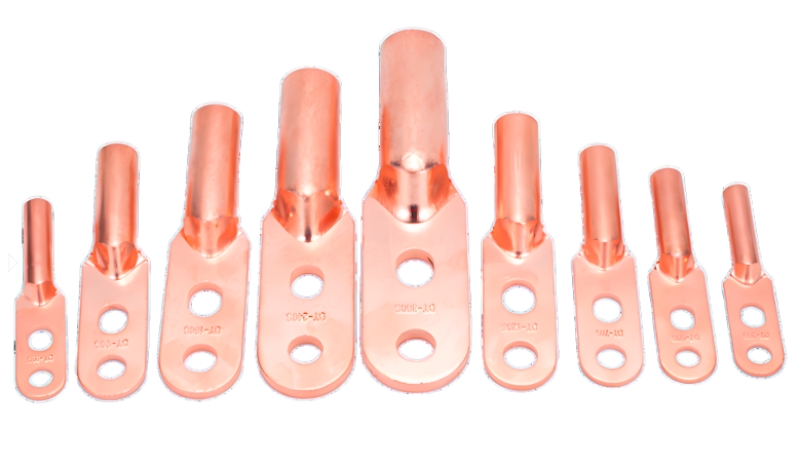
22. Two-Hole Terminal
A lug-type terminal is a type of terminal that has 2 terminals and holes to fix the lug type. It is usually made of copper or tinned copper and it enhances the distribution of loads, and prevents rotation in high-current mechanical connections.
Key benefits
- Prevents terminal rotation
- Excellent vibration resistance
- Better mechanical stability
- Even distribution of the force of fasteners.
- Strong heavy-current connection
Ideal for
Used in transformers, switchgear, busbars, and industrial terminals installations where the conductors are of high current carrying capacity and high security of fastening is required.
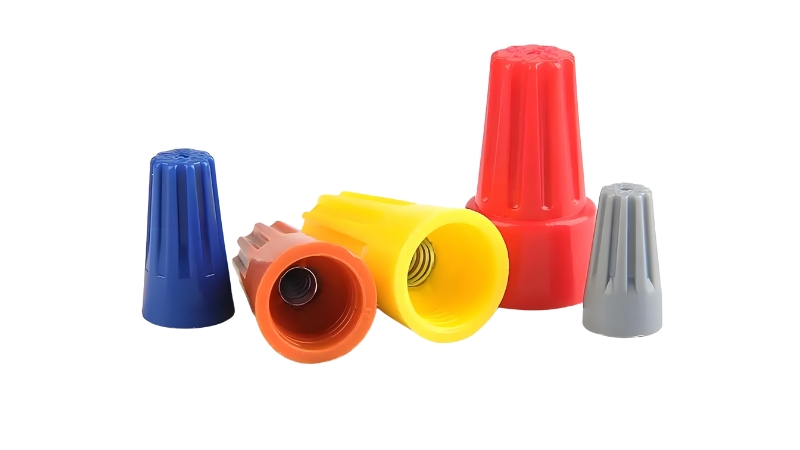
23. Wire Nuts
A wire nut is a twist-on insulated connector, with an internal metal spring that holds stripped conductors together. These electrical terminal devices are commonly rated at 300 V -600 V circuits, and are widely used in connections of branch wiring.
Key benefits
- Fast tool-free installation
- Protective outer shell is insulated.
- Appropriate to splicing wires.
- Simple residential use
- Cost-effective connector option
Ideal for
Best lighting circuits, outlet wiring, and residential electric wire terminals applications that require quick enclosed wire joining.
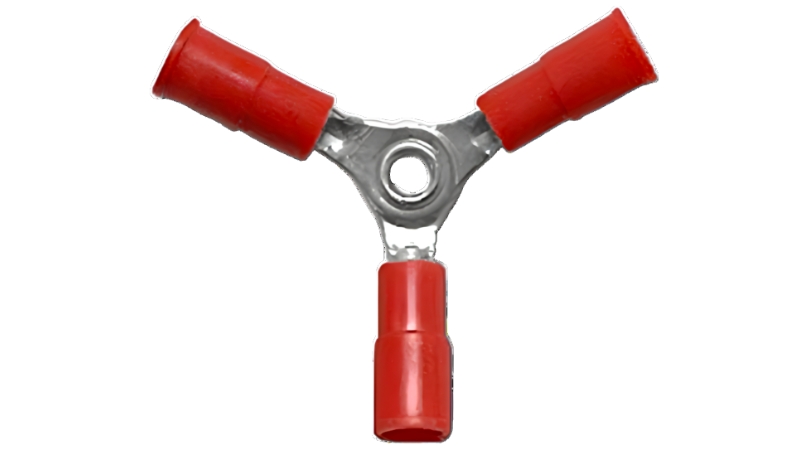
24. Y Terminal
A Y terminal is a split-fork terminal with a wide Y-shaped opening to be easily inserted under slightly loosened screws. These custom metal terminals enhance accessibility in congested multi-wire mounting systems.
Key benefits
- Quick under-screw fitting
- Supports branching layouts
- Easy maintenance access
- Good conductor positioning
- Operates in small areas
Ideal for
The most suitable panel and assembly materials include ideal automotive harnesses, automotive branching circuits, and automotive serviceable connector terminal assemblies that need easy screw-mount conductor access.
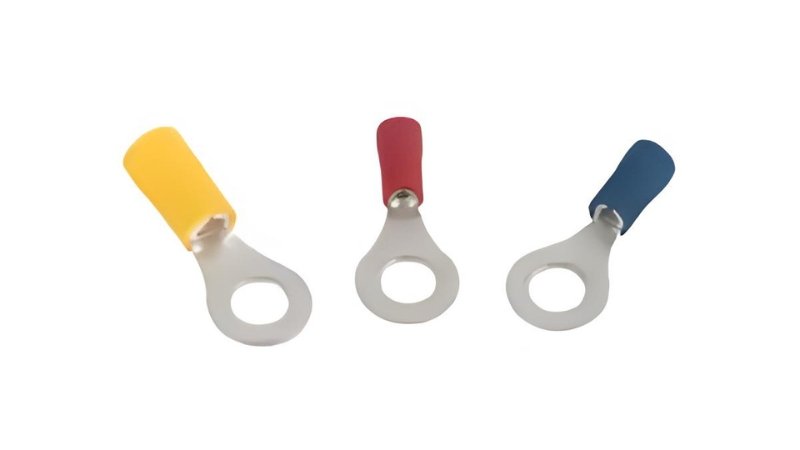
25) Eye Terminal
An eye terminal is a closed-ring terminal with a circular mounting eye, intended to be used to fasten by bolt or screw. These terminals are typically made of M3-M12 stud sizes and wide conductor ranges, but are made of tin-plated copper.
Key benefits
- Complete enclosed fastening point.
- Excellent vibration resistance.
- Strong long-term conductivity.
- Secure mechanical mounting.
- Appropriate to use for high-current.
Ideal for
Best in battery cables, grounding strap, heavy equipment wiring, and secure terminal in electrical systems where reliable stud-mounted fastening is needed.
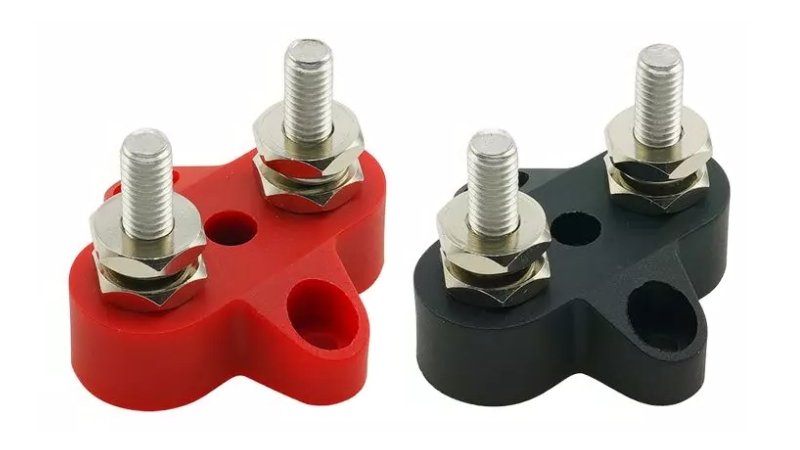
26) Stud Terminal
A stud terminal (also known as a threaded post-style terminal) is a threaded post-type terminal that receives ring, fork or lug connectors over a fixed mounting stud. Terminal stud designs are often made of brass, copper, or stainless steel, and facilitate high-current electrical joining.
Key benefits
- Strong threaded mechanical hold
- Supports a variety of connector styles.
- Reliable under vibration
- Good heavy-current performance
- Long service life.
Ideal for
They are ideal in battery banks, power distribution blocks, switchgear, and industrial electrical terminal types installations that need secure threaded conductor attaching points.
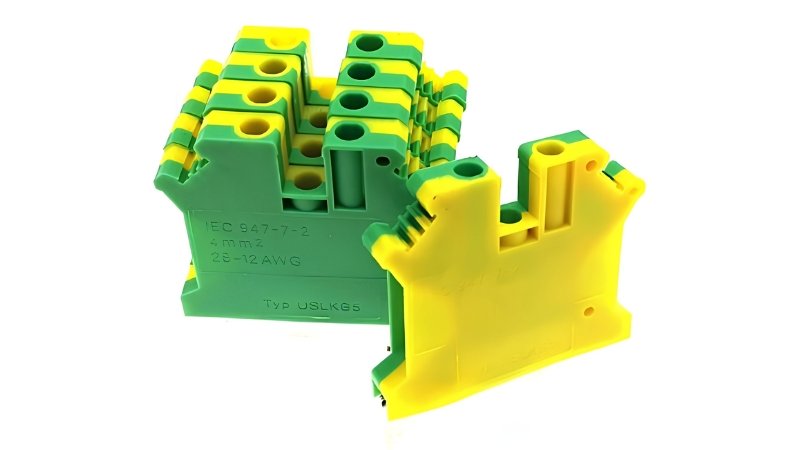
27) Green Terminal (Ground Terminal)
A green terminal is a grounding terminal that is color-coded in green to represent protective earth connections as per wiring identification standards. Typically screw-clamped or spring-clamped, these terminals electric components provide continuity of grounding.
Key benefits
- Clear grounding identification
- Improves electrical safety
- Reliable earth continuity
- Easy inspection during servicing
- Supports code-compliant wiring
Ideal for
Most suitable in control panels, equipment grounding, distribution boards and safety-oriented terminal assemblies where special earth termination is necessary.
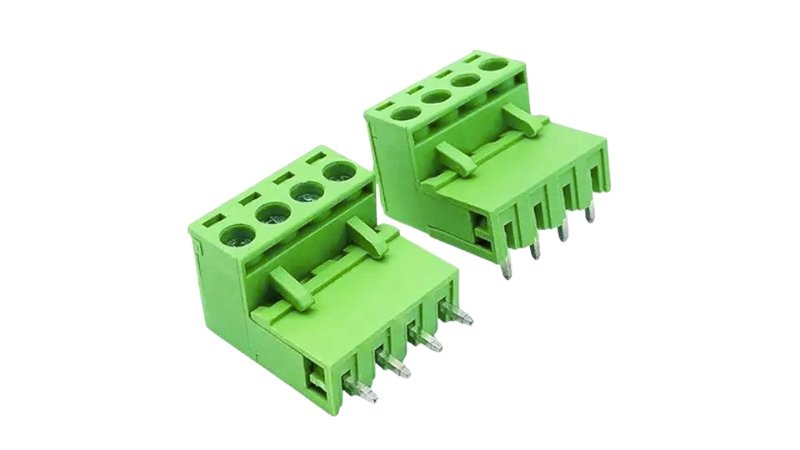
28) Circuit Board Terminal (PCB Terminal)
A circuit board terminal is a board-mounted terminal that is used to wire-to-board connection on PCBs. Circuit board terminals typically have a 2.54 mm to 7.62 mm pitch spacing available as screw, spring, or plug in style.
Key benefits
- Compact board-level connection
- Supports modular wiring
- Easy maintenance access
- Reliable conductor retention
- Available in multiple pitches
Ideal for
Ideal in controllers, instrumentation and industrial electronics, and compact terminal electronics assemblies that need a reliable termination of wires directly on the printed circuit boards.
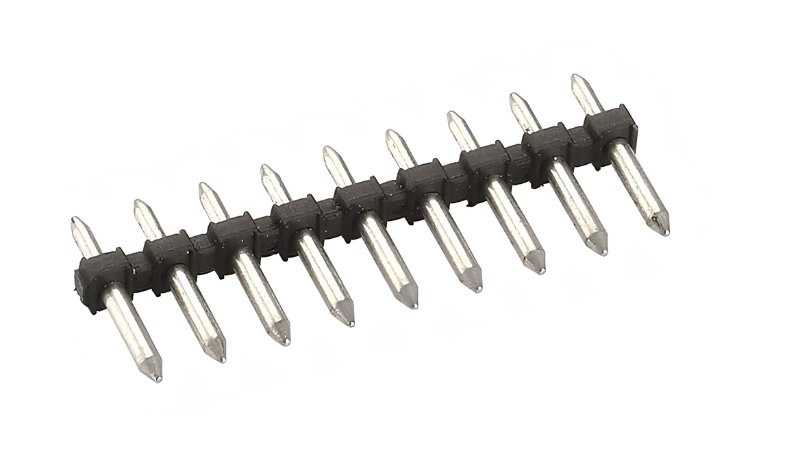
29) Pin Header Terminal
Pin header terminal is a fixed board-mounted pin terminal array used to interconnect modules either by signal or power. Typically made of brass, but plated with gold or tin, these electrical terminals are common in connector systems of low voltage.
Key benefits
- Compact connection footprint
- Easy modular interfacing
- Supports repeated mating cycles
- Good signal conductivity
- Simple board integration.
Ideal for
Best where embedded systems, sensors, modules and compact terminals in electronics designs where they require modular plug-in board connectivity.
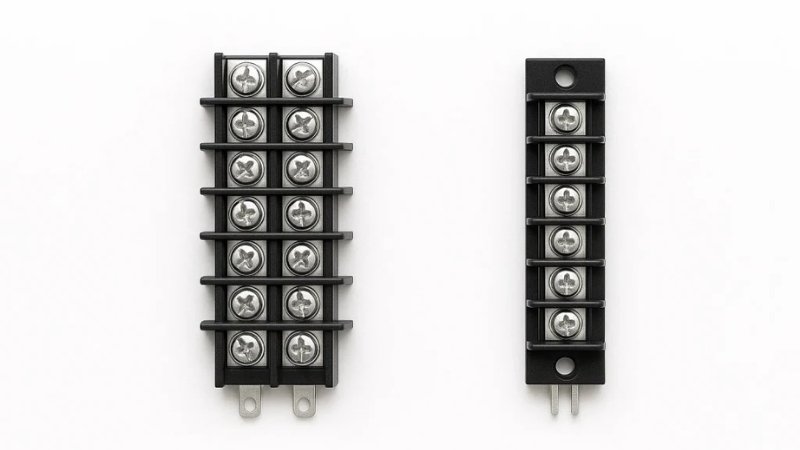
30) Barrier Strip Terminal
A barrier strip terminal is a screw-mounted terminal block that is separated by insulating barriers between connection points. Constructed to support organized routing of conductors, these electrical terminals types are often designed to provide support to circuit loads of 10A-150A depending on design.
Key benefits
- Prevents accidental contact
- Arranges various circuits in a tidy manner.
- Strong screw-clamped connection
- Good current handling
- Easy circuit identification.
Ideal for
Ideal in control cabinets, machinery wiring, distribution assemblies, and structured electric wire terminals layouts that need distinct connection points.
Insulated Terminal Vs Uninsulated Terminals
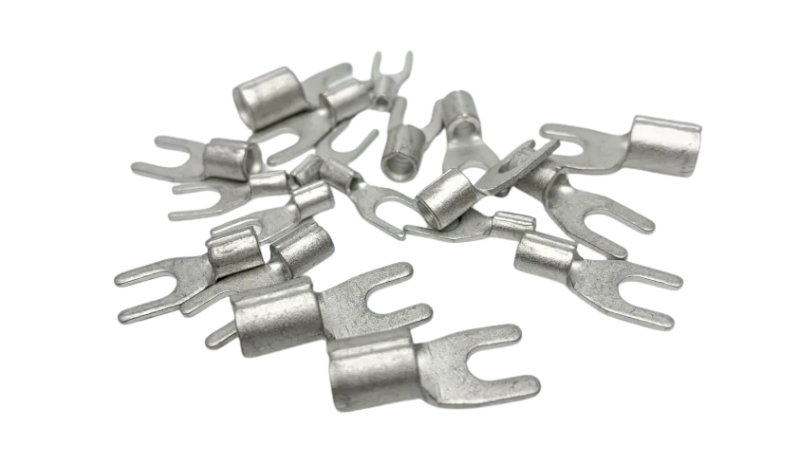
Non-Insulated Terminals
Non-insulated terminals are plain metal connectors which provide cost effective wiring choices in most projects. They need the additional heat shrink or tape to ensure that they are well insulated and safe. These terminals are used in low-cost installations where additional protection is intended when the final assembly phases are undertaken.
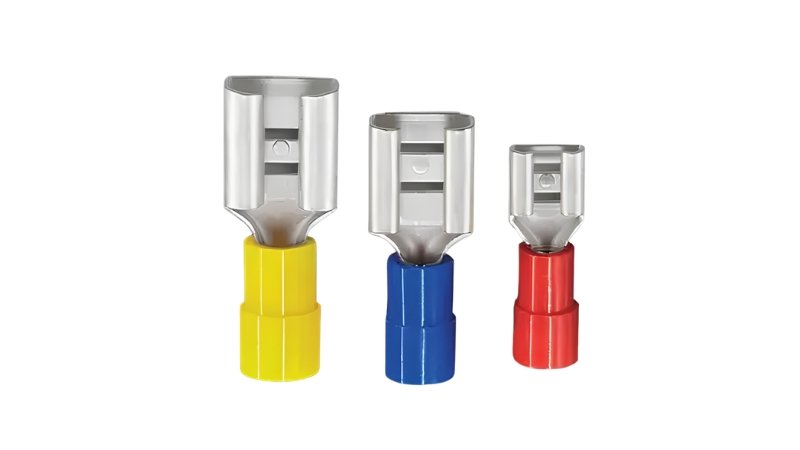
Vinyl-Insulated
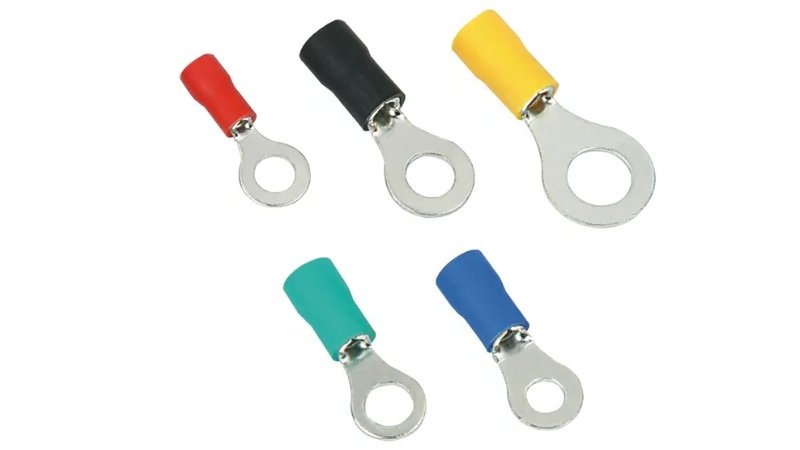
Vinyl insulated terminals are typical connectors that offer simple electrical shorting protection at a reasonable cost in the present day. They are suited to work in normal wiring installations in normal indoor environments and systems. Their practical insulation is a balance of safety and cost in the everyday electrical maintenance work requirements.
Nylon-Insulated
Nylon insulated terminals are more durable to heat stress and chemical exposure conditions. They have consistent insulation in harsh industrial environments with a high number of temperature variations per day. The connectors are suitable in rugged applications that require long-lasting operation and higher material resistance.
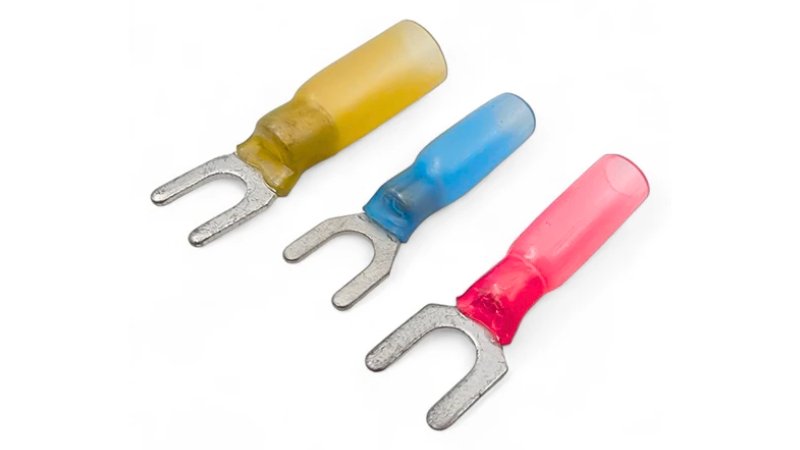
Heat-Shrink Terminals
Heat-shrink terminals form airtight connections that exclude moisture and enhance wire support to a greater extent. They also offer great strain relief when vibration heavy movement and flexing occurs. These terminals work well in marine outdoor and invariably wet conditions of long term reliability.
Electrical Terminal Sizes for Your Reference
Small Wire Range (22–18 AWG)
Small wire range 22 to 18 AWG are used in light duty electronics and control circuits. It guarantees minimal current flow and secure small connections in devices.
Medium Wire Range (16–14 AWG)
Medium wire range 16-14 AWG is commonly used in automotive and appliances. It deals with typical loads and performs well and consistently with electrical flow.
Large Wire Range (12–10 AWG)
Large wire 12 to 10 AWG is safe to use in higher current applications. Applied In most appliances and power circuits where stronger and more secure connections are needed in general, the appliances are hazardous.
Heavy-Duty Range (8 AWG+)
Very heavy duty range 8 AWG and more is utilized in industrial high power systems. It helps to handle heavy electrical loads and avoid overheating in important configurations.
Common Stud Sizes for Terminals
Some of the common stud sizes are 6, 8, 10, quarter inch, five sixteenths, and three eighths inches. Proper sizing is safe and conductive with consistent terminal performance at all times.
Leading Custom Metal Terminals Solutions Provider – Why Masion?
Masion offers secure custom metal terminals by in-house sophisticated metal fabrication of sheet metals. All terminals have ISO9001 and ISO16949 certified processes, which guarantee precision and electrical safety. They have vertical integration, which allows them to control production, starting with laser cutting and continuing through stamping and assembly, minimizing defects. Automated equipment and high-grade materials enhance conductivity and durability to suit the various requirements of different wire gauge. The engineers come up with terminals that match various stud sizes and current ratings. Close quality control maintains constant performance, avoiding overheating, loose connection, and long-term electrical stability in the industrial application.
How to Choose the Right Electrical Terminal Types for Your Project
Wire Size and Current Rating
Begin by determining the gauge of the wire and anticipated current load. The terminal should be of the same size as the conductor. Small terminals heat up and malfunction. Big terminals lead to loose connections. Proper ratings guarantee safety, efficiency, and reliability in the long run in any electric terminal connector or terminal in circuit.
The type of permanent or temporary connection
Determine whether the relationship should be permanent or flexible. Soldered and crimped options are used in permanent installations. Temporary connections are supported by screw and alligator styles. Connection intent matching assists in choosing appropriate terminal connector types without exposing you to frequent failure or maintenance problems.
Mating Connector Compatibility
Terminal/mating component compatibility. Poorly matched components lead to resistance, arcing or signal loss. Check dimensions, locking methods, and contact materials always. Correct compatibility guarantees stable operation in diverse kinds of wire terminals in complicated circuits.
Environmental and Mechanical Conditions
Assess the location of the terminal. Material choice is influenced by heat, moisture, vibration or chemicals. Terminals are insulated, sealed, or made resistant to corrosion, thereby enhancing durability. The terminal in circuit is safeguarded by environmental awareness against untimely wear and electrical breakdown.
Installation Method and tools required
Determine what installation tools are available. There are those that need crimping tools, others that need soldering irons or screwdrivers. Secure connections are made through proper tools. Incorrect installation destroys the type of connector used at the terminals and decreases performance of electrical characteristics in the long run.
Standards and Certifications Compliance
Take into consideration relevant standards and certifications. Eco-wiring can be mentioned as RWS or OEKO-TEX compliance. Certifications in industry assure safety and quality of materials. Certified terminals facilitate regulatory suitability and accountable manufacturing.
Application-Specific Performance Needs
Select matching terminal based on needs. Sensitized systems must be locked. Systems with high current will require heavy-duty terminals. Knowing performance requirement enables you to select trustworthy varieties of wire terminals to ensure long-term electric stability.
Maintenance, Safety, and Best Practices
Electrical terminals should be well-maintained to prevent system failure and avoid injury to users. Terminals should be inspected by you on a regular basis as regards their wear, corrosion or lose fittings. Early warning eliminates overheating and unforeseen failures. Proper crimping tools and established practice of soldering will give strong connections, lasting. Personal safety should be observed whenever handling live wires. Scheduled cleaning, tightening and testing are used to ensure service efficiency of electrical terminals and improve equipment life.
Conclusion
Safety and efficiency of any electrical connection rely on the use of electrical terminals. Knowledge of electrical terminal types will enable you to make the appropriate choice of current load, wire size, and environment. The terminals have a designated use and are temporary testing as well as permanent industrial facilities. An adequate selection, installation, and maintenance enhance functionality and minimize risks of failures. When working on DIY wiring or professional systems, the familiarity of the types of wire terminal connector guarantees the reliability, safety, and long-term effectiveness of the modern electrical and electronic projects.


8 Responses