Melting Point of Titanium – An Ultimate Guide
Among many metals the notable and valuable one is the Titanium. The properties that adds up worth to this metal includes corrosion resistivity, lower overall weight, and incredible strength. You cannot deny its role in the auto sector, aerospace, as well as medical sector. Besides intriguing features many enquire about the melting point of Titanium. This article will not only assist you in this regard but also educates you regarding applications, alloys, differences, and muc more. Let’s get started!
What is the melting point of Titanium?
It refers to the point which makes the metal liquid. For titanium, this point helps you know how titanium behaves under heat, and it’s is suitability for higher temperature conditions.
Engineers and manufacturers need to understand the melting point of titanium. This ensures that titanium components remain intact and perform as designed under heat.

Here are the melting point in different units:
| Sr. No. | Melting Point in Different Units | |
| 1 | Melting point of titanium in Celsius | 1,668°C |
| 2 | Melting point of titanium in Fahrenheit | 3,034°F |
| 3 | Melting point of titanium in Kelvin | 1,941 K |
Such values indicate that titanium withstands extreme temperatures and thus it is a good material for industries such as aerospace and medical device products.
Different Types of Titanium Alloys
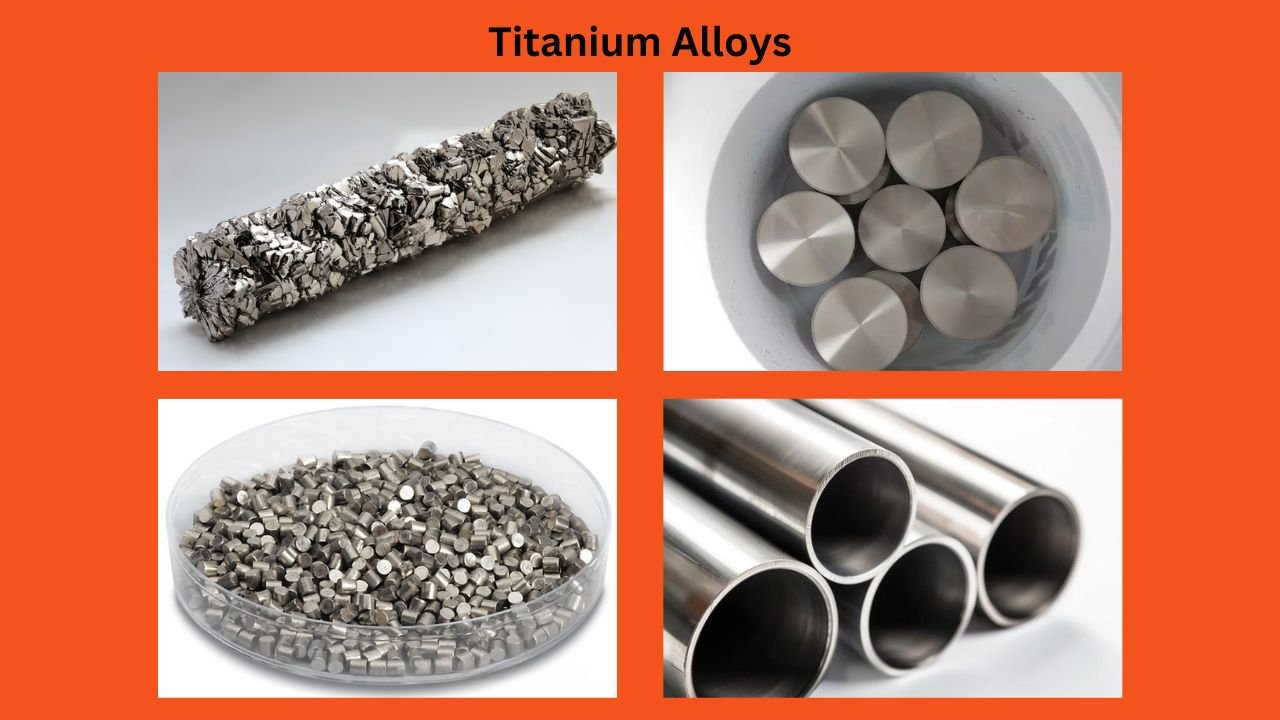
Uncover every single type of the titanium alloy along with the melting point in different unit in the table below:
| Sr. No. | Alloys of Titanium | Melting Point in 0Celsius | The Melting Point in 0Fahrenheit | Melting Point in Kelvin |
| 1 | Titanium Aluminum Vanadium | 1650 to 1670 | 3000 to 3040 | 1923 to 1943 |
| 2 | Titanium Vanadium Chromium Aluminum | 1600 to 1650 | 2912 to 3000 | 1873 to 1923 |
| 3 | Titanium | 1600 to 1650 | 2912 to 3000 | 1873 to 1923 |
| 4 | Titanium Vanadium Iron Aluminum | 1600 to 1650 | 2912 to 3000 | 1873 to 1923 |
| 5 | Titanium Alumimum Tin | 1600 to 1650 | 2912 to 3000 | 1873 to 1923 |
| 6 | Titanium Aluminum Niobium | 1600 to 1650 | 2912 to 3000 | 1873 to 1923 |
| 7 | Titanium Aluminum Vanadium | 1600 to 1650 | 2912 to 3000 | 1873 to 1923 |
| 8 | Titanium Aluminum Tin | 1600 to 1650 | 2912 to 3000 | 1873 to 1923 |
| 9 | Titanium Aluminum Zirconium Molybdenum Vanadium | 1600 to 1650 | 2912 to 3000 | 1873 to 1923 |
| 10 | Titanium Aluminum Molybdenum | 1600 to 1650 | 2912 to 3000 | 1873 to 1923 |
Titanium Aluminum Vanadium
Higher strength alloy popular for its excellent resistivity to corrosion. One use is in aerospace, on airframes or engines. On account of its light weight characteristic, it is very suitable to be used for medical implants, featuring high durability and reliability. This alloy finds popularity due to its balance of strength to weight.
Titanium Vanadium Chromium Aluminum
Excellent thermal stability and high strength are key features. It does very well in high temperature applications, e.g., aerospace components. This alloy also is oxidation resistant, which makes it good for harsh environments. It can be trusted for parts critical to lasting performance under stress.
Titanium
Ti-15-3 is famous for its strahten to weight ratio. You will find it especially in aerospace and automotive industries, structural components. It is an alloy, which has excellent corrosion resistance, prolonging the life. It is heat treatable and has tailored mechanical properties and is therefore suitable for demanding applications.
Titanium Vanadium Iron Aluminum
Ti 10V-2Fe-3Al is a high strength and ductile alloy. Because of its lightweight and excellent fatigue resistance you’ll commonly use it in aerospace applications. In high stress areas, this alloy is safe and reliable. For components that need a balance of toughness and weight, it’s the way to go.
Titanium Alumimum Tin
Ti-5Al-2.5Sn is noted for its excellent corrosion resistance and good weldability. Durability is important and you’ll find it in marine and aerospace applications. Structural components can be provided by this alloy because of the strength it offers at elevated temperatures. It’s lightweight improves performance in many demanding environments.
Titanium Aluminum Niobium
Ti-2Al-2.5Nb is suitable for high strength and corrosion resistant applications. It can be used also in aerospace and medical fields for implants, and surgical tools. Good formability and weldability makes for some complex designs. It also one of the versatile which is a popular choice in specialized applications.
Titanium Aluminum Vanadium
Corrosion resistance and high strength to weight ratio makes Ti-3Al-2.5V an outstanding material. In aircraft structures and marine environments, you’ll see it to ensure durability and performance. It possesses excellent fatigue properties and is suitable for high stress applications. For demanding aerospace components, this alloy is a good choice.
Titanium Aluminum Tin
The superior mechanical properties at elevated temperatures of Ti‐6Al‐2Sn are well known. In jet engines and aerospace and industrial applications in general you’ll see it quite often. This alloy bridges the lightweight and strong gap in reliability. In high performance components, intricate turbine blades can be put in place due to this excellent weldability.
Titanium Aluminum Zirconium Molybdenum Vanadium
With good corrosion resistance and high temperature performance, Ti-6Al-2Zr-1Mo-1V is studied. Of course, it can be found in aerospace applications, such as turbine components. This alloy allows the product to be lightweight and have incredible strength but be durable under stress.
Titanium Aluminum Molybdenum
Known for its higher strength and incredible fatigue properties. You’ll typically use it in aerospace components, and high performance applications. It is a reliable substance at high temperatures because this alloy has structural integrity. Being a unique material it is ideal for use in demanding industrial environments.
The Uses of Titanium Alloys
There are multiple applications exist when it comes to titanium alloy. Let’s explore some of the major uses:
Medical Devices: Medical implant industry needed implantable materials like titanium alloys, which are key component for hip replacements, spinal implants, dental fixtures etc. Their biocompatibility makes sure it is compatable to the human body, preventing rejection. Their excellent resistance to bodily fluid is a plus benefit.
Marine Applications: In marine environment, titanium alloys are extremely precious because of their better corrosion resistance to seawater. Built for shipbuilding, underwater pipelines or offshore drilling components. Their durability under harsh conditions make them a perfect choice for marine applications, where long lifetime, reliability, and repairability matters.

Aerospace Components: The titanium alloys used in an aircraft structure, engine, and landing gear. That is because they are lightweight and extremely strong, and thus fit very nicely for making fuel efficiency and performance issues better.
Automotive Parts: Titanium alloys are used for exhaust systems, engine components and suspension parts in high performance vehicles. However, these alloys do not come at the expense of weight.
Sports Equipment: Bicycles, golf clubs and tennis rackets, for example, are also sports gear with titanium alloys. It does not sacrifice agility for an improved strength.
Different Grades of Titanium Alloys
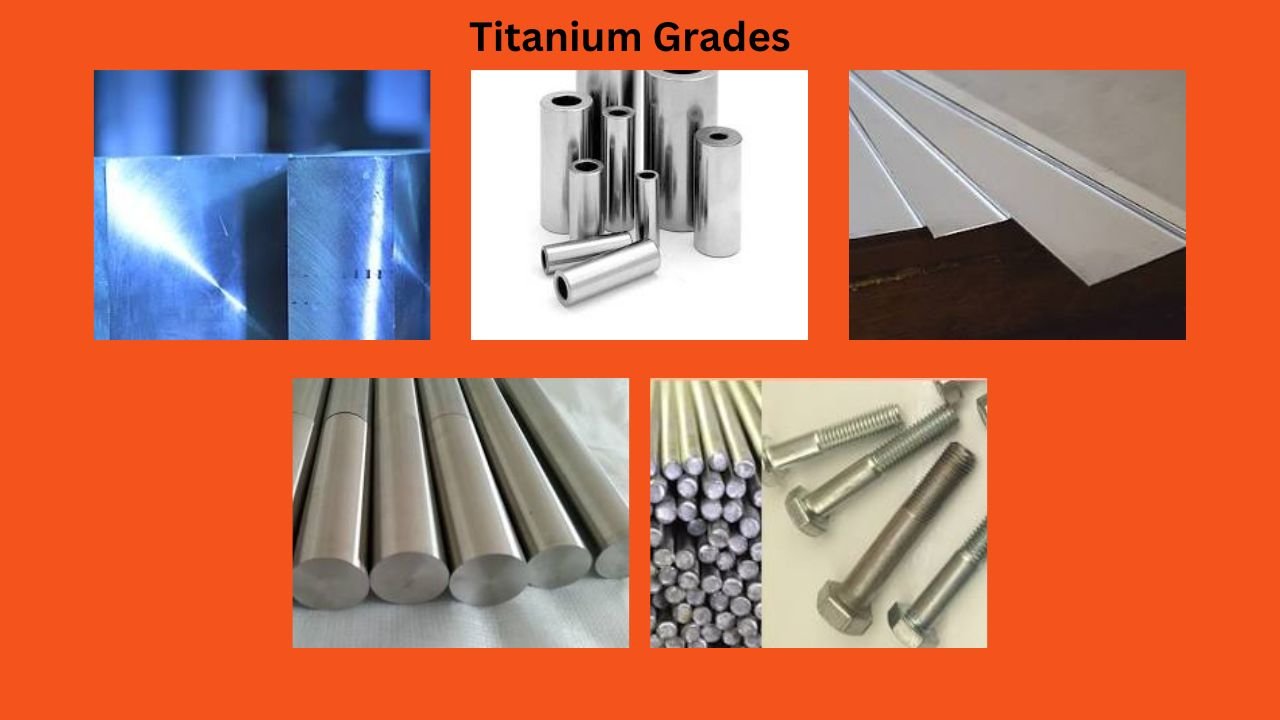
Get insights on the features, applications, and melting points of various titanium alloys right in the table below:
| Sr. No. | Grade | Features | Applications | Melting Point (Celsius) |
| 1 | Grade 1 | Pure titanium with low impurities | Aerospace components, chemical processing equipment, biomedical implants | 1665-1670 |
| 2 | Grade 2 | Slightly higher impurity levels than Grade 1 | Heat exchangers, condensers, marine equipment | 1665-1670 |
| 3 | Grade 3 | Improved strength and ductility compared to Grades 1 and 2 | Pressure vessels, fasteners, tubing | 1665-1670 |
| 4 | Grade 4 | Higher strength than Grade 3 | Aerospace components, structural parts, automotive components | 1665-1670 |
| 5 | Grade 5 | Excellent strength-to-weight ratio, good corrosion resistance | Aerospace components, medical implants, marine equipment | 1650-1670 |
| 6 | Grade 9 | Improved creep resistance at high temperatures | Aerospace components, turbine blades | 1650-1670 |
| 7 | Grade 12 | Enhanced fatigue resistance | Aerospace components, structural parts | 1650-1670 |
| 8 | Grade 23 | Excellent corrosion resistance in chloride environments | Chemical processing equipment, marine equipment | 1650-1670 |
| 9 | Grade 26 | Improved toughness at low temperatures | Cryogenic applications | 1650-1670 |
| 10 | Grade 32 | Enhanced strength and ductility at elevated temperatures | Aerospace components, turbine blades | 1650-1670 |
The Melting Points of Various Titanium Compounds
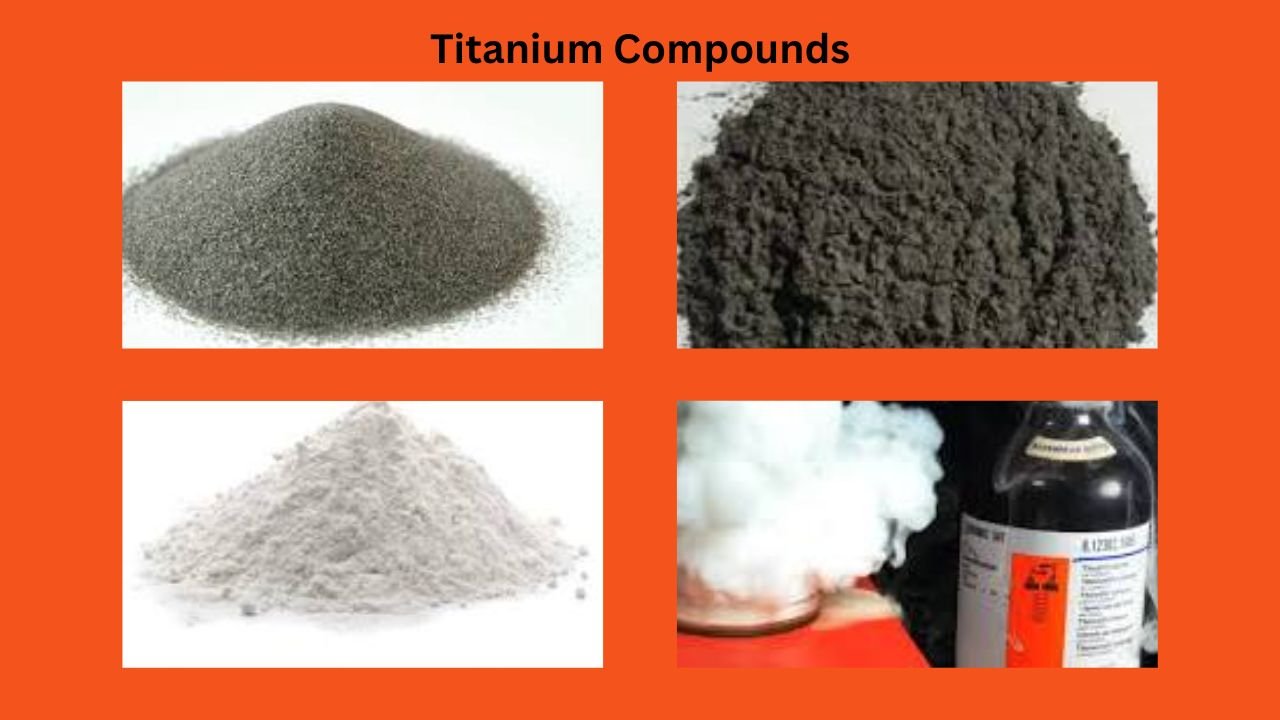
| Sr. No. | Compound | Melting Point (Celsius) | Description | Applications |
| 1 | Titanium Carbide (TiC) | 3140 | Extremely hard and refractory compound | Cutting tools, wear-resistant coatings, nuclear materials |
| 2 | Titanium Dioxide (TiO₂) | 1840 | White, crystalline solid | Pigments, ceramics, electronics |
| 3 | Titanium Nitride (TiN) | 2950 | Gold-colored, hard compound | Cutting tools, wear-resistant coatings, decorative coatings |
| 4 | Titanium Carbonitride (TiCN) | 2800-3000 | Hard and refractory compound with intermediate properties between TiC and TiN | Cutting tools, wear-resistant coatings |
| 5 | Titanium Chloride (TiCl₄) | -24 | Liquid at room temperature, highly reactive | Catalyst in the production of titanium metal and other titanium compounds |
| 6 | Titanium Diboride (TiB₂) | 2980 | Extremely hard and refractory compound | Cutting tools, wear-resistant coatings, armor materials |
| 7 | Nickel Titanium (NiTi) | 900-1300 | Shape memory alloy with superelasticity and pseudoelasticity | Medical implants, actuators, shape memory devices |
| 8 | Titanium Aluminide (TiAl) | 1460 | Lightweight, high-temperature alloy with excellent strength-to-weight ratio | Aerospace components, turbine blades |
Frequently Asked Questions
What Is the Melting and Boiling Point of Titanium?
The melt point for Titanium exists in the range of 30340F up to 5490F. Such higher level of melting point makes it suitable for tough and rough applications.
What Is the Freezing Point of Titanium?
Freezing temperature of the titanium is same as the melting temeprature as discussed above. It is extemely beneficial for the metal specially when it comes to manufacturing. This way you can control the cooling of the metal appropriately.
What is the Melting Point of Gold Titanium Alloys?
It lies around 14500C, however the actual point varies depending on the extent of elements exists within the metal. They are specifically popular in jewelry as well as electrical devices.
What Is the Price of Titanium Alloys?
You can get the Titanium alloy anywhere between six dollars to the 12 dollars for every single pound. Knowing the exact price will help you make an informed decision and plan your expenditures appropriately.
What is the Melting Point of Steel vs. Titanium?
Titanium has a melting temperature of 16680C while steel has a melting temprature of 13900C. For higher melting temprature application select the Titanium alloy. This is perfect for the higher heat enviironments.
What are the Strongest Titanium Alloys?
The strongest alloy among the various Titanium alloys are the Grade 5 alloys. What makes the lead the other alloys includes higher corrosive resistance, and enduring strength. You can employ this metal alloy in aerospace, auto sector without any doubt about reliability and performance.
Conclusion
Therefore, knowledge of the melting point of titanium and its alloys is valuable for a range of applications. Titanium with a melting point just below 1668℃ (3034℉) is highly malleable and used in various industries including aerospace, automobile, and biomedical industries. It applies to these specialized alloys based on their capability to perform in diverse high-performance conditions. Titanium low density, corrosion protection, and its high tolerance to stressful conditions underscore the importance this material holds in the modernization of engineering, medicine, and industrial applications. This knowledge assists in the application of titanium characteristics in various and challenging environments.