
H Beams vs S Beams vs W Beams – Concept, Manufacturing, Uses, and More
What Are Steel Beams?
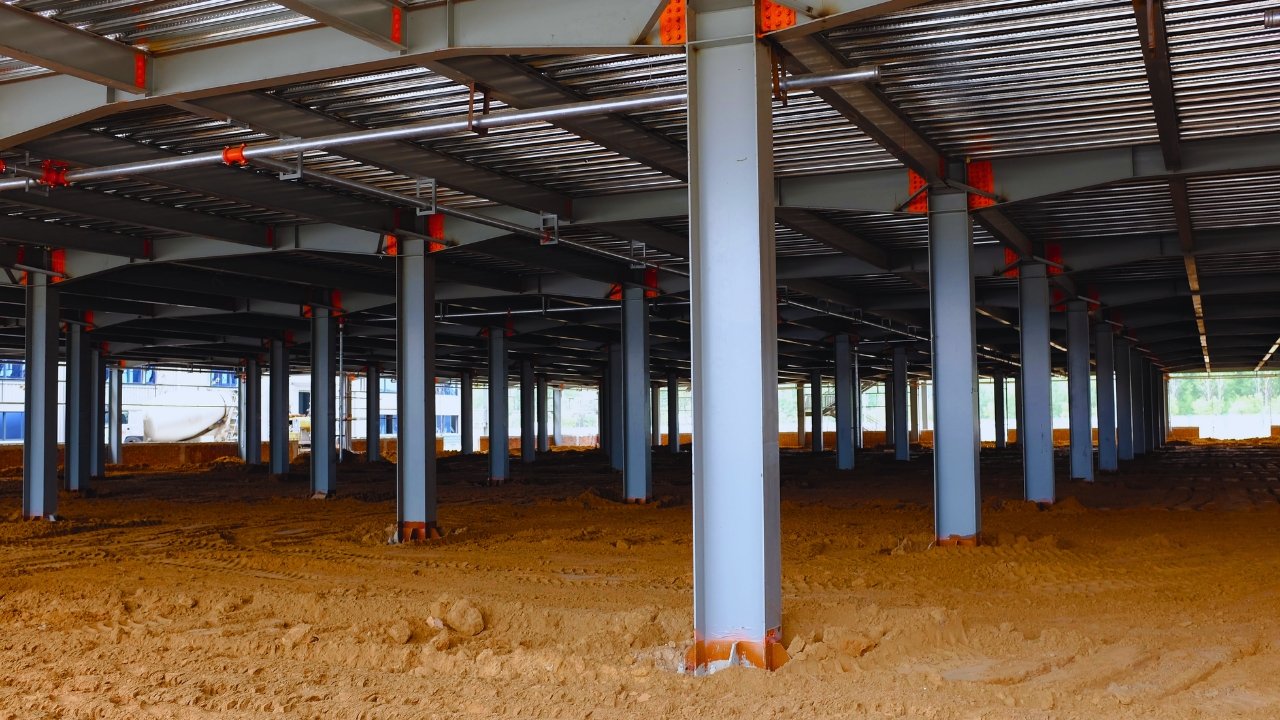
Steel beams are horizontal or inclined structural components that load and transmit the load to supports in buildings and infrastructure. Based on the principles of structural engineering and AISC, they bear weight at two or more points. Now you must know that beams are of a vertical web and horizontal flanges. The web is resistant to shearing and is stable when under load. The flanges manage the bending stress and enhance the strength. These elements interact in structural systems. You see steel beams utilized in framing, bridging, and industrial-type projects to ensure weight-bearing strength and permanence.
How Steel Beams Are Named
The beams of steel are named according to their shape, cross-section, structural geometry, weight, and exact dimensions. You recognize them by letter codes such as
- S for standard beams
- W for wide flange beams
- H or wide sections are found at the far ends of the series: H.
These letters determine their structural category and performance. The I or H profile is made of a vertical web with horizontal flanges. The beam type is identifiable by its location, carrying capacity, and size.
What Are the Common Types of Steel Beams?
- H-Beams
- W-Beams
- S-Beams
Detailed Explanation of Each Beam Type
H-Beams
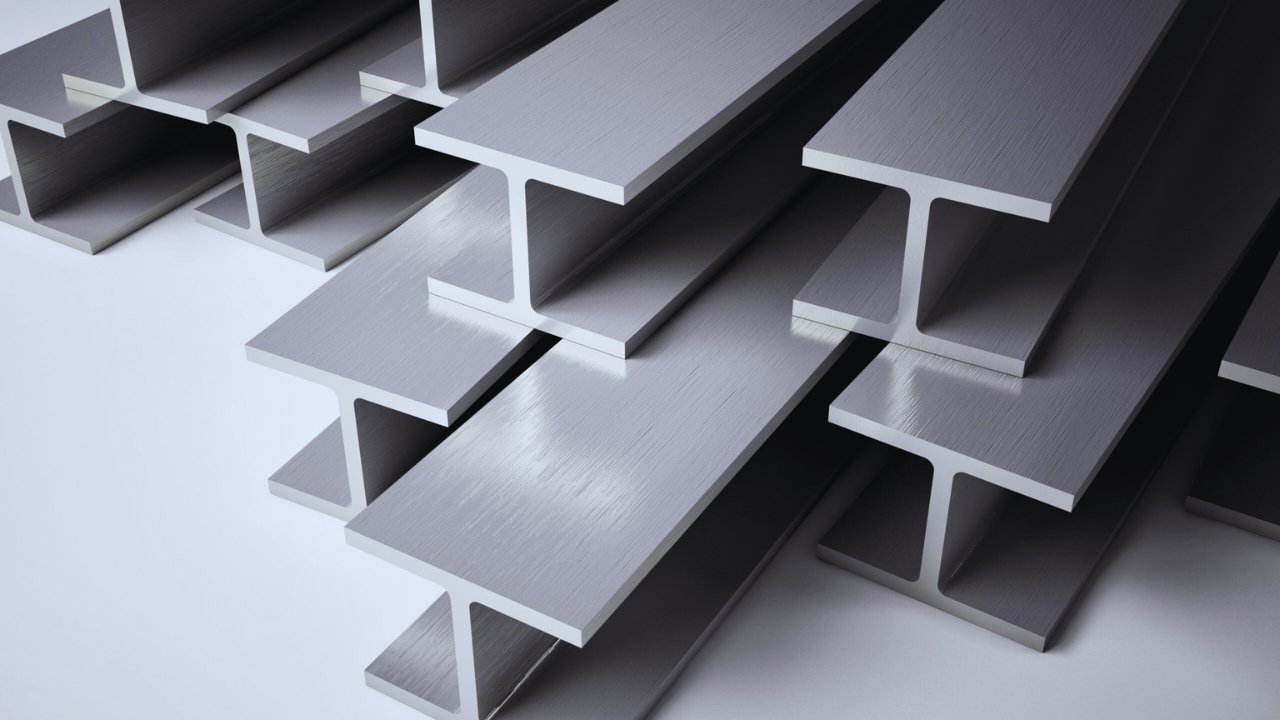
H-beams have a cross-sectional shape of H and have parallel flange surfaces and equal cross-section thickness. The width of their flange is close to the beam depth to ensure that the load is distributed strongly.
Key Characteristics and Structural Properties
- Largest and Heaviest Beam Type: These beams are used in construction of heavy structures with high structural strength. They sustain huge weight in foundations and structures. They are dependable in challenging engineering tasks and massive infrastructural projects.
- Also Called HP Beams, H-Piles, Bearing Piles: Industry experts know these beams by other names. They are structural support systems and deep foundation needs. They can be chosen depending on the needs of the project and the soil conditions to perform better.
- High Load-Bearing Capacity: They are designed to support very high vertical and horizontal loads. They do not easily bend and deform under pressure. They can be used in high buildings and industrial buildings to provide reliable support.
- Excellent for Vertical Load Support: These beams distribute weight well to the ground. They minimize stress on the surrounding structural aspects. You can use them in foundations where stability on the vertical and long-term service are paramount.
- Can Tolerate Larger Weight Loads: Rocky material structure improves their strength in cases of intense loading. They are structurally capable of withstanding adverse environments. They will be reliable in projects that need heavy load bearing and extended durability.
Manufacturing Process of H Beams
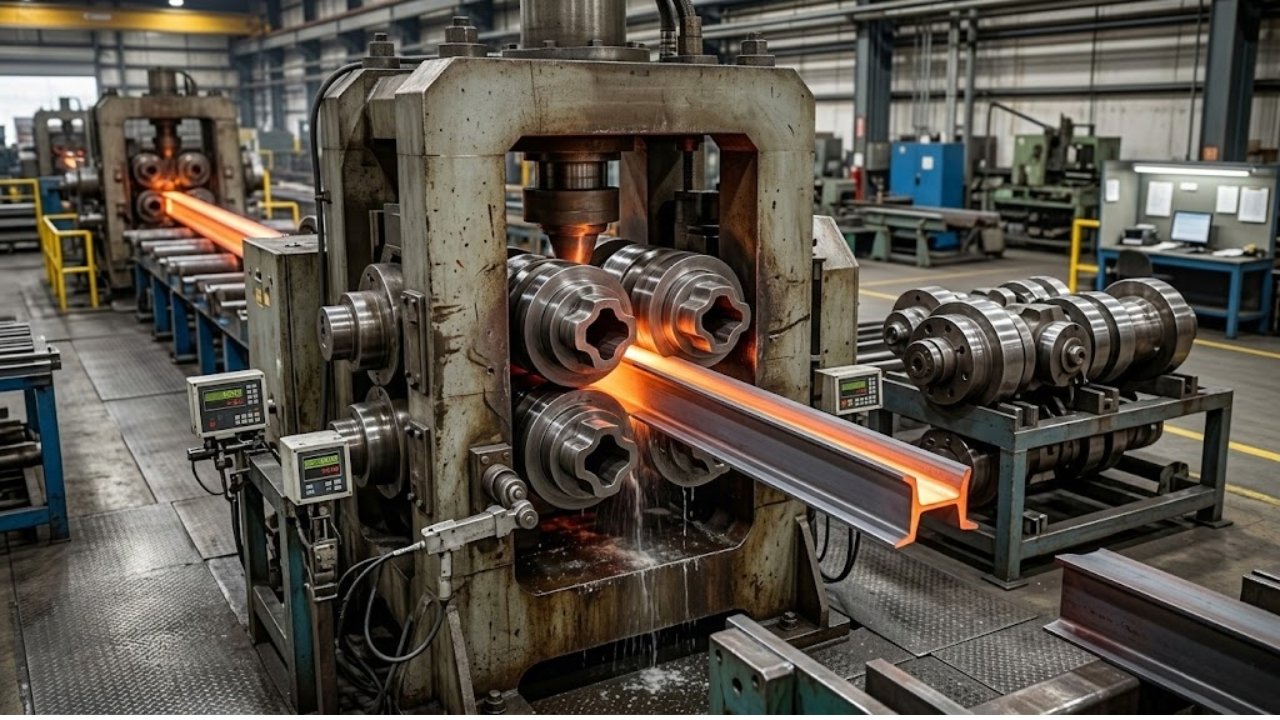
The process of making H beams starts with the hot rolling whereby steel billets are heated to high temperatures. This is followed by rolling them on heavy rollers to give them the shape they should take. When rolling, the material is rolled into the necessary H profile. You maintain correct temperature and accuracy of the rolling to ensure strength and dimension. The process produces long-lasting construction structural beams.
Major Applications
- Skyscraper foundation support
- Load-bearing columns
- Industrial buildings
- Bridge support
- Underground foundation piles
W-Beams (Wide Flange Beams)
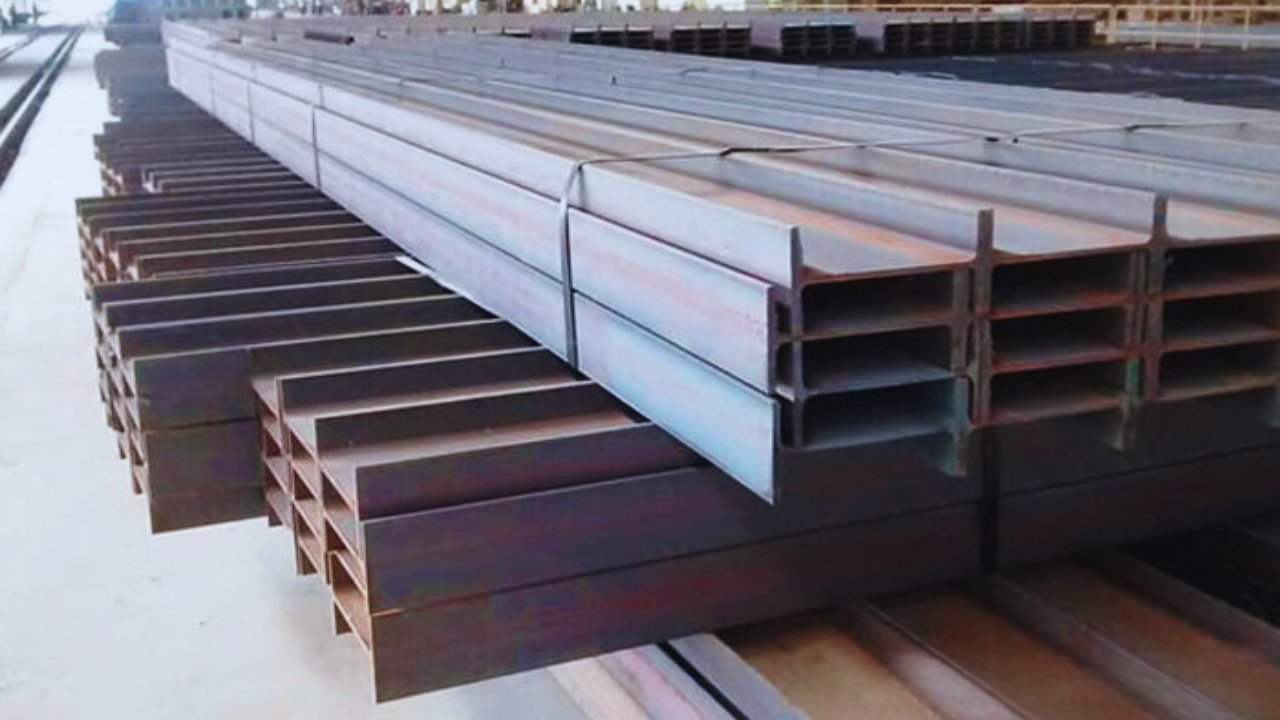
W-beams, which are also referred to as wide flange beams, have parallel inner and outer flange surfaces, which enhance strength. They are at least as deep as the flange width, and in effect provide you with greater load support. The flanges are also thicker than the web, which enhances stability and structural performance.
Key Characteristics and Structural Advantages
- Global Usage: This is the most common type of beam used in construction projects all over the world. It is chosen by engineers because of its strength and reliability. It can be used in buildings, bridges and industrial buildings to support stable loads and perform over time.
- Standard Size Range: It has a broad dimension W4x14 up to W44x355. These sizes are applicable to light to heavy loads. You are able to select the appropriate section according to the project needs and structure requirements.
- Structural Strength: Thick flanges increase resistance to bending and increase load-handling. The design spreads stress effectively in the section. It can be trusted to heavy structural uses with lower deformation possibilities.
- Stability and Standardization: It offers excellent lateral stability when under dynamic forces. Fabrication and installation are made easier by standardized dimensions. It is easy to incorporate it in designs that are better compatible and easier to construct.
Manufacturing Process of W Beams
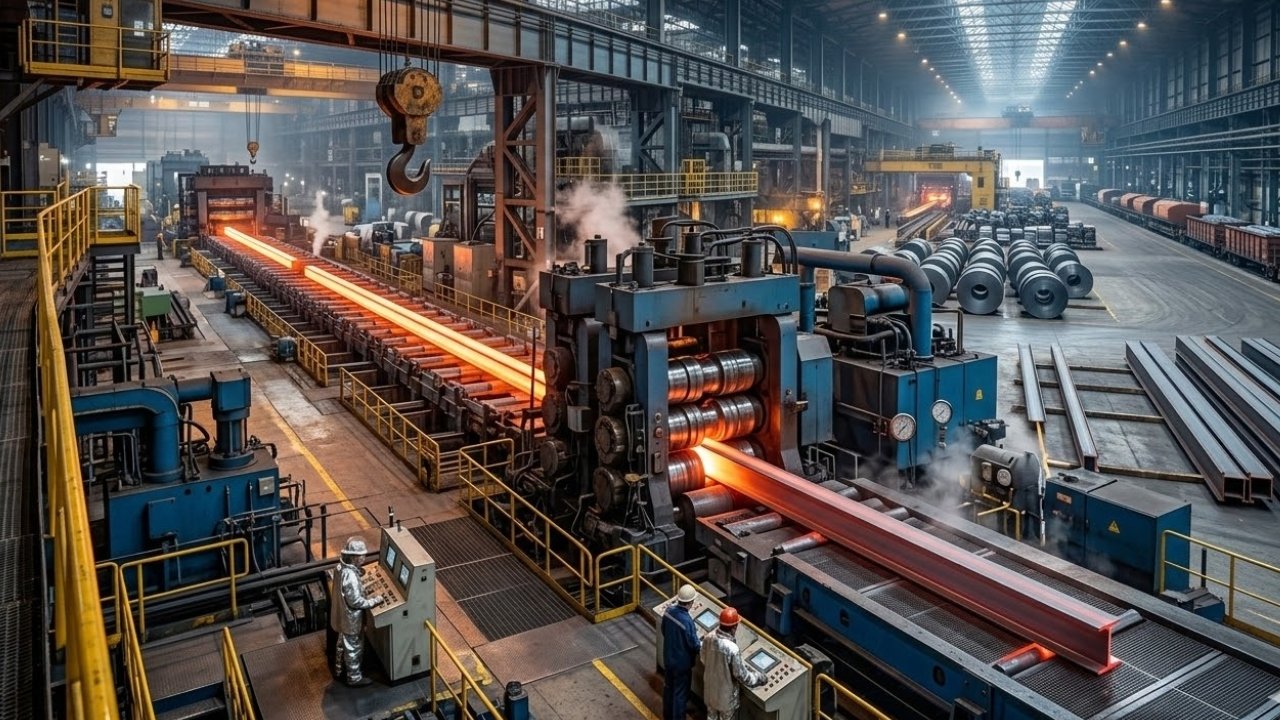
The process of producing W beams starts with the hot rolling where the steel is heated and formed into structural parts. You pass the material through controlled rolls to attain accurate flange and web sizes. Caliber rolls maintain uniform shaping and strength. Wide flanges have tight tolerances to carry heavy loads. Prior to delivery, quality checks are made to verify dimensional accuracy and structural performance.
Applications
- Highway bridge girders
- Industrial buildings
- Commercial structures
- Large-span buildings
S-Beams (Standard Beams)
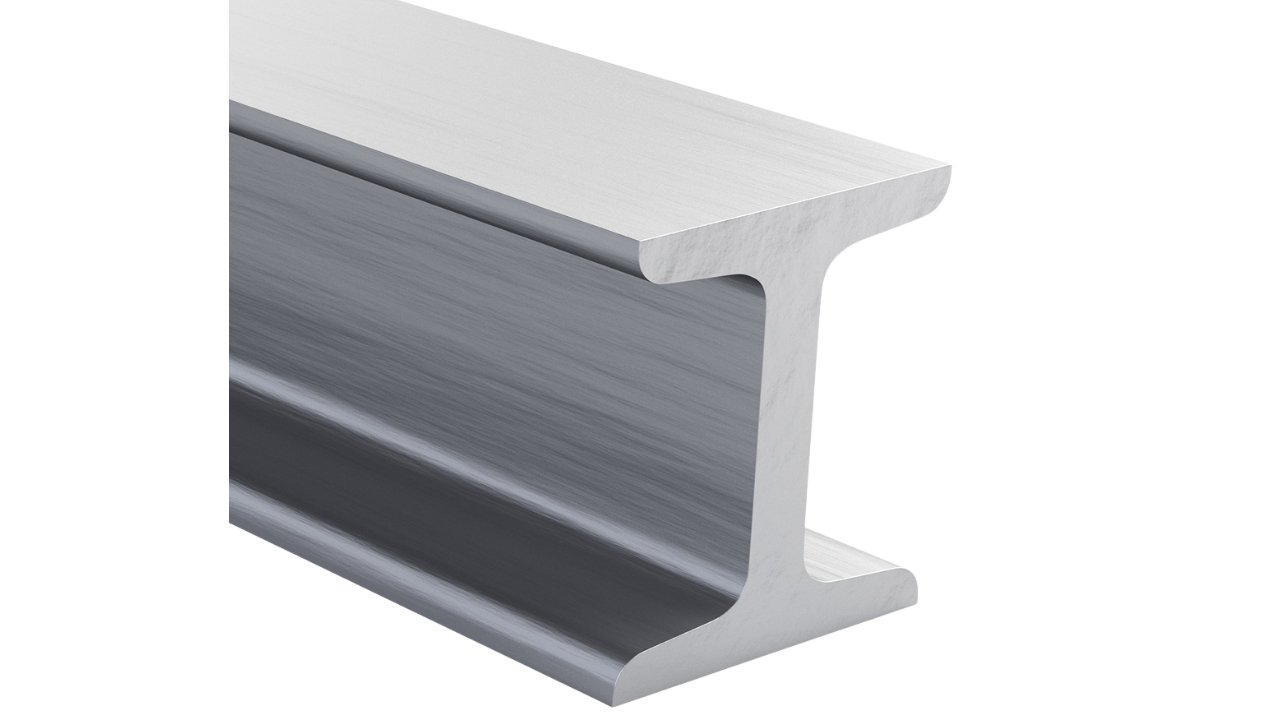
S-Beams are standard beams that utilize the use of S to denote standard structural sections tapered flanges. They are distinguished by their flanged design and sloping inner surfaces. The inner flange is sloped at an angle of 2:12 or 16.67, which provides strength and stability to load bearing purposes.
Key Characteristics and Structural Features
- Rounded flange-web connection
Rounded flange-web joints enhance structural stability and eliminate stress concentration. With this design you can have smoother load transfer. It enhances sturdiness and reduces cracking in heavy loads. - Narrower legs compared to H and W beams
Small legs save on material and weight. They can be utilized in space-constrained projects. This aspect facilitates effective building and ensures high load carrying capacity. - Limited size range compared to W beams
The sizes are more oriented and standard. You can choose certain dimensions to do accurate applications. The restriction guarantees uniform performance and controlled fabrication. - Thicker cross-section at top than bottom
During bending, the upper section experiences more stress. You may depend on increased strength in the location of load concentration. This architecture enhances the deformation resistance. - Tapered legs improve vertical load distribution
Tapered legs also evenly distribute vertical forces throughout the structure. You will have the advantage of balanced weight transfer in buildings. It improves stability in dynamic and static loads. - Unique S-shaped profile
The identity and strength behavior of the beam is characterized by the S-shape. It is quite easy to find in structural systems. This profile enhances effective force management and dependable functionality.
Manufacturing Process of S-Beams
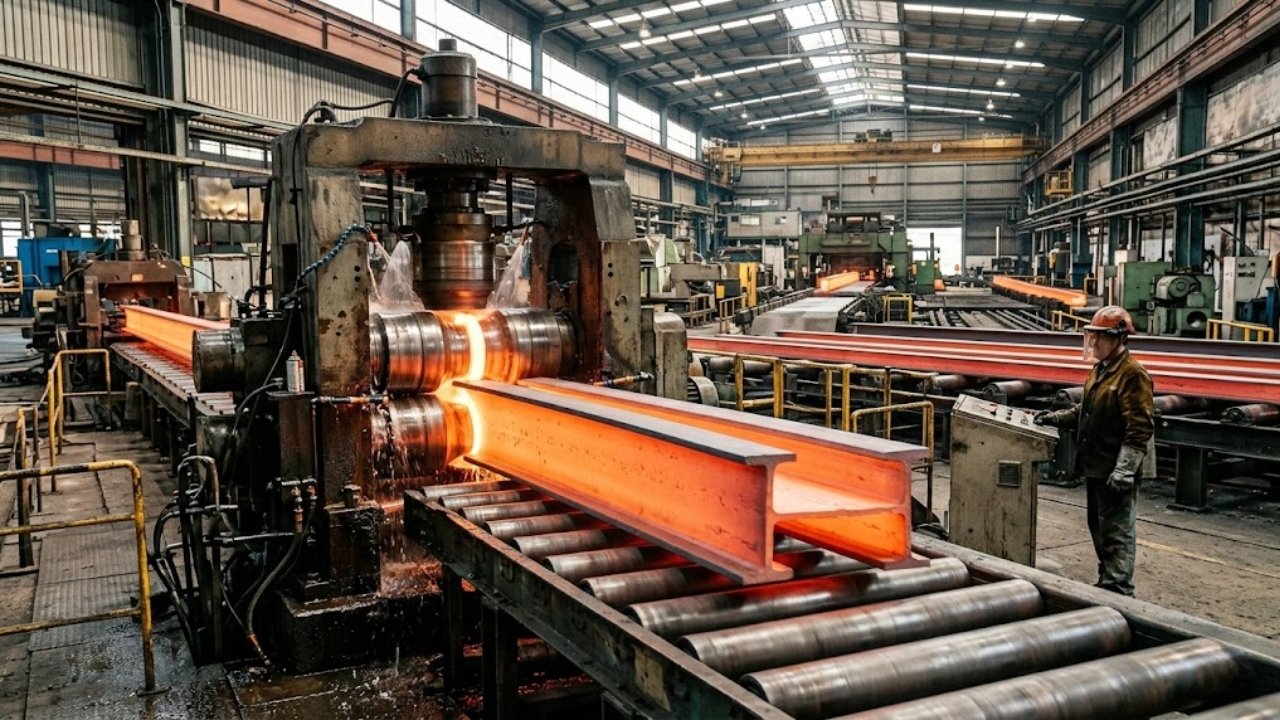
Production of S-beams commences with hot rolling of steel under high temperatures in order to create the fundamental profile. Thickness and strength are regulated by close control of temperature during rolling. The tapered flange slope is formed by controlled rolling to increase the load distribution and structural performance. Durability, accuracy and uniform quality in production are ensured by this process.
Applications
- Residential construction
- Roof supports
- Light commercial buildings
- Shipbuilding
- Applications requiring lighter load capacity
Comparative Analysis: H Beams vs W Beams vs S Beams
1) Shape and Structure
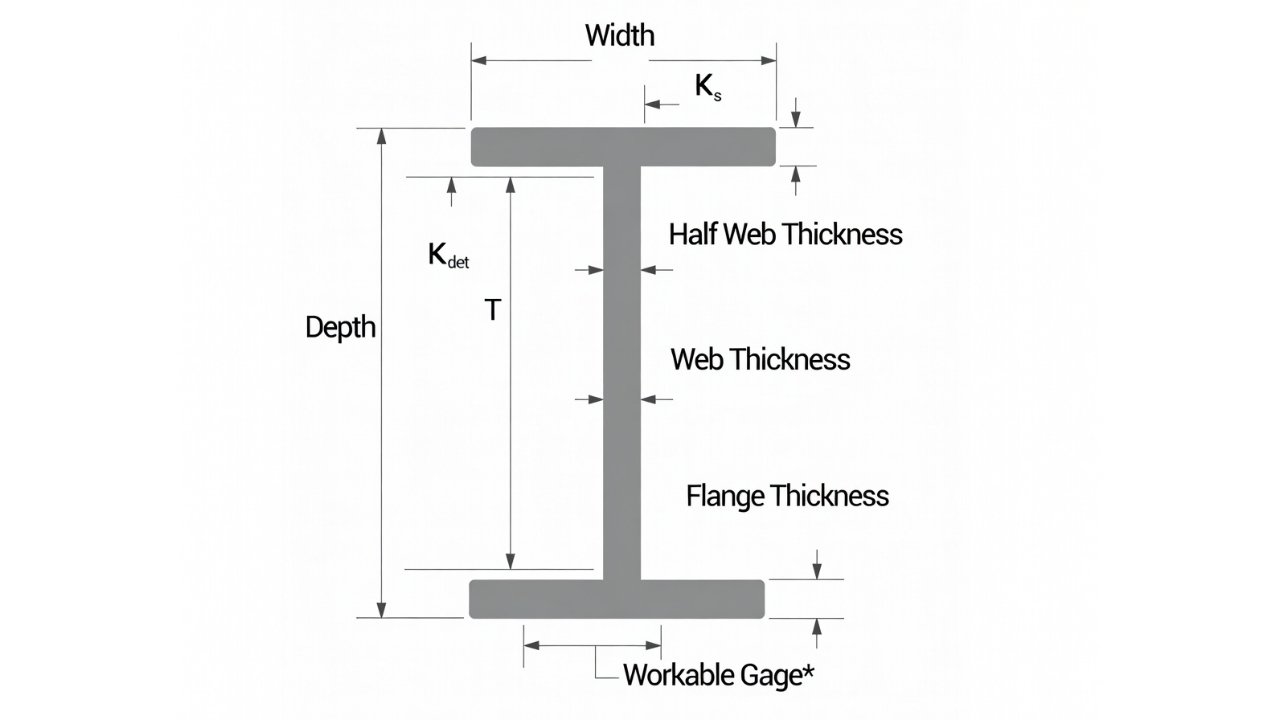
H Beams
H beams are parallel flanged with constant thickness. The H shape provides even distribution of loads. The depth is frequently equal to the flange width. The geometry gives you good structural stability. The construction uses heavy structures. Right flanges are easy to install because they align.
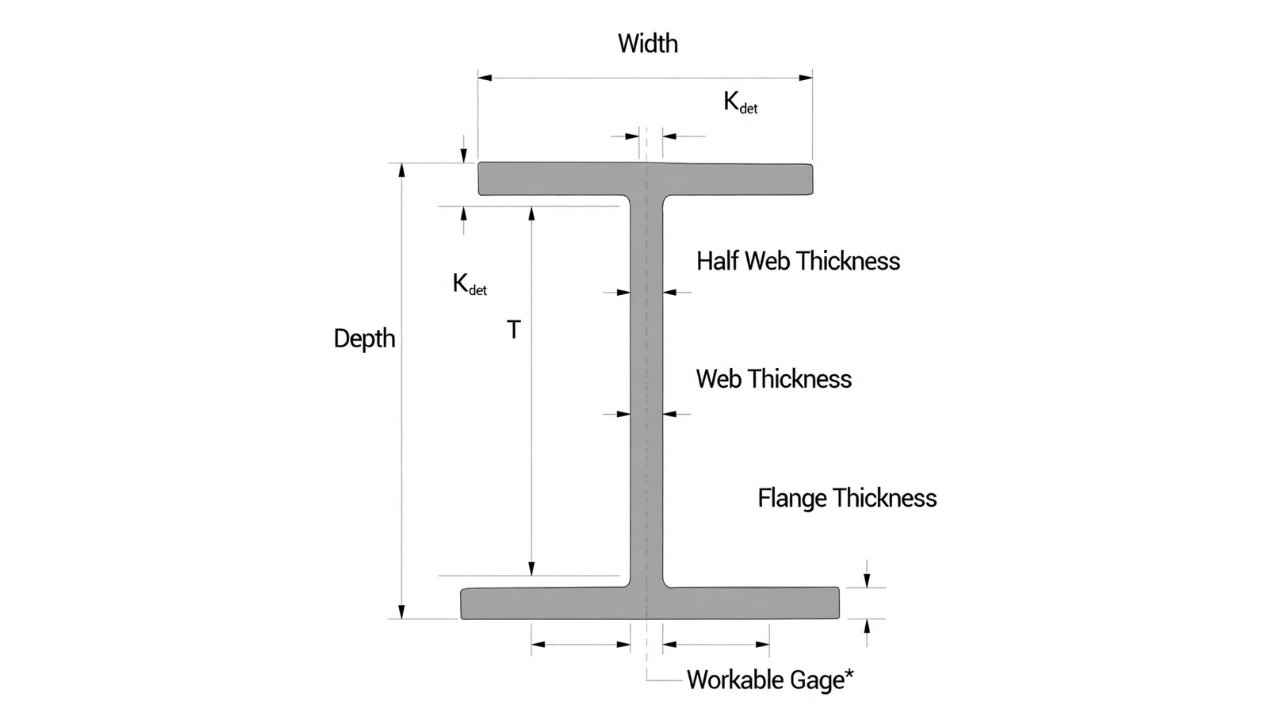
W Beams
W beams have wide parallel flanges. The flanges are made thicker to enhance resistant bending. Their form improves the vertical loading. You enjoy consistent performance in buildings. The broad profile enhances structural strength. Parallel surfaces make construction work easier.
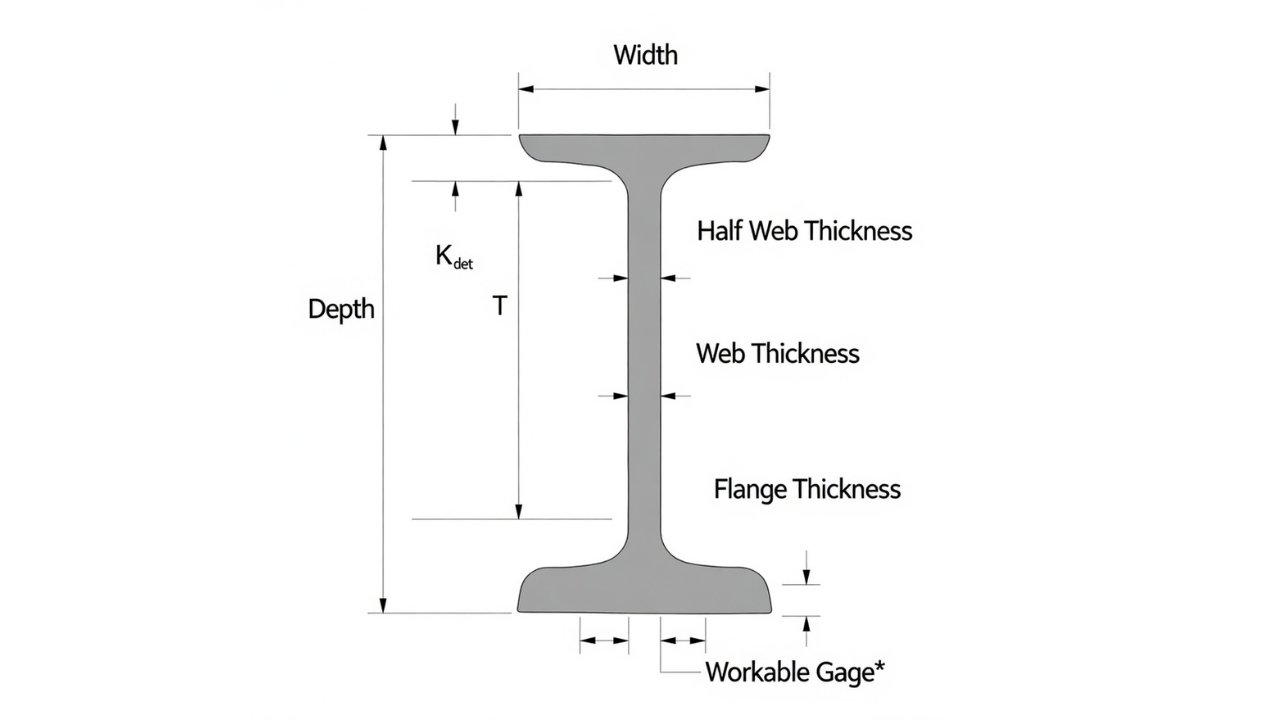
S Beams
S beams are tapered flanged and sloped. The 2:12 taper enhances the distribution of stress. The structure is characterized by their rounded edges. You apply them to medium weight loads. The design is distinctly different as compared to H and W beams. The fabrication should be aligned carefully.
2) Load-Bearing Capacity
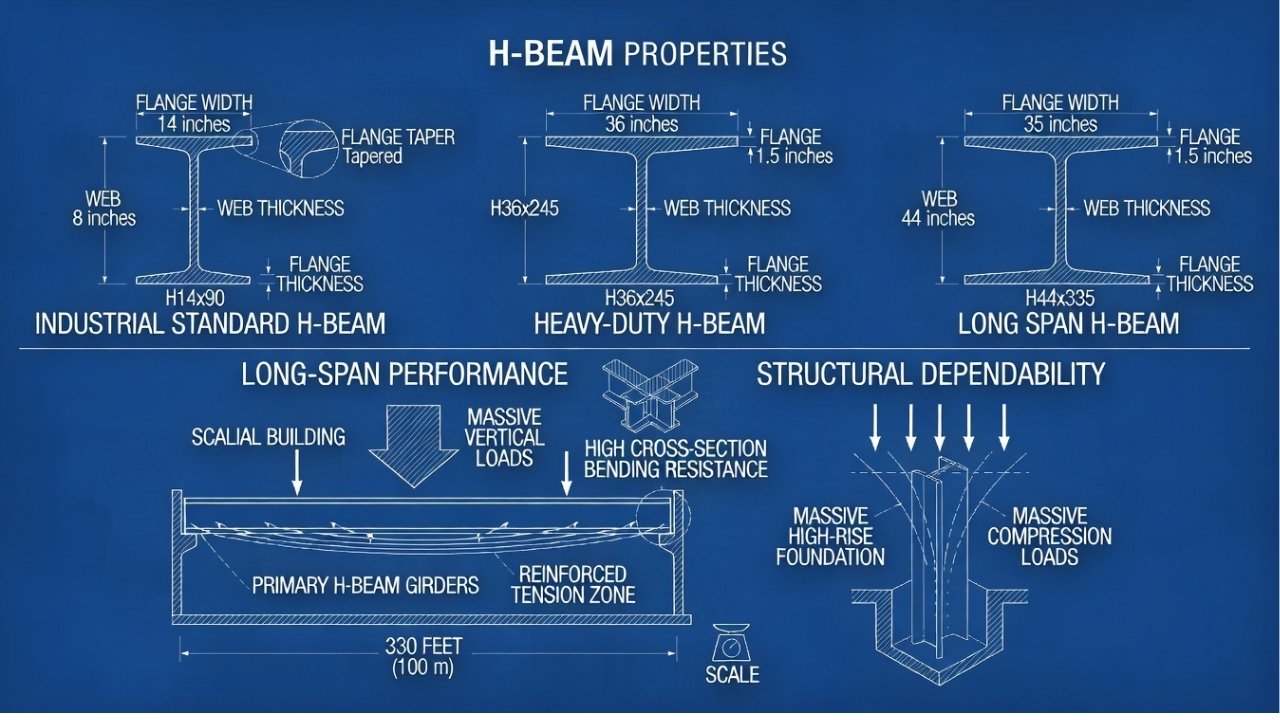
H Beams
H beams have the best load bearing capacity. They sustain long spans in massive buildings. The high cross-section can withstand bending. You depend on them in industrial projects. Span length may be as much as 330 feet. Massive loads stand firm in tension.
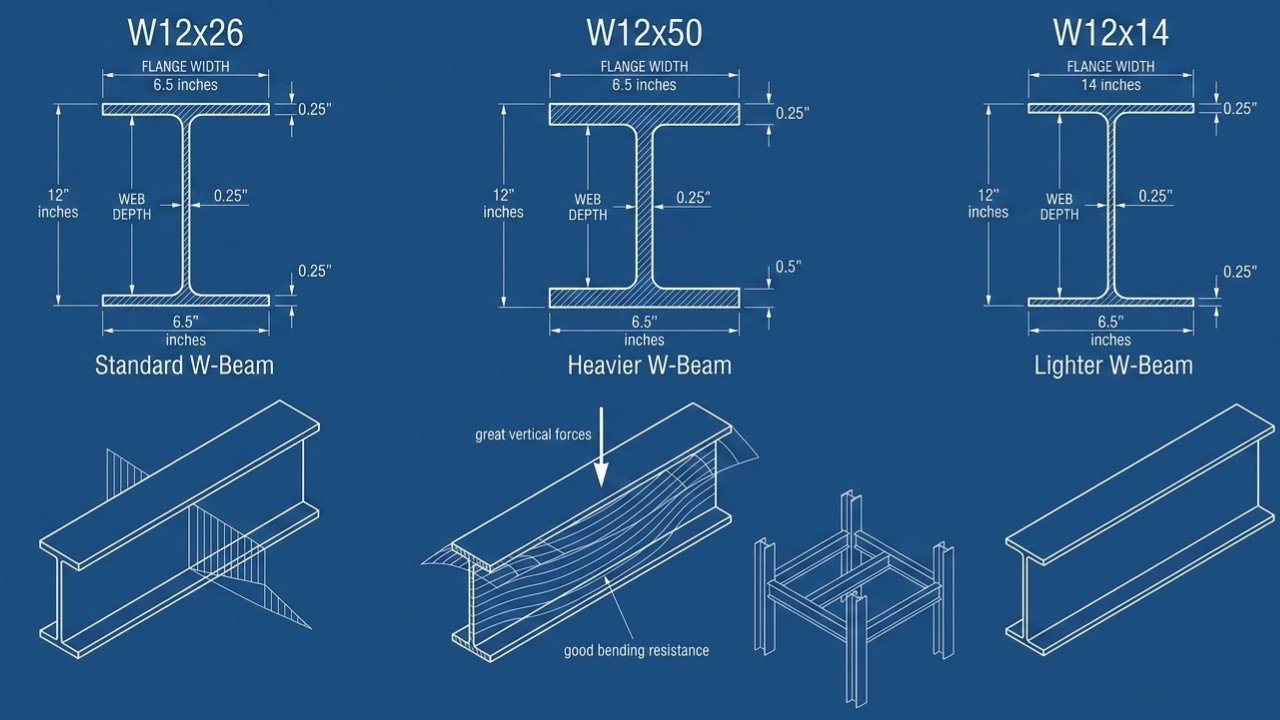
W Beams
W beams have good bending resistance. Their broad flanges balance weight well. Capacity is still a little lower than H beams. You use them on commercial construction. They deal with great vertical forces. Performance is suitable to medium to heavy loads.
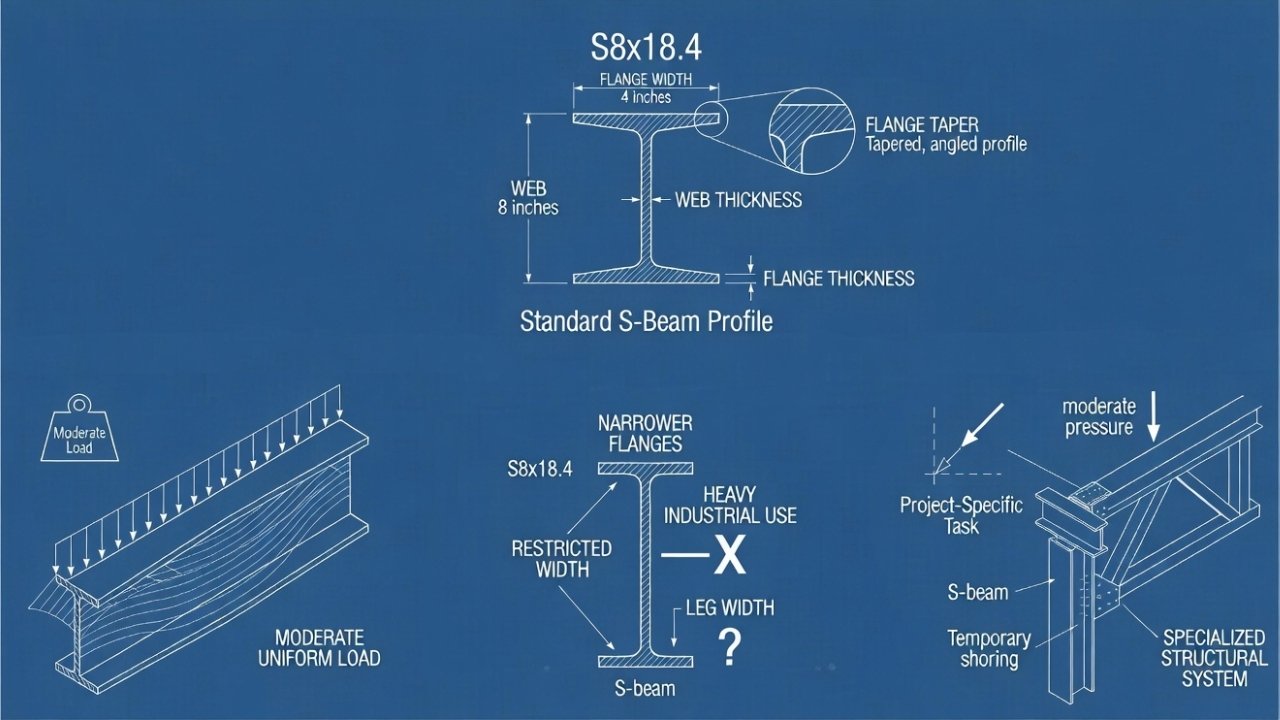
S Beams
S beams carry less structural weight. They have tapered flanges that restrict extreme load capacity. You apply them to smaller structural systems. The design is effective at managing moderate pressure. Heavy industrial usage is minimal. They are effective in project-specific tasks.
3) Manufacturing Method
H Beams
The making of H beams involves hot rolling of steel billets. The material is then heat-formed into the H profile. Accurate rolling provides uniform thickness. You have reliable structural quality. The procedure enhances toughness and robustness. Massive production promotes massive construction requirements.
W Beams
W beams are hot rolled using calibrated rolls. The procedure creates broad parallel flanges. Precision of tools gives correct dimensions. You gain good cross-sectional strength. Manufacturing assists in efficiency of mass production. Structural performance is maintained by quality control.
S Beams
The tapered legs of the S beams need special rolling tools. The slope of 2:12 is produced correctly in the process. The complexity of tooling heightens the effort of production. You undergo tailor-made molding in the production process. Accurate machines guarantee good taper development. Production fits the engineering needs.
4) Tapered Legs
H Beams
Tapered legs are absent in H beams. Their flanges are parallel to the web. This construction makes fabrication easier. You have less connection alignment. There is uniform load transfer throughout the section. Straight flanges enhance efficiency during construction.
W Beams
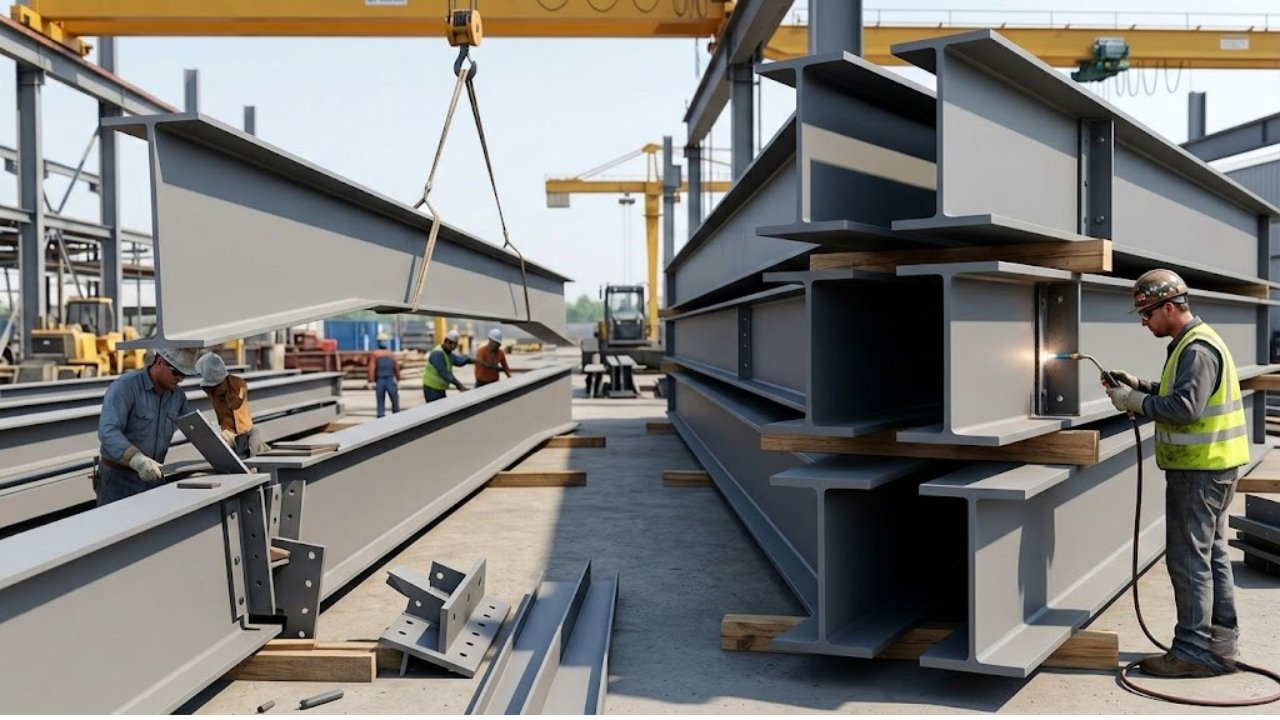
Parallel flanges are also present in W beams. The straight leg design provides easy connections. You enjoy the convenience of welding and bolting. The process of fabrication is accelerated and simplified. Joint stability is enhanced by parallel surfaces. The construction time is lowered.
S Beams
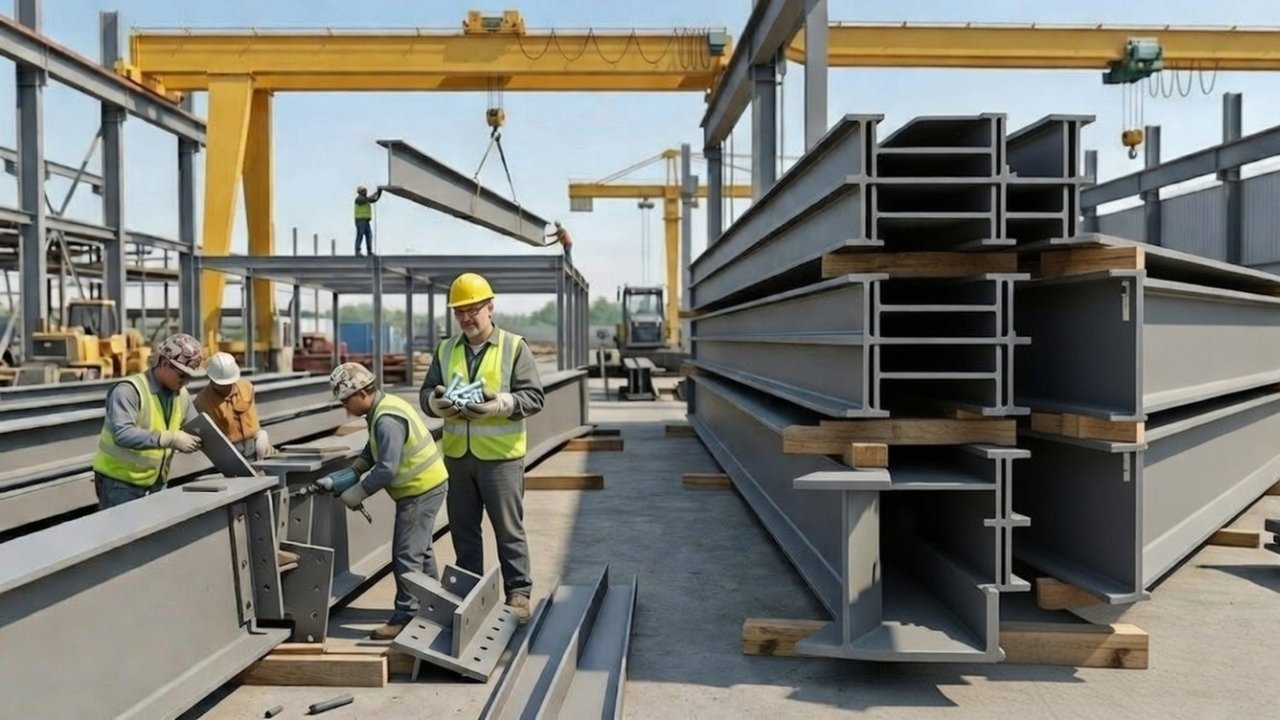
The inner flange surfaces of S beams are tapered. The taper enhances the vertical load distribution. Nevertheless, it makes joint design more difficult. Installation requires accurate fabrication. Relationships need to be fine-tuned. The design adds complexity to engineering.
5) Leg Width Comparison
H Beams
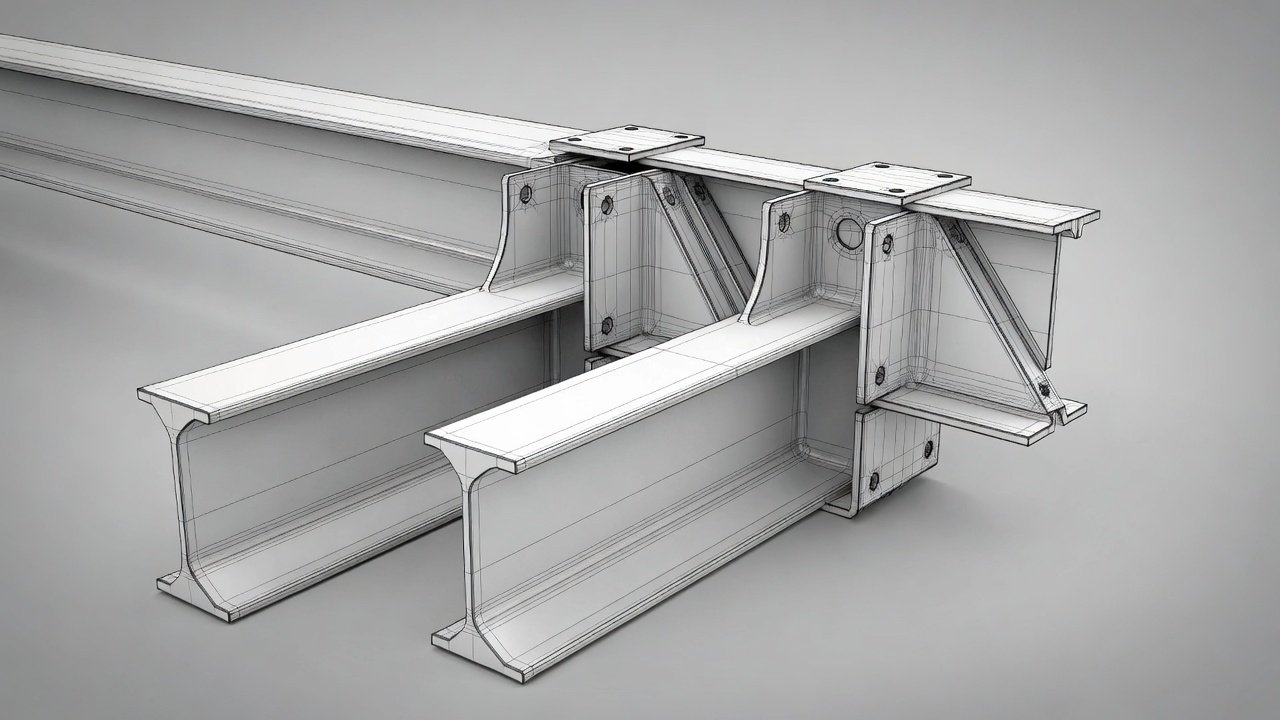
H beams are beams with almost the same flange width and depth. The proportional design makes it stronger. The width depends on the needs of the structure. You choose sizes based on the project load requirements. Large dimensions accommodate heavy uses. The balance enhances the structural stability.
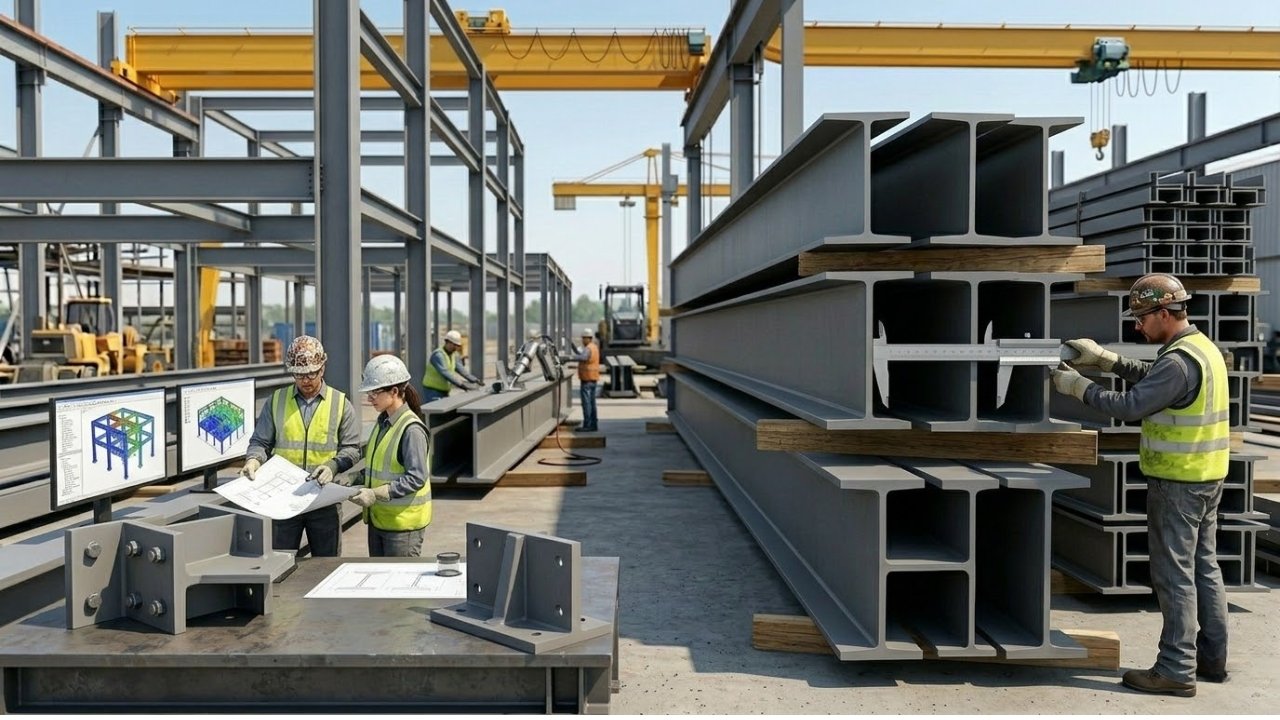
W Beams
W beams vary between 4.06 inches (W4) and 14.5 inches (W14). Its extensive size range is flexible. You select dimensions depending on the construction needs. Wider dimensions enhance the load handling. Diverse series sponsor different projects.
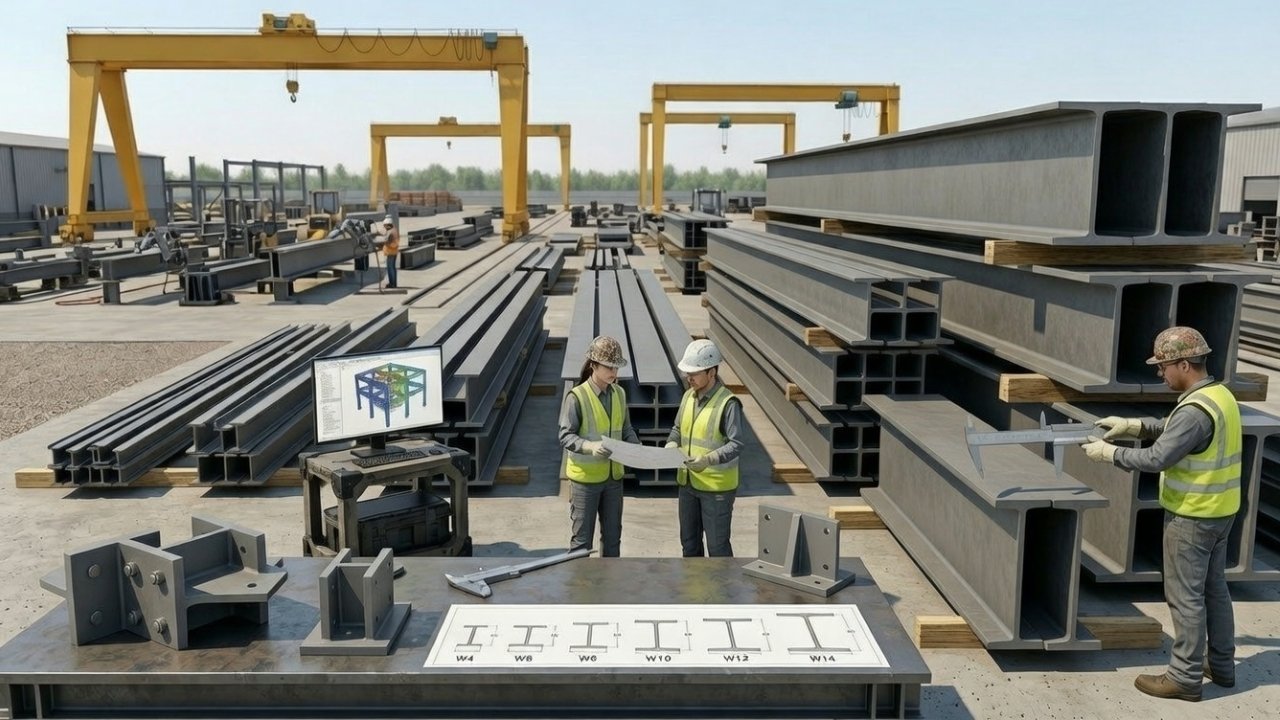
S Beams
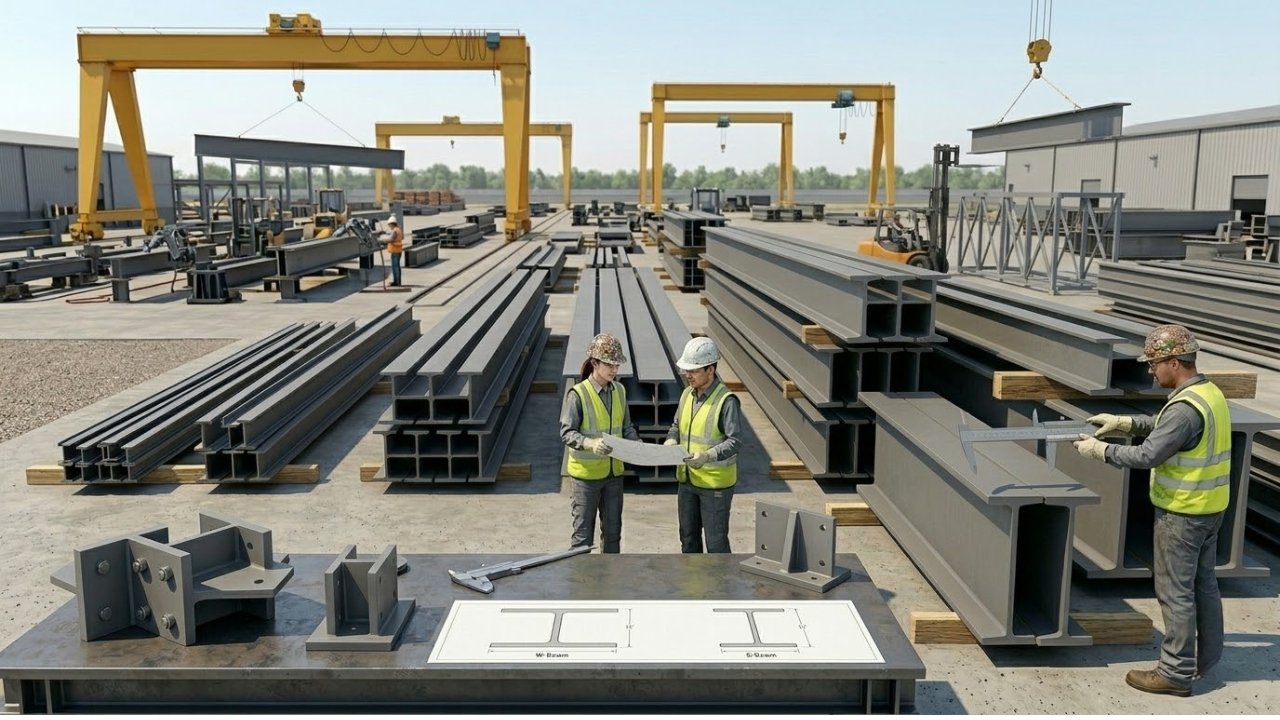
S beams vary between 2.330 inches and 8.050 inches. The most prevalent sizes range between 3 and 7 inches. The reduced width restricts its heavy usage. You use them to lighter structures. The size choices are still poor in comparison to W beams.
6) Flange Comparison
H Beams
H beams have parallel and thick flanges. The depth is equal to the flange width. This arrangement promotes rigidity. You experience good resistance to compressive forces. Monolithical thickness favors heavy building.
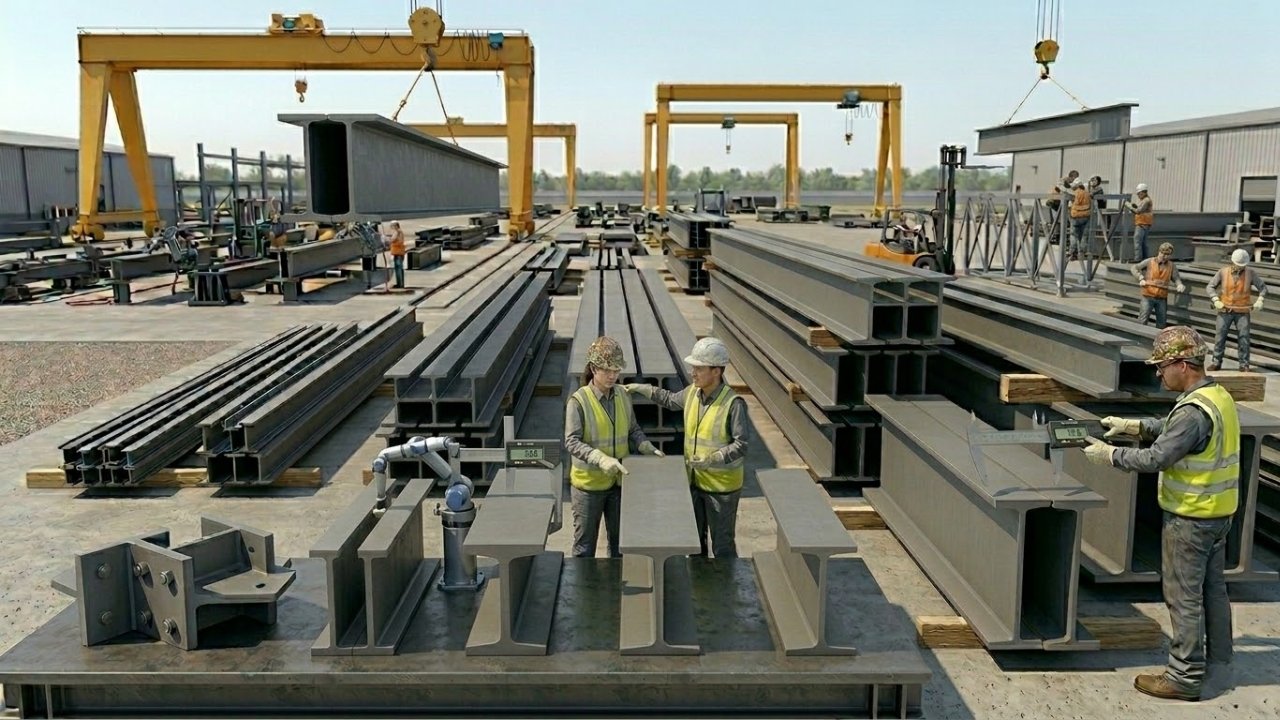
W Beams
W beams have thick parallel flanges and wider size selections. They are designed to enhance strength capacity. You enjoy better bending performance. The flange thickness carries heavier loads. Application flexibility is provided by size variety.
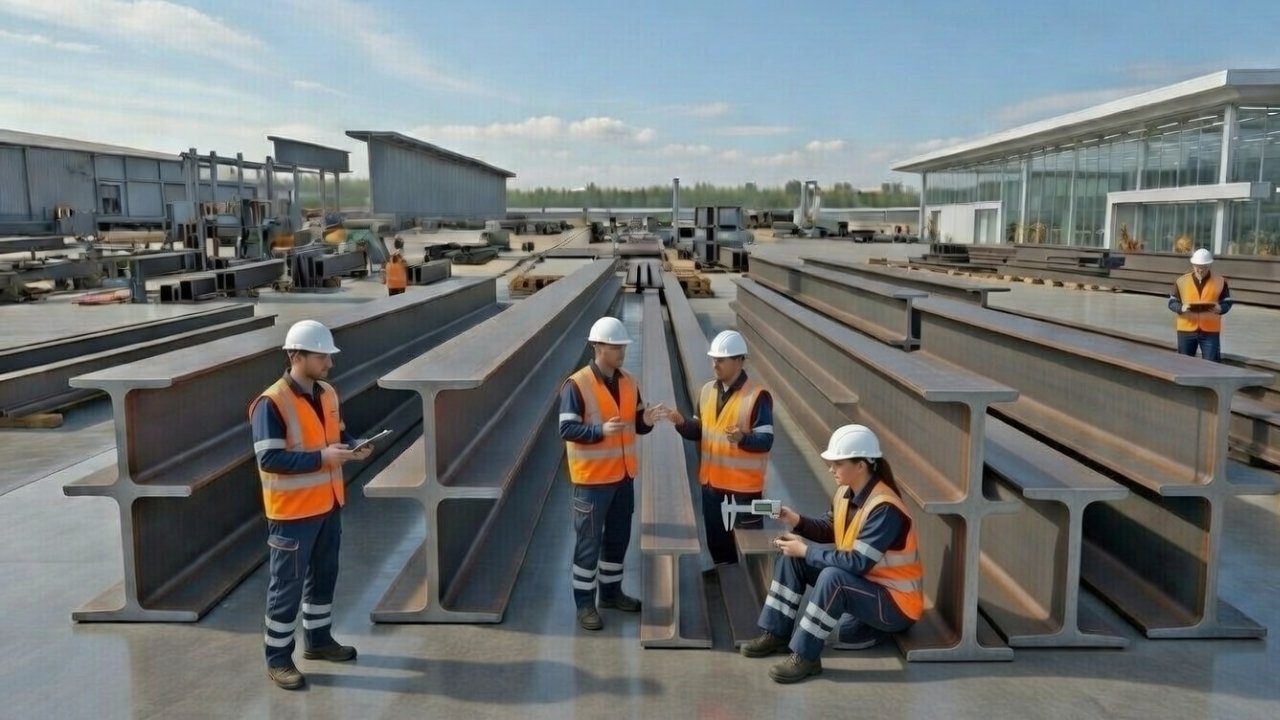
S Beams
The flanges of S beams are tapered and narrow. Thickness is less than H and W beams. The design restrains the heavy structural use. You use them to support them with a lighter load. The taper decreases the volume of the material.
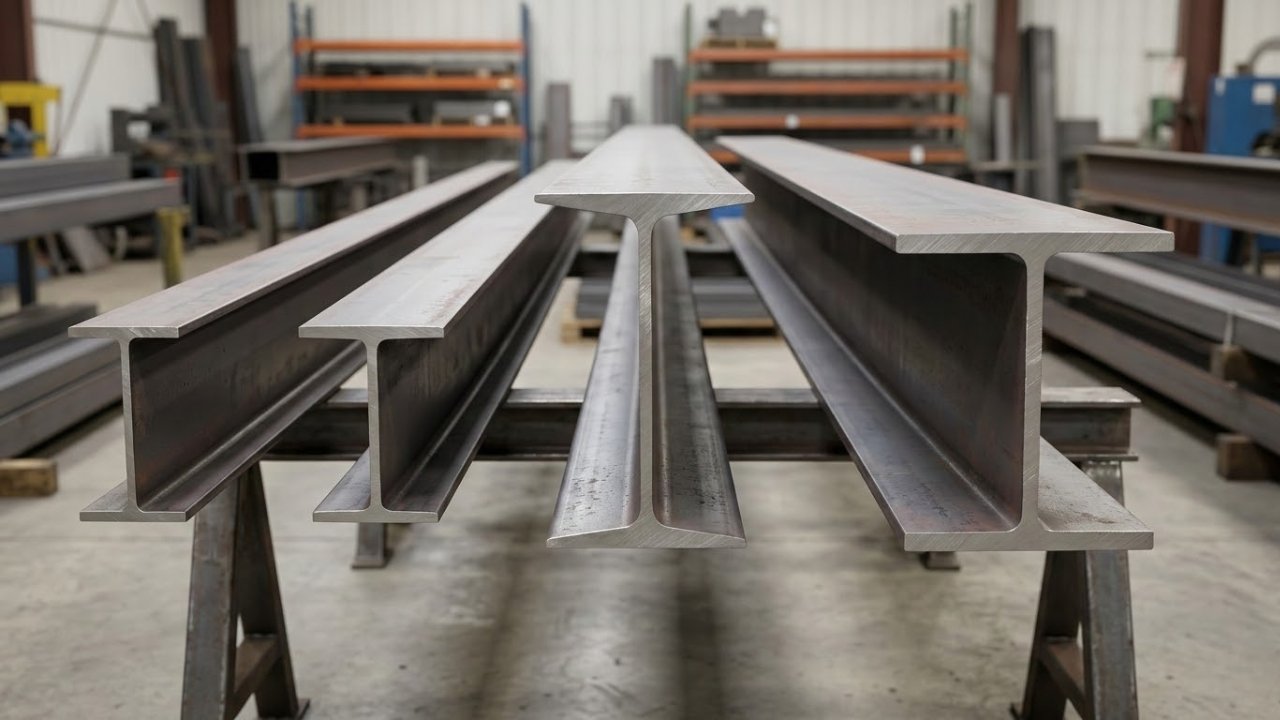
7) Ease of Fabrication & Construction
H Beams
The H beams must be fabricated accurately because of massive sections. Installation requires proper alignment. You require powerful handling equipment. Efficient welding and bolting. Construction suits well with big structures.
W Beams
W beams have the simplest fabrication. Parallel flanges make connection design easy. You have accelerated installation. Welding and cutting become easy. There is better construction efficiency.
S Beams
S beams generate fabrication problems due to tapered flanges. You require expert connection information. Installation requires increased accuracy. You deal with complicated joint manipulations. Building is more technical.
8) Flexibility in Design
H Beams
H beams offer a moderate level of design flexibility. They finance large-scale industrial and construction works. You choose sizes depending on load demands. Usage is high and niche-based.
W Beams
W beams are the most flexible. The large size range is beneficial to a variety of projects. You apply them in commercial and residential buildings. The possibilities of design are vast.
S Beams
S beams offer a restricted flexibility. The availability of size is limited. You use them in certain engineering situations. Their design scope is determined by specialized use.
9) Cost & Efficiency
H Beams
H beams are more costly in terms of material. They provide high performance on heavy loads. You decrease the amount of beams in large structures. Long spans enhance project performance.
W Beams
W beams offer cost-effectiveness and performance. Pricing remains moderate. You attain high structural efficiency. The design facilitates low cost building.
S Beams
S beams are the cheapest of the three. They are applicable to light loads. You save material expenses. Small projects are cost efficient.
Comparison Table
Feature | H-Beam | W-Beam | S-Beam |
Shape | H-shaped | Wide flange | Tapered flange |
Flange Type | Parallel | Parallel | Tapered (2:12 slope) |
Flange Width | Approx. equal to depth | Wider than web | Narrower |
Load Capacity | Highest | High | Lower |
Manufacturing | Hot rolling | Hot rolling with caliber rolls | Hot/controlled rolling with taper |
Tapered Legs | No | No | Yes |
Leg Width Range | Large & heavy sections | Wide range (W4–W44) | Narrow range |
Fabrication Ease | Moderate | Easy | Difficult |
Flexibility | Moderate | Highest | Limited |
Cost | High | Moderate | Low |
Best Applications | Skyscrapers, piles | Bridges, industrial buildings | Light structures, shipbuilding |
Advantages and Limitations of Each Beam Type
H-Beams
- Strength Advantage: H-Beams offer unprecedented strength to heavy structures and bridges. Their high load capacity and structural stability can be trusted in a challenging project around the world today.
- Cost Limitation: H-Beams are more expensive to produce and use more steel material than light sections. Before choosing them in large constructions projects, you should put into account their budget impact.
- Heavy Load Support: H-Beams are effective in supporting vertical and lateral loads in industrial buildings and bridges. To enhance safety, you can apply them in high stress structural frameworks at all times.
- Installation Limitation: They are very heavy and this makes transportation and installation on-site difficult. To handle the safe handling at the time of erection, you may require heavy lifting machinery and experienced labor.
W-Beams
- Versatility Advantage: These beams can be used in a wide range of structural projects and deal with moderate loads effectively. They can be used in buildings, bridges, and industrial frames and will perform reliably.
- Size Availability Advantage: Manufacturers have extensive dimensional selections that allow you to choose appropriate sections to meet custom designs and project needs with great degree of structural control in many construction use applications.
- Limitation Under Extreme Load: These sections cannot sustain lower extreme loads compared to H beams and they can be bent when under heavy stress conditions. Before being selected, you should check on load demands.
- Fabrication Strength and Limitation: Easy fabrication makes cutting and welding of your projects easier, but thinner flanges need to be handled with care during installation to prevent deformation to ensure you can keep accuracy.
S-Beams
- Cost-Effectiveness: You save on light works and simple constructions since the production is cheap and the material utilization is minimal. Connections should always be detailed carefully.
- Size Limitations: You have limited size and smaller section options that eliminate flexibility in heavy structural uses. It is better to plan early to prevent expensive redesign in the future.
- Load Efficiency: You work well in light to moderate loads and facilitate effective distribution of material in small spans. Safety and stability are enhanced by proper engineering.
- Connection Challenges: You might have challenging welds and connection detailing that require skilled work and accuracy at the job site. Planning minimizes errors during installation.
How to Choose the Right Beam
Load Requirement
Begin by finding out the overall weight the beam is supposed to handle safely. Add dead loads, live loads and dynamic forces. Proper load evaluation averts structural breakdown and redesigning, which costs money. Engineering standards should be consulted to ensure safety factors and performance margins.
Span Length
Span length has a direct influence on beam size, depth, and material selection. Longer spans need stronger parts or supports. Assess deflection limits in order to ensure structural stability. To ensure safety, you are required to align the beam profile with the unoccupied space between supports.
Budget
Material choice, and fabrication are affected by budgetary concerns. Steel, concrete and timber are different in terms of cost and durability. Trade off short run cost versus long run maintenance. Final decisions must be made by comparing supplier quotes and lifecycle costs.
Structural Design
General structural design defines the type of beam and connection. Take into consideration load paths and column or slab integration. Adequate coordination guarantees uniformity of strength within the framework. You are to match beam specifications to architectural and engineering drawings.
Fabrication Complexity
Complexity of fabrication influences time of production and efficiency of installation. Shapes or heavy parts that are custom made complicate the manufacturing process. Early assess welding, cutting, and transportation needs. Designs that are easy to assemble and do not affect structural performance should be chosen.
Conclusion
Each beam has a different shape, load capacity, fabrication and cost that determine the use of the beam in an engineering structure. H beams, W beams, and S beams have diverse applications. H beams provide the maximum strength needed in heavy-duty foundations, W beams provide the most versatility to most construction jobs, and S beams are required in lighter, specialized applications. Awareness of these differences can enable you to maximize safety, efficiency and budget. The right choice of beam type guarantees good performance of the load, easier fabrication and structural integrity in any engineering or construction undertaking.
FAQs
How to Measure H-Beam?
An H-beam is measured by beginning with overall depth and flange width. Use a steel tape for accuracy. Measur web thickness between flanges. Then measure flange thickness at one end. Before finalizing dimensions to be fabricated, check straightness and squareness.
What Is The Difference Between H Beam And I Beam?
H beams are heavier than I beams in their flanges and webs. They have a more rectangular cross section. Tapered flanges and lighter weight profiles are present in I beams. You choose H beams where the weight is heavy. I beams are used on lighter structures.
How to Read W Beam Sizes?
W beam sizes have a definite system of designation. The former indicates nominal depth in inches. The second figure represents the weight per foot. W12x26, e.g. twelve inches deep. It has a weight of twenty six pounds per foot.
What Does W Mean in Steel Beams?
W refers to wide flange beam. It explains parallel flange beam surfaces. These forms give excellent bending support and stability. They are used by engineers in structural framing. W beams are also common in buildings and bridges.
Can You Cut Two Wt Beam From A W Beam?
Two WT beams can be cut out of a W beam. Fabricators divide the beam along its center of web. The two halves constitute structural tee sections. You need to verify thickness and strength specifications. Structural performance is achieved through proper cutting.